

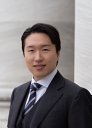
 WonJin Yoon
· 2 previous affiliations
- Harvard UniversitySince 2023
- Postdoc · Since 2023
- Korea University2017–2023
- PhD student · 2017–2023
Research Overview
WonJin Yoon focuses on biomedical natural language processing, named entity recognition, and domain-specific language model adaptation. His research trajectory spans the development of foundational biomedical representation models to scalable frameworks for clinical and enterprise text mining. Recently, his work addresses long-context clinical document analysis and the application of large language models to complex biomedical relation extraction.
Research Trajectory
WonJin Yoon’s early research focused on adapting deep learning architectures to the specific challenges of biomedical text. He introduced CollaboNet: collaboration of deep neural networks for biomedical named entity recognition (2019), which addressed data scarcity and polysemy in biomedical named entity recognition (NER) by combining multiple neural networks to improve entity type classification. Recognizing the limitations of general-domain models, he contributed to the development of BioBERT: a pre-trained biomedical language representation model for biomedical text mining (2020). This work investigated how models like BERT could be adapted to handle the distinct word distributions of biomedical corpora, providing a foundational representation model for the field. Concurrently, he explored the application of these pre-trained models to specific downstream tasks, demonstrating in Pre-trained Language Model for Biomedical Question Answering (2019) how BioBERT could effectively process factoid, list, and yes/no questions to achieve strong performance in biomedical question answering challenges.
By 2022, his focus expanded to encompass diverse languages, noisy text domains, and scalable enterprise frameworks. In the context of social media, he worked on KU_ED at SocialDisNER: Extracting Disease Mentions in Tweets Written in Spanish (2022). This project intersects with the research direction of Robust Natural Language Processing for Noisy Social Media Data and the area of Pre-Training Language Models on Specialized Corpora. By utilizing specialized tokenization strategies and silver standard annotations, the work also addressed challenges in the research direction of Why Subword Tokenization Fails on Noisy Text and the broader area of Precise Span Boundary Detection in Information Extraction.
To address the practical deployment of NLP tools in industry settings, he presented Biomedical NER for the Enterprise with Distillated BERN2 and the Kazu Framework (2022). This work introduced Kazu, a scalable, open-source framework built around a computationally efficient version of the BERN2 model, designed specifically to support large-scale biomedical text mining for pharmaceutical applications. He also continued advancing question answering methodologies, formulating the extraction process as a sequence tagging problem in Sequence tagging for biomedical extractive question answering (2022).
In recent years, his research has incorporated emerging large language models (LLMs) and weak supervision techniques. With collaborators, he evaluated modern generative models in Exploring Approaches to Answer Biomedical Questions: From Pre-processing to GPT-4 (2023). This research contributes to the area of Sequence Tagging for Multi-Span Question Answering and explores the research direction of The Context Window Trade-off for Semantic Disambiguation. He also developed novel methods for knowledge graph construction in Biomedical relation extraction with knowledge base-refined weak supervision (2023), leveraging LLMs and knowledge base refinements to generate high-quality weak labels, thereby improving relation extraction performance without relying strictly on manually annotated datasets. Advancing into clinical applications, he recently introduced the LCD benchmark: long clinical document benchmark on mortality prediction for language models (2025), focusing on the challenges of processing extended medical texts for predictive healthcare tasks.
Current Directions
The most recent papers in the evidence indicate a focus on the application of advanced language models to complex, long-form clinical and biomedical texts. A primary direction is the evaluation and development of models capable of processing extended clinical documents for predictive healthcare tasks, such as mortality prediction. Additionally, ongoing research explores the integration of large language models with knowledge base-refined weak supervision to overcome data scarcity in biomedical relation extraction and automated knowledge graph construction.
Profile updated
| Paper | Venue | Year |
|---|---|---|
| CollaboNet: collaboration of deep neural networks for biomedical named entity recognitionGitHubwonjininfo/ | BMC Bioinformatics | 2019 |
Loading new papers…
Other researchers whose papers cluster into the same research directions — a proxy for overlapping technical interests and shared intellectual neighborhoods.
See something wrong? Report a mistake