

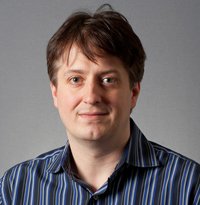
 Wojciech Matusik
· 6 previous affiliations
- Massachusetts Institute of TechnologySince 2011
- Full Professor · Since 2011
- Phd, Computer Science · 1998–2003
- EGISince 2023
- Co-Founder, CSO · Since 2023
- Inkbit (United States)2016–2023
- Co-Founder, CTO · 2016–2023
- Walt Disney (United States)2009–2011
- Senior Research Scientist · 2009–2011
- Adobe Systems (United States)2007–2009
- Senior Research Scientist · 2007–2009
- University of California, Berkeley1995–1997
- BS, EECS · 1995–1997
Research Overview
Wojciech Matusik focuses on computational design, computer graphics, and robotics, developing algorithms that bridge digital modeling with physical fabrication. His trajectory spans early work in data-driven reflectance and computational displays to advanced differentiable simulation and programmatic computer-aided design. Recently, his research investigates the integration of generative artificial intelligence with physics-based simulation, automated assembly, and synthesizable molecular design.
Research Trajectory
Matusik’s early research addressed fundamental problems in computer graphics, particularly in appearance modeling and computational displays. He contributed to the area of Relighting with Linear Superposition of Light and broader rendering challenges with A data-driven reflectance model (2003). This interest in high-fidelity visual reproduction extended to hardware-software systems, as seen in the development of 3D TV: a scalable system for real-time acquisition, transmission, and autostereoscopic display of dynamic scenes (2004).
Moving into computational design and fabrication, his work began treating 3D modeling as a programmable and optimizable process. He explored the broader area of 3D Modeling as Program Synthesis through systems like InverseCSG: automatic conversion of 3D models to CSG trees (2018). This programmatic approach to geometry naturally extended to computer-aided design, where he contributed to the research direction of Neural Synthesis of Parametric CAD Programs. A key artifact in this space was the Fusion 360 gallery: a dataset and environment for programmatic CAD construction from human design sequences (2021), which provided a foundation for training AI agents to reconstruct 3D models from programmatic definitions. This work also intersects with the broader field of Learning on Boundary Representation Graphs for analyzing complex CAD geometries.
Concurrently, Matusik applied computational design to robotics, focusing on how physical form and control policies interact. He introduced RoboGrammar: graph grammar for terrain-optimized robot design (2020) to automate the generation of robot morphologies. To provide a rigorous benchmark for this domain, his lab developed Evolution Gym: A Large-Scale Benchmark for Evolving Soft Robots (2021), advancing the research direction of Simultaneous Optimization of Robot Form and Function by evaluating soft, rigid, and actuated voxel-based robots.
He continued to advance core graphics and simulation, utilizing deep learning for computational displays in Towards real-time photorealistic 3D holography with deep neural networks (2021). In physics-based simulation, he developed DiffPD: Differentiable Projective Dynamics (2022), contributing to the area of Differentiable Contact Modeling for Robot Planning by enabling gradients to flow through complex physical simulations.
His recent trajectory emphasizes highly scalable, physics-integrated neural representations. He led the development of TetSphere Splatting: Representing High-Quality Geometry with Lagrangian Volumetric Meshes (2025), which combines Lagrangian splatting with geometric constraints to produce simulation-ready meshes free of floating artifacts. To scale physics simulation further, his group introduced GeoPT: Scaling Physics Simulation via Lifted Geometric Pre-Training (2026), augmenting static 3D shapes with synthetic dynamics to reduce the need for labeled data. He also addressed the stability of neural simulators with Neural Modular Physics for Elastic Simulation (2026), decomposing elastic simulation into physically meaningful material and time-integration modules. In traditional high-performance simulation, he participated in creating M-ABD: Scalable, Efficient, and Robust Multi-Affine-Body Dynamics (2026), a framework capable of simulating massive articulated systems on a single CPU thread. Additionally, his work on neural PDE solvers provided theoretical grounding for generative models in FlowPDE: Understanding and Justifying Flow Matching in PDE Solving (2026).
Matusik's focus on generative design has recently expanded into materials, automated assembly, and molecular synthesis. He oversaw the creation of MetaGen: A DSL, Database, and Benchmark for VLM-Assisted Metamaterial Generation (2025) to facilitate AI-assisted metamaterial design, and VLMaterial: Procedural Material Generation with Large Vision-Language Models (2025), which fine-tunes VLMs to generate procedural node graphs from single images. In robotics, he led the development of Fabrica: Dual-Arm Assembly of General Multi-Part Objects via Integrated Planning and Learning (2025), a system for long-horizon, contact-rich manipulation. He also contributed to motion foundation models with UMO: Unified In-Context Learning Unlocks Motion Foundation Model Priors (2026), which decomposes complex motion tasks into atomic per-frame operations. Finally, addressing the "synthesizability gap" in AI-driven drug discovery, his lab developed Procedural Synthesis of Synthesizable Molecules (2025) and A Genetic Algorithm for Navigating Synthesizable Molecular Spaces (2026), optimizing molecular properties by evolving synthesis recipes rather than just chemical structures to ensure physical viability.
Current Directions
The most recent papers in the evidence indicate a strong focus on integrating generative artificial intelligence with rigorous physical constraints. Current work investigates scalable neural physics simulators, utilizing techniques like lifted geometric pre-training and modular network architectures to improve the speed and stability of elastic and multi-body dynamics. Additionally, recent research addresses the synthesizability of AI-generated designs across multiple domains, from procedural metamaterials and vision-language-driven material generation to the procedural synthesis of molecules, ensuring that computationally optimized structures can be physically realized in the laboratory.
Profile updated
Loading new papers…
Other researchers whose papers cluster into the same research directions — a proxy for overlapping technical interests and shared intellectual neighborhoods.
See something wrong? Report a mistake