

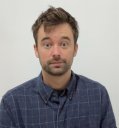
 William T Redman
· 5 previous affiliations
- AIMdyn Inc.Since 2021
- Researcher · Since 2021
- Researcher · Since 2024
- Johns Hopkins UniversityCurrent
- Current
- PhD student · 2018–2023
- New York University2014–2018
- Undergrad student · 2014–2018
Research Overview
William T Redman focuses on the intersection of dynamical systems theory and machine learning, specifically applying Koopman operator theory to understand and optimize neural network training. His work bridges theoretical physics and deep learning to analyze sparse subnetworks and non-stationary dynamics. Recently, his research has expanded to explore the neural computation underlying spatial navigation and multi-agent interaction.
Research Trajectory
Redman’s early work established foundational connections between data-driven dynamical systems and deep learning optimization. In 2020, he introduced Optimizing Neural Networks via Koopman Operator Theory, demonstrating that this linear mathematical framework could accurately predict the evolution of weights and biases in feedforward networks. By leveraging these predictions, the work showed how to accelerate training in non-convex optimization landscapes, contributing directly to the research direction of Neural Networks as Controlled Dynamical Systems.
In 2022, his focus expanded to the theoretical underpinnings of neural network sparsity and pruning. He addressed the mechanics of magnitude pruning in An Operator Theoretic View On Pruning Deep Neural Networks, advancing the area of Provable Guarantees for Neural Network Pruning and the broader field of Linear Mode Connectivity in Sparse Neural Networks. Building on this effort to explain why sparse subnetworks succeed, he provided a formal bridge to statistical physics in Universality of Winning Tickets: A Renormalization Group Perspective. By modeling pruning as a renormalization group process, this work offered a principled way to predict when sparse networks transfer across tasks, a key problem in the area of Sparse Subnetworks and the Lottery Ticket Hypothesis.
Concurrently, Redman continued to refine the mathematical tools used to analyze complex systems. He established theoretical equivalencies between different high-dimensional data decomposition techniques in On Koopman mode decomposition and tensor component analysis. He also applied these spectral properties to the classification of iterative algorithms, framing them as discrete-time dynamical systems in Algorithmic (Semi-)Conjugacy via Koopman Operator Theory.
Returning to neural network optimization in 2023, Redman sought to formally identify when different training configurations yield equivalent trajectories. This inquiry led to On Equivalent Optimization of Machine Learning Methods and culminated in the 2024 paper Identifying Equivalent Training Dynamics. By comparing the spectral signatures of training trajectories, this framework can distinguish between fundamentally different learning regimes—such as delayed generalization or "grokking"—even when standard loss curves appear identical. Together, these papers significantly advanced the research direction of Spectral Dynamics of Neural Network Training. In parallel, he addressed the limitations of modeling non-stationary systems in Koopman Learning with Episodic Memory, developing an algorithm that stores and retrieves spectral fingerprints to recognize repeating dynamical patterns in evolving physical systems.
By 2024, Redman’s research broadened to include computational neuroscience, specifically the mechanisms of spatial navigation. With collaborators, he investigated how the brain's grid cells adapt to environmental rewards in Global Distortions from Local Rewards: Neural Coding Strategies in Path-Integrating Neural Systems. The study revealed that while recurrent neural networks distort their geometric activity near rewards, they preserve their underlying topological structure to maintain a stable navigation map. He further explored spatial representations in multi-agent contexts in Not so griddy: Internal representations of RNNs path integrating more than one agent, contributing to the area of Egocentric Representations for Generalizable Spatial Learning.
Most recently, in 2025, he returned to the mechanics of network sparsity with How Iterative Magnitude Pruning Discovers Local Receptive Fields in Fully Connected Neural Networks, demonstrating how pruning algorithms iteratively amplify non-Gaussian statistics to form localized features essential for image processing.
Current Directions
The most recent papers in the evidence highlight two primary ongoing research themes. First, Redman continues to investigate the internal mechanics of deep neural networks, particularly how sparsity and pruning algorithms drive the emergence of structured, localized features during training. Second, he is actively exploring spatial navigation and multi-agent representations in recurrent neural networks. This work bridges computational neuroscience and machine learning, focusing on how neural systems integrate paths, maintain stable topological maps in the face of local distortions, and encode the dynamics of multiple interacting agents.
Profile updated
Loading new papers…
Other researchers whose papers cluster into the same research directions — a proxy for overlapping technical interests and shared intellectual neighborhoods.
See something wrong? Report a mistake