

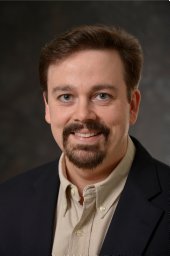
 William M. Campbell
· 7 previous affiliations
- Capital One (United States)Since 2025
- Sr. Distinguished Applied Researcher · Since 2025
- Amazon (United States)2017–2025
- Sr Applied Science Manager · 2022–2025
- Applied Science Manager · 2019–2022
- Senior Scientist Alexa Machine Learning · 2017–2019
- MIT Lincoln Laboratory2002–2017
- Senior Staff · 2011–2017
- Technical Staff · 2002–2011
- Researcher · 2002–2011
- Motorola (United States)1995–2002
- Principal Staff Engineer · 1995–2002
- Cornell University1990–1995
- PhD, Applied Mathematics · 1990–1995
- South Dakota School of Mines and Technology1985–1990
- BS, Math, Computer Science, Electrical Engineering · 1985–1990
Research Overview
William M. Campbell focuses on speech processing, speaker verification, and efficient machine learning. His early trajectory emphasized robust, language-independent speaker recognition systems and methods for mitigating acoustic domain shifts. More recently, his work has expanded to address context-aware code-switching in speech recognition and competence-aware knowledge distillation for reasoning models.
Research Trajectory
In the mid-2000s, Campbell’s research centered on advancing language and speaker recognition systems, particularly in the context of large-scale evaluations. He introduced methods for fusing core cepstral and phonotactic recognizers in Advanced Language Recognition using Cepstra and Phonotactics: MITLL System Performance on the NIST 2005 Language Recognition Evaluation. This work improved system robustness to unseen languages by utilizing SVM-based language models derived from lattice phonotactics. Building on this fusion approach, he subsequently addressed the computational bottlenecks associated with running multiple high-level systems independently. In The MIT-LL/IBM 2006 Speaker Recognition System: High-Performance Reduced-Complexity Recognition, he detailed a reduced-complexity speaker recognition architecture that maintained high performance while significantly lowering computational demands.
By 2011, his focus shifted toward mitigating environmental and channel variations in speaker recognition. A key challenge in the field was operating in the low false-alarm regime, which he addressed in Towards reduced false-alarms using cohorts by developing adaptive score normalization techniques and methods that penalize trials lacking nearest-neighbor relationships within a diverse impostor set. Concurrently, he contributed to the development of channel-independent architectures. In A channel-blind system for speaker verification, he and his collaborators proposed a "blind" system based on the total variability framework, allowing the model to process both telephone and microphone data without prior conditioning on the channel type. This emphasis on robustness and scalability was further consolidated in The MIT LL 2010 speaker recognition evaluation system: Scalable language-independent speaker recognition, which detailed a language-independent speaker recognition system designed to handle variational nuisances across different recording environments using inner product-based and cepstral systems.
This trajectory of building resilient audio models continued into the late 2010s, expanding into complex domain shifts. He participated in the development of The MIT-LL, JHU and LRDE NIST 2016 Speaker Recognition Evaluation System, which tackled challenges in the research direction of Cross-Lingual Domain Mismatch in Speaker Verification. This collaborative effort also contributed to the broader area of Robust Audio Modeling Under Acoustic Domain Shift and explored techniques within the area of Domain Adaptation under Extreme Target Data Scarcity, alongside continued advancements in the area of Adaptive Score Normalization for Biometric Verification.
In the 2020s, his research expanded into end-to-end speech recognition and efficient model training paradigms. He led work on handling multilingual utterances in Towards Context-Aware End-to-End Code-Switching Speech Recognition, proposing a Hierarchical Attention-based Recurrent Decoder (HARD) to build context-aware systems capable of processing code-switched speech at both the character and sub-sequence levels. Most recently, his focus has broadened to include the optimization of reasoning models. In SEAD: Competence-Aware On-Policy Distillation via Entropy-Guided Supervision, he guided the development of a framework that improves the training of small models by filtering redundant tokens based on teacher feedback. This research advances the direction of Adaptive Data Selection for Efficient Knowledge Distillation and contributes to the area of Dynamic Difficulty Adaptation in Curriculum Learning by scheduling problem difficulty according to the student model's competence.
Current Directions
The most recent work in the evidence indicates a shift toward optimizing the training and efficiency of machine learning models, particularly in the context of reasoning and knowledge transfer. Current research investigates how to effectively distill capabilities from large teacher models into smaller student models by dynamically assessing the student's competence. This involves exploring entropy-guided supervision to filter out unnecessary computational steps and applying curriculum learning principles to adaptively schedule problem difficulty during training. Additionally, recent themes highlight an ongoing interest in complex, context-aware sequence modeling, such as handling code-switching in end-to-end speech recognition architectures.
Profile updated
Loading new papers…
Other researchers whose papers cluster into the same research directions — a proxy for overlapping technical interests and shared intellectual neighborhoods.
See something wrong? Report a mistake