

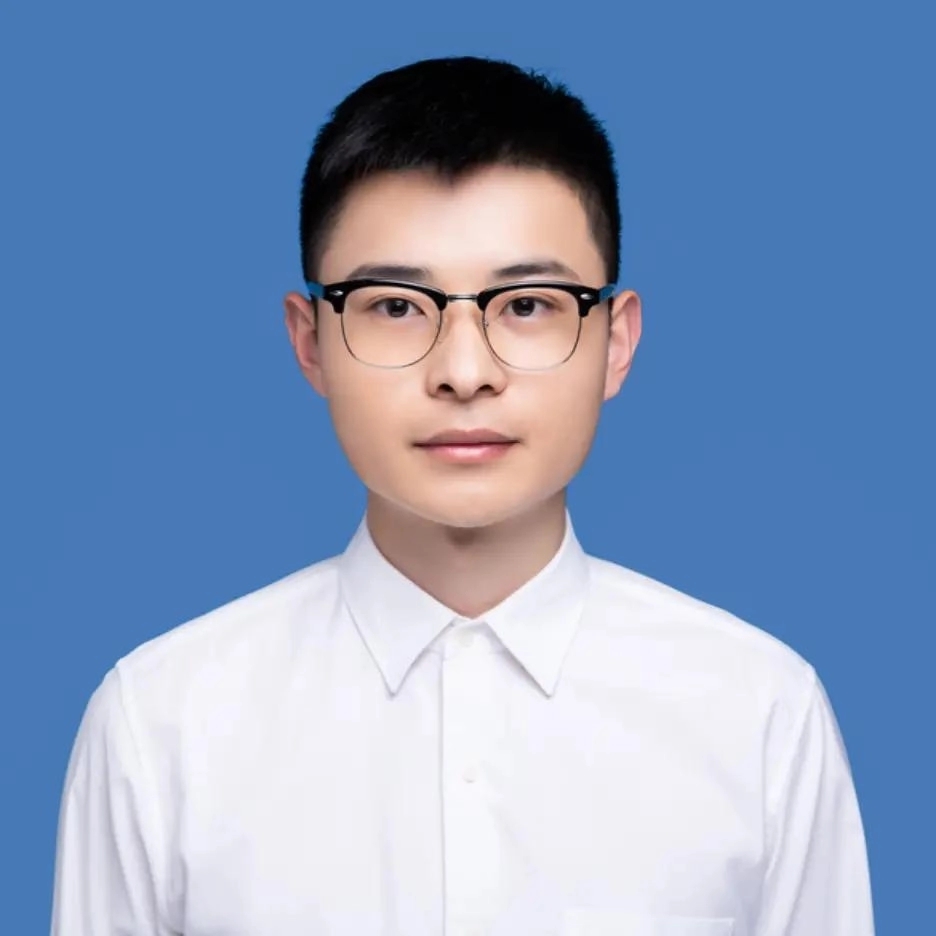
 Wenyu Jiang
· 3 previous affiliations
- Nanjing UniversitySince 2020
- PhD student · Since 2020
- Current
- Intern · 2023–2024
- Southeast University2016–2020
- Undergrad student · 2016–2020
Research Overview
Wenyu Jiang focuses on data-centric artificial intelligence, out-of-distribution detection, and dataset curation for robust machine learning. His early work addressed label noise and outlier sampling to improve model reliability under distribution shifts. More recently, his research investigates data pruning strategies and the underlying mechanisms of scaling laws to optimize the training of large language and multi-modal models.
Research Trajectory
Jiang's research trajectory began with investigations into the vulnerabilities of deep neural networks when trained on imperfect data. In 2021, he contributed to Two Wrongs Don't Make a Right: Combating Confirmation Bias in Learning with Label Noise, which examined how pseudo-labeling in two-stage training pipelines often fails to correct non-random label corruption, leading to error accumulation. This focus on model reliability naturally extended into out-of-distribution (OOD) detection. With collaborators, he developed CESED: Exploiting Hyperspherical Predefined Evenly-Distributed Class Centroids for OOD Detection (2023), exploring geometric constraints to better separate known classes from unknown inputs.
Building on these foundations, Jiang introduced more robust OOD training strategies. In DOS: Diverse Outlier Sampling for Out-of-Distribution Detection (2024), he presented a method that leverages semantically diverse and difficult-to-classify outliers during training. This approach tightens the model's decision boundary, significantly reducing false positive rates and advancing the research direction of Out-of-Distribution Detection Without Massive Outlier Exposure. During the same period, he investigated how data quality impacts large language models. In On the Noise Robustness of In-Context Learning for Text Generation (2024), Jiang and his co-authors demonstrated that text generation tasks are highly sensitive to low-quality demonstrations. They proposed Local Perplexity Ranking, a training-free method to filter noisy examples by comparing their perplexity against semantic neighbors. This work contributed to the broader areas of Semantic Example Retrieval for In-Context Learning and Resolving Ambiguity Between Hard Samples and Label Noise.
Expanding his focus to graph-structured data, Jiang participated in Similarity-Navigated Conformal Prediction for Graph Neural Networks (2024). This research addressed the critical need for reliable uncertainty estimates in Graph Neural Networks (GNNs) to make them safer for high-stakes applications, contributing to the areas of Scaling Beyond the Nearest Neighbor Search Bottleneck and Overcoming the Homophily Assumption in Graph Neural Networks.
As the computational demands of fine-tuning massive pre-trained models grew, Jiang's work shifted toward efficient dataset curation. He spearheaded Exploring Learning Complexity for Efficient Downstream Dataset Pruning (2025), introducing Distorting-based Learning Complexity (DLC). This training-free method evaluates sample difficulty using masked versions of a pre-trained model. Combined with a randomized sampling strategy, it enables highly efficient dataset pruning that accelerates fine-tuning while maintaining strong performance across vision and language tasks. Concurrently, he continued to refine OOD detection methodologies in MuSIA: Exploiting multi-source information fusion with abnormal activations for out-of-distribution detection (2025).
Jiang has also explored robustness in complex, multi-modal environments. He co-authored Test-Time Selective Adaptation for Uni-Modal Distribution Shift in Multi-Modal Data (2025), which addressed scenarios where only one data source in a multi-modal system (such as a camera) is corrupted while others remain clean. The proposed framework uses a routing mechanism to apply lightweight adapters selectively, preventing the negative transfer common in standard adaptation methods.
Most recently, Jiang's research has expanded into privacy auditing and retrieval optimization. In How does Bayesian Sampling help Membership Inference Attacks? (2026), he collaborated on a method that uses the Laplace approximation to sample from a single reference model's posterior. This approach captures per-example hardness to improve the efficiency and power of Bayesian Membership Inference Attacks without requiring dozens of shadow models. Additionally, he contributed to GRAPE: Let GRPO Supervise Query Rewriting by Ranking for Retrieval (2026), a framework that leverages a ranking-based reinforcement learning approach to rewrite search queries. This aligns queries with frozen image-retrieval models to improve performance without the need for costly vector re-indexing.
Current Directions
The most recent papers in the evidence indicate a focus on optimizing the efficiency and security of large-scale machine learning systems. Recent work investigates dataset pruning techniques that drastically reduce the computational overhead of fine-tuning massive pre-trained models by identifying and sampling only the most informative training examples. Additionally, Jiang is exploring robustness in multi-modal architectures, specifically addressing test-time adaptation strategies for localized, uni-modal distribution shifts. His latest collaborations also extend into privacy auditing—enhancing the efficiency of membership inference attacks through Bayesian sampling—and leveraging large language models to optimize query rewriting for cross-modal retrieval systems.
Profile updated
Loading new papers…
Other researchers whose papers cluster into the same research directions — a proxy for overlapping technical interests and shared intellectual neighborhoods.
See something wrong? Report a mistake