

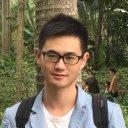
 Wenxiang Jiao
· 4 previous affiliations
- Current
- Researcher · 2025–2026
- Tencent (China)2021–2025
- Researcher · 2021–2025
- Chinese University of Hong Kong2017–2021
- PhD student · 2017–2021
- Nanjing University2011–2017
- MS student · 2015–2017
- Undergrad student · 2011–2015
Research Overview
Wenxiang Jiao focuses on large language model reasoning, autonomous agents, and AI safety alignment. His early work explored multimodal emotion recognition and neural machine translation for low-resource languages, addressing critical data scarcity and model robustness challenges. Currently, he investigates test-time scaling and reinforcement learning techniques to optimize the efficiency and reliability of complex reasoning models.
Research Trajectory
Wenxiang Jiao’s early research focused on conversational emotion recognition and sequential modeling. In 2019, he introduced HiGRU: Hierarchical Gated Recurrent Units for Utterance-Level Emotion Recognition, an architecture designed to better capture the contextual flow of dialogue. This work contributed to the broader area of Hierarchical Context Aggregation for Sequential Modeling and advanced the research direction of Addressing Class Imbalance with Weighted Loss Functions. It also laid foundational groundwork for the area of Multimodal Emotion Recognition for Empathetic Large Language Models. Building on these sequential architectures, he subsequently developed Real-Time Emotion Recognition via Attention Gated Hierarchical Memory Network, which utilized bidirectional GRUs and an attention mechanism to summarize conversational memory, significantly improving the accuracy of real-time emotion detection.
Transitioning into the domain of natural language generation, Jiao dedicated several years to advancing Neural Machine Translation (NMT), particularly focusing on data utilization, model pretraining, and low-resource languages. He addressed the challenges of noisy training data in Self-Training Sampling with Monolingual Data Uncertainty for Neural Machine Translation and proposed methods to maximize the value of large-scale datasets in Exploiting Inactive Examples for Natural Language Generation With Data Rejuvenation. His investigations into model architectures revealed critical insights into sequence-to-sequence pretraining dynamics; in Understanding and Improving Sequence-to-Sequence Pretraining for Neural Machine Translation, he demonstrated that while pretrained decoders enhance translation diversity, they can also introduce objective discrepancies that cause hallucinations and degrade beam search performance.
To further improve translation reliability, he tackled the "off-target" generation problem in Understanding and Mitigating the Uncertainty in Zero-Shot Translation. By identifying extrinsic data uncertainty and intrinsic model over-estimation as root causes, he implemented lightweight denoising and unlikelihood training techniques that drastically reduced off-target translation ratios. Applying these robust methodologies to the research direction of Neural Machine Translation for Low-Resource Languages, he contributed to the development of Tencent's Multilingual Machine Translation System for WMT22 Large-Scale African Languages. He also addressed severe data scarcity in specialized domains, such as sign language, by utilizing large pre-trained models to hallucinate in-domain text for synthetic data augmentation in Scaling Back-Translation with Domain Text Generation for Sign Language Gloss Translation.
With the advent of highly capable Large Language Models (LLMs), Jiao’s focus shifted toward evaluating, fine-tuning, and securing these foundational models. He conducted early comparative evaluations in Is ChatGPT A Good Translator? A Preliminary Study, assessing the model's performance across high- and low-resource languages and contributing to the area of Understanding Prompt Sensitivity in Language Models. To bridge the gap between open-source LLMs and specialized translation tasks, he introduced ParroT: Translating during Chat using Large Language Models tuned with Human Translation and Feedback, a framework that reformulates human translation data into instruction-following formats to boost translation quality during chat interactions.
Beyond translation, Jiao has addressed the structural efficiency and safety alignment of LLMs. In DRPruning: Efficient Large Language Model Pruning through Distributionally Robust Optimization, he developed a pruning methodology that dynamically rebalances training data to prevent unbalanced capability degradation in specialized domains like mathematics or coding. Concurrently, he investigated critical vulnerabilities in AI safety filters. With collaborators, he explored "mismatched generalization" in GPT-4 Is Too Smart To Be Safe: Stealthy Chat with LLMs via Cipher, demonstrating that while advanced models successfully refuse harmful prompts in natural language, their sophisticated reasoning allows them to bypass these same safety rules when inputs are presented as ciphers.
Most recently, Jiao’s research has centered on the cognitive dynamics and computational efficiency of Large Reasoning Models (LRMs), contributing heavily to the research direction of Difficulty-Adaptive Test-Time Scaling for Reasoning Models. A major challenge in this domain is "overthinking," where models generate thousands of redundant tokens after already reaching a correct conclusion. To mitigate this, he participated in the development of REA-RL: Reflection-Aware Online Reinforcement Learning for Efficient Reasoning. Building on this objective, he also co-developed DeepCompress: A Dual Reward Strategy for Dynamically Exploring and Compressing Reasoning Chains, a reinforcement learning framework that classifies problem difficulty during training to reward brevity on simple tasks while encouraging sustained exploration on complex ones.
Current Directions
Recent work investigates the efficiency, agentic behavior, and cognitive dynamics of Large Reasoning Models (LRMs). A primary focus is optimizing test-time compute and mitigating the tendency of advanced models to generate redundant reasoning tokens during problem-solving. By employing reinforcement learning frameworks and difficulty-adaptive scaling, this research aims to dynamically balance exploration and compression. The goal is to produce reasoning agents that scale their computational effort to match task complexity, ensuring high accuracy on difficult, multi-step problems while maintaining strict token efficiency on simpler tasks. Additionally, ongoing efforts explore the broader alignment of LLMs, ensuring that as models become more capable in their reasoning and tool-use, they remain reliable, safe, and robust against adversarial inputs.
Profile updated
Loading new papers…
Other researchers whose papers cluster into the same research directions — a proxy for overlapping technical interests and shared intellectual neighborhoods.
See something wrong? Report a mistake