

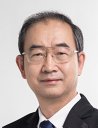
 Wenmin Wang
· 4 previous affiliations
- Full Professor · Since 2019
- Peking University2009–2019
- Full Professor · 2009–2019
- Professor · 2010–2018
- Guangzhou Center of National Engineering Laboratory for Video Technology2010–2012
- Vice Director · 2010–2012
- Harbin Institute of Technology1986–2000
- Associate Professor · 1989–2000
- PhD student · 1986–1989
Research Overview
Wenmin Wang focuses on computer vision, video processing, and deep learning architectures. His research spans from early work in image upsampling and video coding to the development of specialized neural networks for action recognition, video prediction, and image captioning. Recently, his work has concentrated on advanced attention mechanisms and motion-centric models for visual understanding.
Research Trajectory
Wang's early research addressed foundational problems in image processing and video coding. In 2015, he participated in projects on Image classification using RBM to encode local descriptors with group sparse learning and High Resolution Local Structure-Constrained Image Upsampling. Concurrently, he directed research on video compression, proposing a method for Context-adaptive fast motion estimation of HEVC. His focus on efficient feature extraction extended to autonomous driving applications, where his lab designed A Novel Shadow-Free Feature Extractor for Real-Time Road Detection in 2016 to improve accuracy and robustness in severe shadow conditions.
Around 2016, Wang's work increasingly centered on deep learning architectures for spatiotemporal modeling, particularly for action recognition. With collaborators, he introduced the architecture detailed in Deep Alternative Neural Network: Exploring Contexts as Early as Possible for Action Recognition. This approach interleaved volumetric convolutional layers with recurrent layers to capture contextual evolutions early in the network, rather than relying solely on high-order encodings. This design proved versatile; it was later scaled up in Multiscale Deep Alternative Neural Network for Large-Scale Video Classification and even adapted for move generation in computer Go, offering an alternative to standard search methods by mimicking human expert play in Beyond Monte Carlo Tree Search: Playing Go with Deep Alternative Neural Network and Long-Term Evaluation. To further optimize action recognition, he co-developed the framework presented in Tube ConvNets: Better exploiting motion for action recognition, which processed specific action tubes—fractions of spatiotemporal volumes generated by object detection techniques—rather than full video frames to reduce computational overhead and eliminate distractions from irrelevant objects.
During this period, Wang also contributed to diverse visual understanding tasks. He collaborated on Mask-streaming CNN for pedestrian detection and explored multimodal alignment in Cross-media Retrieval by Learning Rich Semantic Embeddings of Multimedia, which utilized a multi-sensory fusion network to combine visual and descriptive senses, mapping text into the same semantic space as images via a topic model.
By 2017, Wang began addressing the challenging task of video prediction. Recognizing that different objects deform and move independently, he co-authored Learning Object-Centric Transformation for Video Prediction, which dynamically learned local motion transformations for key regions. This approach was later refined in Predicting Diverse Future Frames With Local Transformation-Guided Masking, focusing on regions of interest to mitigate the compounding errors typical of pixel-level recursive prediction by learning evolutions at the transformation level.
In 2019 and 2020, Wang's research heavily emphasized the design of advanced attention mechanisms for both image captioning and video analysis. For image captioning, he co-developed the approach in Adaptively Aligned Image Captioning via Adaptive Attention Time, allowing the model to dynamically determine how many attention steps to take per decoding step, overcoming the limitations of strict one-to-one mapping between image regions and words. He also contributed to Attention on Attention for Image Captioning, which introduced a module to evaluate the relevance between attention results and queries by generating an information vector and an attention gate, preventing the decoder from being misled by irrelevant features. This work aligns with the broader research direction of sparse attention for robust visual representation. In the video domain, he co-authored Fast and Accurate Action Detection in Videos With Motion-Centric Attention Model, which imitated human saccade and fixation procedures to dynamically focus computation on informative spatiotemporal volumes.
Current Directions
Based on the most recent papers in the evidence, Wang's work investigates dynamic attention mechanisms and motion-centric modeling for complex visual tasks. His recent research addresses the inefficiencies of processing redundant visual data by developing models that selectively focus on regions of interest, such as local transformation-guided masking for video prediction and motion-centric attention for action detection. Additionally, his contributions to image captioning highlight an ongoing interest in adaptive alignment and self-evaluating attention modules that improve the robustness of sequence-to-sequence visual understanding.
Profile updated
| Title | Venue | Year |
|---|---|---|
| DHCF-Net: Dual heterodimensional context fusion network for medical image segmentation | Expert Systems with Applications | 2026 |
| FMRFusion: Frequency-Aware Multi-View Representation Learning for Heterogeneous Image Fusion | arXiv | 2026 |
| Insert Anyone: High-fidelity full-body photo insertion via dual-branch adapters | Expert Systems with Applications | 2026 |
| Distilled large language model-driven dynamic sparse expert activation mechanism | Applied Soft Computing | 2025 |
| Fast and Accurate Action Detection in Videos With Motion-Centric Attention Model | IEEE TCSVT | 2020 |
| Predicting Diverse Future Frames With Local Transformation-Guided Masking | IEEE TCSVT | 2019 |
| Image Captioning with Two Cascaded Agents | ICASSP | 2019 |
| Adaptively Aligned Image Captioning via Adaptive Attention TimeGitHub resource | NeurIPS | 2019 |
| Brain-Inspired Inference on Missing Video Sequence | arXiv | 2019 |
| Attention on Attention for Image Captioning | arXiv | 2019 |
| Paper | Venue | Year |
|---|---|---|
| Adaptively Aligned Image Captioning via Adaptive Attention TimeGitHubhusthuaan/ | NeurIPS | 2019 |
Loading new papers…
Other researchers whose papers cluster into the same research directions — a proxy for overlapping technical interests and shared intellectual neighborhoods.
See something wrong? Report a mistake