

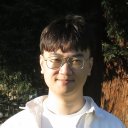
 Wenlong Huang
· 4 previous affiliations
- Stanford UniversitySince 2022
- PhD student · Since 2022
- Intern · 2024
- Intern · 2022
- Undergrad student · 2018–2021
Research Overview
Wenlong Huang focuses on robot learning, spatial intelligence, and the integration of foundation models for embodied control. His early work explored geometric abstraction and multi-task learning to improve structural generalization across diverse environments and embodiments. Currently, his research emphasizes building structured 3D world models and leveraging large-scale vision-language models to enable open-world robotic manipulation.
Research Trajectory
Huang's early research established a foundation in 3D perception and reinforcement learning, with a focus on generalizing control policies across diverse objects and agent morphologies. His initial work included 3D Volumetric Modeling with Introspective Neural Networks (2019), which proposed a unified framework allowing a single 3D convolutional neural network to function as both a classifier and a generative model for volumetric data. Building on this interest in robust representations, he explored morphology-conditioned policies in One Policy to Control Them All: Shared Modular Policies for Agent-Agnostic Control (2020), investigating whether a single global reinforcement learning policy could generalize across agents with different physical structures.
This focus on structural generalization culminated in Generalization in Dexterous Manipulation via Geometry-Aware Multi-Task Learning (2021). By combining multi-task learning with point cloud representations, this research demonstrated a single policy capable of zero-shot generalization across over 100 geometrically diverse objects. This work advanced the research directions of Geometric Abstraction for Generalizable Robotic Manipulation and Decoupling Representation Learning from Reinforcement Learning.
In 2022, Huang's focus shifted significantly toward the integration of large language models (LLMs) into robotic control pipelines. He introduced Language Models as Zero-Shot Planners: Extracting Actionable Knowledge for Embodied Agents, a translation framework that repurposed the latent world knowledge within LLMs to generate valid, executable actions for household tasks without additional training. This foundational work contributed to the broader areas of Semantic Grounding for Robotic Skill Libraries and Dynamic Retrieval for In-Context Learning.
Expanding on this paradigm, he developed Code as Policies: Language Model Programs for Embodied Control (2022). This approach prompted LLMs to write executable Python scripts that call perception and control APIs, effectively establishing the research direction of Executable Code as a Universal Interface for Embodied AI. Concurrently, he participated in Inner Monologue: Embodied Reasoning through Planning with Language Models, which incorporated closed-loop environmental feedback into LLM-driven planning to allow robots to react to changing conditions.
To address the physical limitations of pure text generation, Huang co-developed Grounded Decoding: Guiding Text Generation with Grounded Models for Embodied Agents (2023). This method constrained the token-by-token generation of an LLM using probabilities from grounded models aware of robot physics and vision, ensuring that generated plans were both semantically logical and physically viable. During this period, he also contributed to the massive-scale multimodal model PaLM-E: An Embodied Multimodal Language Model (2023), which integrated real-world sensor data directly into the language model architecture to facilitate complex robotic planning and visual question answering.
Recognizing that pre-defined motion primitives remained a bottleneck for open-world manipulation, Huang began focusing on synthesizing dense, 6-DoF end-effector trajectories using foundation models. He introduced VoxPoser: Composable 3D Value Maps for Robotic Manipulation with Language Models (2023), which leveraged LLMs to infer affordances and constraints from free-form instructions, advancing the area of Volumetric Voxel Grids for 3D Spatial Reasoning.
This spatial and geometric approach evolved further in 2024. He developed ReKep: Spatio-Temporal Reasoning of Relational Keypoint Constraints for Robotic Manipulation, introducing a visually-grounded representation that expresses manipulation tasks as Python functions mapping 3D environmental keypoints to numerical costs. Alongside this, he co-authored UAD: Unsupervised Affordance Distillation for Generalization in Robotic Manipulation, a method for automatically annotating large-scale datasets with detailed visual affordances by distilling knowledge from vision and vision-language models without manual labeling.
Current Directions
The most recent papers in the evidence indicate a focus on evaluating embodied cognition and bridging generative video models with physical robot control. In ENACT: Evaluating Embodied Cognition with World Modeling of Egocentric Interaction (2025), Huang and collaborators introduced a benchmark to test whether vision-language models truly understand the physical consequences of actions, revealing significant limitations in long-term memory and human-centric biases. Concurrently, his work on Dream2Flow: Bridging Video Generation and Open-World Manipulation with 3D Object Flow (2025) investigates using off-the-shelf video generation models to imagine task execution. By extracting 3D object flow from these generated videos, this framework guides robots in zero-shot manipulation of rigid, articulated, and deformable objects, effectively closing the embodiment gap between internet-scale video generation and physical control.
Profile updated
Loading new papers…
Other researchers whose papers cluster into the same research directions — a proxy for overlapping technical interests and shared intellectual neighborhoods.
See something wrong? Report a mistake