

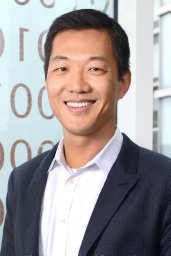
 Wenke Lee
· 3 previous affiliations
- Georgia Institute of TechnologySince 2001
- Co-Executive Director of the Institute for Information Security & Privacy (IISP) at Georgia Tech · Since 2015
- Full Professor · Since 2001
- Columbia University1994–1999
- PhD student · 1994–1999
- Intergraph Corporation1990–1994
- Senior Software Analyst · 1990–1994
Research Overview
Wenke Lee focuses on behavioral anomaly detection, software supply chain security, and adversarial machine learning. His early work established foundational data mining approaches for intrusion detection and network traffic analysis. More recently, his research investigates the vulnerabilities of machine learning models, smart contract security, and the reasoning capabilities of large language models.
Research Trajectory
In the late 1990s, Lee introduced foundational frameworks that applied data mining techniques to network security. This early research, including Data Mining Approaches for Intrusion Detection and A Data Mining Framework for Building Intrusion Detection Models, demonstrated how auditing programs could extract features from network connections to learn rules for both misuse and anomaly detection, moving the field away from manually encoded expert systems.
Building on these anomaly detection principles, his focus expanded to broader network and system-level threats. He contributed to the research direction of Detecting Zero Day Exploits Beyond Historical Signatures with BotMiner: Clustering Analysis of Network Traffic for Protocol- and Structure-Independent Botnet Detection, which clustered network traffic to identify botnets regardless of their specific command-and-control structures. His investigations into system vulnerabilities also encompassed mobile platforms, as seen in Cloak and Dagger: From Two Permissions to Complete Control of the UI Feedback Loop, which exposed severe risks in Android's permission models. Concurrently, he advanced the area of Source to Sink Data Flow Analysis through RAIN: Refinable Attack Investigation with On-demand Inter-Process Information Flow Tracking, developing mechanisms for detailed, system-level attack forensics.
As software ecosystems grew more complex, his research addressed emerging vulnerabilities in package managers and decentralized platforms. In the broader area of The Mechanics of Vulnerability Remediation Latency, his group developed the MALOSS framework in Measuring and Preventing Supply Chain Attacks on Package Managers, a multi-stage vetting pipeline that identified hundreds of malicious packages across registries like Npm and PyPI. This work also touched upon the related area of transitive vulnerability propagation in software ecosystems. He extended forensic capabilities to modern browsers with WEBRR: A Forensic System for Replaying and Investigating Web-Based Attacks in The Modern Web, contributing to the direction of deterministic execution and verification of concurrent systems by partitioning JavaScript execution to enable the deterministic replay of sophisticated web attacks. In the blockchain domain, he addressed the problem space of the blockchain observability gap with BACKRUNNER: Mitigating Smart Contract Attacks in the Real World, introducing preemptive hijacking techniques to rescue funds from vulnerable smart contracts.
A significant portion of his recent trajectory investigates the security and robustness of machine learning models. Exploring the scaling paradox of adversarial robustness, he examined adversarial vulnerabilities in anomaly detection in Non-Robust Features are Not Always Useful in One-Class Classification, revealing that lightweight one-class models learn non-robust features as an unwanted byproduct rather than a predictive shortcut. He further analyzed geometric properties of classification to mitigate open space risks in Geometric Implications of Classification on Reducing Open Space Risk, advancing the field of open set recognition for the unpredictable world. In the physical domain, his work on the direction of View-Consistent Adversarial Learning for 3D Representations includes UNDREAM: Bridging Differentiable Rendering and Photorealistic Simulation for End-to-end Adversarial Attacks, which connects 3D simulators with differentiable renderers to optimize adversarial textures under varying environmental conditions, contributing to the area of bridging the sim-to-real gap in physical adversarial attacks.
Most recently, his research has pivoted toward the reasoning mechanisms and training dynamics of large language models. He investigated the challenge of length generalization in transformer architectures in Can Transformers Reason Logically? A Study in SAT Solving, demonstrating how numerical precision limits in softmax attention hinder models from generalizing simulated DPLL backtracking to larger NP-complete problems. Addressing the issue of model collapse in recursive training loops, he proposed Iterative Model Merging in Superficial Self-Improved Reasoners Benefit from Model Merging to prevent LLMs from memorizing patterns at the expense of logical reasoning. He also participated in developing frameworks for efficient reasoning by mitigating LLM overthinking, such as the training-free SWIR approach detailed in SwiReasoning: Switch-Thinking in Latent and Explicit for Pareto-Superior Reasoning LLMs, which dynamically balances explicit and latent-space reasoning.
Current Directions
The most recent work in the evidence focuses heavily on the reasoning capabilities, efficiency, and robustness of large language models. This includes analyzing the theoretical limits of Transformer architectures when solving complex logical tasks, such as SAT problems, and identifying how attention mechanisms constrain length generalization. Additionally, current research explores methods to improve LLM self-training pipelines—specifically mitigating model collapse during recursive self-improvement through strategic model merging. Another active direction involves optimizing inference efficiency by allowing models to dynamically switch between explicit chain-of-thought generation and continuous latent-space reasoning, improving both accuracy and computational cost.
Profile updated
Loading new papers…
Other researchers whose papers cluster into the same research directions — a proxy for overlapping technical interests and shared intellectual neighborhoods.
See something wrong? Report a mistake