

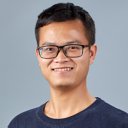
 Wenjie Xu
· 3 previous affiliations
- École Polytechnique Fédérale de LausanneSince 2021
- PhD student · Since 2021
- Chinese University of Hong Kong2018–2020
- MS student · 2018–2020
- Tsinghua University2014–2018
- Undergrad student · 2015–2018
- Undergrad student · 2014–2018
1 other author named Wenjie Xu: Wenjie Xu (Wuhan University · 5 papers)
Research Overview
Wenjie Xu focuses on data-driven control and optimization, with a particular emphasis on Bayesian optimization (BO), multi-agent systems, and the integration of large language models (LLMs) into cyber-physical-human systems. Their work addresses the challenge of optimizing complex, black-box systems where safety constraints are unmodeled or expensive to evaluate, applying these methodologies to sustainable infrastructure such as building energy management.
Research Trajectory
The early phase of Xu’s research, beginning around 2021, centered on the development of robust frameworks for tuning closed-loop control systems. This work was motivated by the limitations of traditional "Safe BO" methods, which often exhibit overly cautious exploration that hinders the discovery of global optima. In VABO: Violation-Aware Bayesian Optimization for Closed-Loop Control Performance Optimization with Unmodeled Constraints, Xu introduced a framework that permits "budgeted" constraint violations. By allowing for calculated risks during the exploration process, this approach facilitates faster convergence to optimal performance without compromising the long-term integrity of physical hardware. This period established a core theme in Xu's work: Optimistic Exploration under Pessimistic Safety Constraints, balancing the need for discovery with the requirements of operational safety.
In 2022, Xu extended this line of inquiry toward providing stronger theoretical guarantees for black-box optimization. The introduction of CONFIG: Constrained Efficient Global Optimization for Closed-Loop Control System Optimization with Unmodeled Constraints addressed the gap between empirical performance and provable optimality. CONFIG provides a global optimality guarantee for controller tuning, a significant advancement for industrial applications where local optima can lead to inefficient resource utilization. This work also touched upon the Certifiable Infeasibility Detection for Robust Optimization, ensuring that optimization routines can definitively identify when no feasible solution exists within the given constraints.
As the work progressed into 2023 and 2024, Xu shifted focus toward scaling these optimization techniques to distributed and multi-agent environments. A primary contribution during this period was the development of Multi-Agent Bayesian Optimization with Coupled Black-Box and Affine Constraints. This research introduced a distributed algorithm (DMABO) that enables multiple agents to collectively optimize a global objective while adhering to both shared black-box constraints and known affine constraints. By utilizing Probabilistic Surrogate Modeling for Black Box Optimization within a primal-dual framework, Xu demonstrated that multi-agent systems could achieve regret and violation bounds comparable to single-agent scenarios. This scaling is particularly relevant for decentralized systems like smart grids and wireless networks.
Concurrently, Xu began exploring the intersection of optimization and natural language processing. In Pre-trained Language Model with Prompts for Temporal Knowledge Graph Completion, Xu applied prompt-based learning to temporal knowledge graphs, addressing the challenge of reasoning across known timestamps to complete missing facts. This work signaled an expansion into "agentic AI," where structured knowledge and temporal reasoning are integrated into generative frameworks.
In 2024, Xu’s work returned to fundamental optimization theory while also addressing human-centric preferences. The paper Principled Preferential Bayesian Optimization introduced POP-BO, an algorithm designed for preference-based optimization. Unlike standard BO, which relies on direct numerical feedback, preferential BO operates on relative comparisons, which are often more accessible in human-in-the-loop systems. Xu provided the first rigorous theoretical guarantees for cumulative regret in this setting, leveraging a likelihood-ratio-based confidence set to ensure both speed and convergence.
Current Directions
Xu’s current research increasingly focuses on the practical deployment of these advanced optimization frameworks in sustainable cyber-physical systems, specifically building control. In Which price to pay? Auto-tuning building MPC controller for optimal economic cost, Xu participated in a study applying the CONFIG algorithm to auto-tune Model Predictive Control (MPC) hyperparameters. This application demonstrated that smart tuning of existing control strategies could reduce energy costs by over 25% while maintaining strict occupant comfort, highlighting the economic and environmental impact of data-driven optimization.
Further recent work explores the social dimensions of optimization and the role of LLMs in temporal reasoning. Xu has participated in the development of "Social Bayesian Optimization," which addresses consensus-building in collective decision-making by modeling the dynamics of noisy public votes versus accurate private feedback. Additionally, Xu’s involvement in the GETER framework—detailed in Towards Explainable Temporal Reasoning in Large Language Models: A Structure-Aware Generative Framework—seeks to bridge the gap between structured temporal data and natural language generation. This direction suggests a future focus on making complex optimization and reasoning processes more explainable and aligned with human collective goals.
Representative Work
The following papers represent key milestones in the development of Xu's research program, moving from single-agent controller tuning to distributed systems and preference-based optimization.
- VABO: Violation-Aware Bayesian Optimization for Closed-Loop Control Performance Optimization with Unmodeled Constraints (2021): Establishes the "violation-aware" paradigm for safe exploration in control systems.
- CONFIG: Constrained Efficient Global Optimization for Closed-Loop Control System Optimization with Unmodeled Constraints (2022): Provides a theoretically grounded algorithm for global black-box optimization in constrained environments.
- Pre-trained Language Model with Prompts for Temporal Knowledge Graph Completion (2023): Demonstrates the application of LLM prompting techniques to temporal reasoning and knowledge graph completion.
- Multi-Agent Bayesian Optimization with Coupled Black-Box and Affine Constraints (2024): Scales constrained BO to distributed multi-agent systems with rigorous regret and violation bounds.
- Principled Preferential Bayesian Optimization (2024): Introduces the first preferential BO algorithm with theoretical guarantees on convergence and regret.
- Which price to pay? Auto-tuning building MPC controller for optimal economic cost (2025): Validates the practical utility of constrained BO for reducing energy costs in large-scale building management systems.
Profile updated
Loading new papers…
Other researchers whose papers cluster into the same research directions — a proxy for overlapping technical interests and shared intellectual neighborhoods.
See something wrong? Report a mistake