

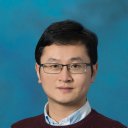
 Wenhao Zhang
· 5 previous affiliations
- Assistant Professor · Since 2021
- University of Chicago2020–2021
- Postdoc · 2020–2021
- University of Pittsburgh2018–2020
- Postdoc · 2018–2020
- Carnegie Mellon University2016–2017
- Postdoc · 2016–2017
- Postdoc · 2015–2016
4 other authors named Wenhao Zhang: Wenhao Zhang (Alibaba Group (China) · 8 papers), Wenhao Zhang (Shanghai Jiao Tong University · 5 papers), Wenhao Zhang (University of Virginia · 3 papers), Wenhao Zhang (0 papers)
Research Overview
Wenhao Zhang focuses on computational neuroscience, bridging normative theories and biologically plausible neural circuit models to understand how perception, cognition, and behavior emerge. His trajectory spans from early models of multisensory integration using continuous attractor dynamics to recent frameworks for Bayesian inference and spatial representation. Currently, he investigates how canonical cortical circuits implement complex computations like dynamic inference, working memory manipulation, and motor control.
Research Trajectory
Beginning in the early 2010s, Zhang investigated how the brain integrates information from multiple sensory cues to form optimal perceptual estimates. He proposed mechanisms for near-Bayesian optimal integration, demonstrating in Reciprocally Coupled Local Estimators Implement Bayesian Information Integration Distributively how reciprocally connected networks—modeling areas like the dorsal medial superior temporal and ventral intraparietal regions—can improve decoding accuracy through positive reciprocal interactions. He expanded on this architecture in "Congruent" and "Opposite" Neurons: Sisters for Multisensory Integration and Segregation, exploring the distinct computational roles of neurons that exhibit similar versus opposing preferred heading directions in response to visual and vestibular inputs. This early research established a strong foundation in the broader research area of Continuous Attractor Manifolds for Parametric State Tracking.
Moving into the 2020s, Zhang’s work increasingly focused on how recurrent neural circuits represent abstract mathematical structures and transformations. In Translation-equivariant Representation in Recurrent Networks with a Continuous Manifold of Attractors, he showed how continuous attractor networks can self-consistently generate stationary population responses that faithfully represent stimuli under translation group transformations. He also explored the temporal dynamics of these networks; in Firing rate adaptation affords place cell theta sweeps, phase precession, and procession, he demonstrated that firing rate adaptation within a continuous attractor network causes neural activity to oscillate around external inputs. This mechanism naturally accounts for the theta phase shifts observed in hippocampal place cells during locomotion, contributing significantly to the research direction of Adaptation Driven Dynamics in Continuous Attractor Neural Networks. Building on the theme of temporal dynamics, he subsequently developed A Recurrent Neural Circuit Mechanism of Temporal-scaling Equivariant Representation, which illustrated how a recurrent circuit can act as a flexible neural clock, scaling or even reversing the speed of generated sequences simply by modulating a control signal.
Concurrently, Zhang addressed the intersection of biological noise and dense connectivity in the cortex. In Sampling-based Bayesian inference in recurrent circuits of stochastic spiking neurons, he provided a theoretical bridge showing that stochastic, densely interconnected neurons allow cortical circuits to perform optimal sampling-based inference. This work demonstrated that recurrent connections store an internal model of the environment while Poisson-like noise drives the sampling process, advancing the research areas of Bayesian Inference through Stochastic Neural Sampling and Recurrent Synaptic Weights as Bayesian Priors.
In 2024 and 2025, Zhang applied these normative theories to higher-order cognitive functions, including navigation and working memory, often leveraging group theory. He framed goal-directed navigation as a mathematical search problem in The motion planning neural circuit in goal-directed navigation as Lie group operator search, providing a model for how biological circuits calculate necessary motor actions. Similarly, in On neural circuits of working memory sequence permutation: optimizing circuit architectures via Cayley graphs, he designed a biologically plausible circuit model that realizes working memory sequence permutations using guidance from permutation groups and Cayley graph representations.
His recent investigations have deeply analyzed the computational capacities of standard cortical wiring diagrams. In Natural gradient Bayesian sampling automatically emerges in canonical cortical circuits, Zhang showed that canonical cortical circuits are mathematically optimized to perform natural gradient Bayesian sampling, adaptively adjusting their search step size based on uncertainty. He unified these concepts in Canonical cortical circuits: A unified sampling machine for static and dynamic inference, detailing how modulating the sensitivity of specific inhibitory interneurons allows a single circuit to switch between sampling algorithms for both static and moving objects without synaptic rewiring.
Parallel to his work on cortical circuits, Zhang has continued to refine models of spatial representation. With collaborators, he proposed in Place Cells as Position Embeddings of Multi-Time Random Walk Transition Kernels for Path Planning that hippocampal place cells function as high-dimensional, non-negative embeddings derived from random walks, enabling multi-scale cognitive maps for path planning. This work touches upon themes related to the area of The Geometric Optimality of Hexagonal Spatial Representations. Extending this trajectory into 2026, he contributed a recurrent circuit model to explain how HVC circuits generate song sequences in the collaborative study Holistic motor control of zebra finch song syllable sequences. Furthermore, he introduced a comprehensive theoretical bridge between spatial mapping and navigation in From Representation to Action: A Unified Laplacian Framework for Spatial Representation and Path Planning, demonstrating that navigation can be treated as gradient ascent on a geometry-aware potential field, aligning with the broader field of Neural Representation Learning via Similarity Matching.
Current Directions
Zhang’s most recent work investigates the computational principles embedded within canonical cortical circuits and their role in complex spatial and motor tasks. A major current theme is the framing of the cortex as a unified sampling machine, where standard biological wiring naturally implements sophisticated algorithms like natural gradient Bayesian sampling. His recent papers address how these circuits dynamically adapt to uncertainty and switch between static and dynamic inference simply through the modulation of inhibitory interneurons. Additionally, Zhang is actively exploring the mathematical foundations of spatial representation and motor control, utilizing frameworks such as random walk transition kernels and Laplacian operators to explain how the brain constructs cognitive maps, plans paths, and executes holistic motor sequences.
Profile updated
Loading new papers…
Other researchers whose papers cluster into the same research directions — a proxy for overlapping technical interests and shared intellectual neighborhoods.
See something wrong? Report a mistake