

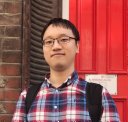
 Wenda Li
· 2 previous affiliations
- University of EdinburghSince 2023
- Lecturer · Since 2023
- University of Cambridge2013–2023
- Postdoc · 2017–2023
- PhD student · 2013–2019
2 other authors named Wenda Li: Wenda Li (Zhejiang University · 3 papers), Wenda Li (University of Michigan · 1 paper)
Research Overview
Wenda Li focuses on neuro-symbolic reasoning, machine learning for theorem proving, and mechanised mathematics. His early work involved formalizing foundational theorems in interactive proof assistants, which evolved into developing neural and agentic methods to bridge informal mathematical intuition with rigorous formal verification. Currently, he investigates scalable neuro-symbolic frameworks and automated proof engineering for large-scale formal math libraries.
Research Trajectory
The early phase of Li’s research focused heavily on the rigorous mechanization of foundational mathematics using interactive proof assistants like Isabelle/HOL. He formalized key results in real and complex analysis, beginning with The Sturm-Tarski Theorem (2014), which provides a basis for quantifier elimination in real closed fields. He subsequently developed A Formal Proof of Cauchy's Residue Theorem (2016), demonstrating the proof assistant's capabilities in complex analysis and verifying algorithms in computer algebra.
Around 2020, his focus expanded to integrating machine learning with theorem proving. Recognizing the need for standardized evaluation, he developed datasets and benchmarks to measure the high-level reasoning capabilities of neural sequence-to-sequence models. This work included Modelling High-Level Mathematical Reasoning in Mechanised Declarative Proofs (2020) and IsarStep: a Benchmark for High-level Mathematical Reasoning (2021). By extracting non-synthetic datasets from repositories of human-written proofs, these projects contributed to the research direction of Continuous Semantic Representations of Symbolic Expressions.
By 2022, Li was actively exploring how large language models could accelerate formalization. With collaborators, he investigated the translation of natural language mathematics into formal specifications in Autoformalization with Large Language Models, advancing the area of Expert Iteration for Automated Theorem Proving. He also addressed the challenge of premise selection in large libraries by introducing Thor: Wielding Hammers to Integrate Language Models and Automated Theorem Provers, a framework that delegates premise selection to traditional automated provers while language models handle other reasoning tasks. Concurrently, he continued to push the boundaries of pure formalization, demonstrating that complex algebraic geometry structures could be mechanized without dependent types in Simple Type Theory is not too Simple: Grothendieck’s Schemes Without Dependent Types.
Between 2023 and 2024, his trajectory increasingly emphasized bridging the gap between informal mathematical intuition and formal verification. He participated in the development of Draft, Sketch, and Prove: Guiding Formal Theorem Provers with Informal Proofs (2023), a method that maps informal proofs to formal sketches to guide automated search, contributing to the broader area of Bridging Informal Mathematical Intuition and Formal Verification. His work also expanded into large-scale synthetic data generation. He contributed to DeepSeek-Prover: Advancing Theorem Proving in LLMs through Large-Scale Synthetic Data (2024), which utilized millions of synthetic formal statements to train reasoning models, aligning with the direction of Formalizing Mathematical Intuition Through Autoformalization. Further exploring data synthesis, he investigated how training on multiple formal languages simultaneously improves autoformalization performance in Multi-language Diversity Benefits Autoformalization (2024), advancing the area of Scaling Mathematical Reasoning with Synthetic Data Synthesis.
During this period, he also explored recursive reasoning strategies, contributing to Proving Theorems Recursively (2024), which teaches models to sketch solutions via recursive subgoal decomposition—a key development in the area of Taming Search Space Explosion in Formal Reasoning. Alongside these neural approaches, he maintained a strong focus on mechanizing advanced mathematics, leading the formalization of complex analytic number theory concepts in Formalising Half of a Graduate Textbook on Number Theory (2024) and subsequently formalizing properties of Dedekind Sums (2025).
Most recently, his research has shifted toward agentic reasoning systems and repository-scale proof engineering. In 2026, he guided the development of Numina-Lean-Agent: An Open and General Agentic Reasoning System for Formal Mathematics, which equips coding agents with specialized tools to interact with proof assistants. He also oversaw BARSA: An Adaptive Test-Time Scaling Strategy for Mathematical Reasoning under Global Compute Budgets, optimizing compute allocation across difficult problems. Recognizing the limitations of evaluating models on isolated theorems, he introduced APE-Bench: Evaluating Automated Proof Engineering for Formal Math Libraries (2026), shifting the focus to the multi-file dependencies and refactoring required to maintain real-world formal libraries.
Current Directions
Recent work investigates the deployment of agentic reasoning systems and the challenges of repository-scale proof engineering. The most recent papers in the evidence address how general-purpose agents can be equipped with specialized tools to interact with proof assistants like Lean, enabling them to formalize complex research mathematics collaboratively. Additionally, current research explores adaptive test-time scaling strategies to intelligently allocate compute budgets during mathematical reasoning. A major emerging theme is the shift from proving isolated mathematical statements to "automated proof engineering"—evaluating and improving how AI models handle the multi-file dependencies, refactoring, and maintenance required for large-scale formal libraries like Mathlib.
Profile updated
Loading new papers…
Other researchers whose papers cluster into the same research directions — a proxy for overlapping technical interests and shared intellectual neighborhoods.
See something wrong? Report a mistake