

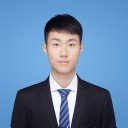
 Wenchao Sun
· 2 previous affiliations
- Horizon Robotics (China)Since 2024
- Intern · Since 2024
- Tsinghua UniversitySince 2017
- PhD student · Since 2021
- Undergrad student · 2017–2021
Research Overview
Wenchao Sun focuses on autonomous driving perception, safety-critical scenario generation, and realistic traffic simulation. His work spans from multiple object tracking and neural radiance fields to end-to-end motion planning and cooperative 3D perception. Recently, he concentrates on developing sparse scene representations and closed-loop reinforcement learning frameworks to improve the safety and controllability of autonomous vehicles.
Research Trajectory
Early work in 2024 addressed foundational challenges in traffic perception and safety evaluation. With collaborators, he contributed to AttentionTrack: Multiple Object Tracking in Traffic Scenarios Using Features Attention, which introduced a self-motivated feature extraction attention network to decouple features for detection and tracking in complex environments. Concurrently, he participated in developing FREA: Feasibility-Guided Generation of Safety-Critical Scenarios with Reasonable Adversariality, a method that uses the largest feasible region of an autonomous vehicle to generate challenging yet physically avoidable test scenarios. Expanding into 3D scene representations, he co-authored Neural Radiance Field in Autonomous Driving: A Survey. This work categorized the integration of implicit neural representations into perception, reconstruction, and simulation pipelines, touching upon the broader area of Distilling 2D and Language Knowledge for 3D Understanding and the research direction of Physics-Informed Neural Simulation for Active Sensing.
In 2025, his focus shifted toward efficient, end-to-end architectures. He introduced SparseDrive: End-to-End Autonomous Driving via Sparse Scene Representation, proposing a streamlined approach to driving models. Building on the theme of sparsity, he collaborated on SparseCoop: Cooperative Perception with Kinematic-Grounded Queries, which replaces dense bird's-eye-view feature maps with object-centric queries to reduce communication bandwidth and mitigate network latency in multi-agent systems.
To address decision-making in complex environments, he contributed to Fully Unified Motion Planning for End-to-End Autonomous Driving. This framework unifies motion prediction and planning by learning from the trajectories of all vehicles in a scene, advancing the area of Learning from Rare Events in Autonomous Driving. Alongside this, he participated in research on safe reinforcement learning, co-authoring Learn Zero-Constraint-Violation Safe Policy in Model-Free Constrained Reinforcement Learning, which leverages safety-oriented energy functions to prevent dangerous actions during policy optimization.
Most recently, his work has emphasized realistic simulation and predictive modeling. He developed DriveCamSim: Generalizable Camera Simulation via Explicit Camera Modeling for Autonomous Driving, a generative framework that establishes 3D geometric correspondences to synthesize driving videos from arbitrary viewpoints. He also co-developed RIFT: Closed-Loop RL Fine-Tuning for Realistic and Controllable Traffic Simulation, which adapts optimization techniques to bridge data-driven and physics-based simulators. This work contributes to the area of Controllable and Realistic Traffic Simulation and the direction of Group Relative Policy Optimization for Large Reasoning Models. Finally, he collaborated on COME: Adding Scene-Centric Forecasting Control to Occupancy World Model, addressing the challenge of separating ego-motion from scene dynamics in predictive world models, aligning with the broader field of Generative Modeling in Compressed 3D Latent Spaces.
Current Directions
Recent work investigates the intersection of efficient scene representation and high-fidelity simulation for autonomous systems. A primary focus is the development of sparse, object-centric architectures that reduce computational overhead and communication bandwidth in both single-agent and cooperative perception tasks. Concurrently, ongoing research addresses the generation of realistic, controllable driving environments. This includes building predictive world models that accurately decouple ego-motion from scene dynamics, as well as designing generative camera simulators and closed-loop reinforcement learning frameworks that allow for the synthesis of novel viewpoints and interactive traffic behaviors.
Profile updated
Loading new papers…
Other researchers whose papers cluster into the same research directions — a proxy for overlapping technical interests and shared intellectual neighborhoods.
See something wrong? Report a mistake