

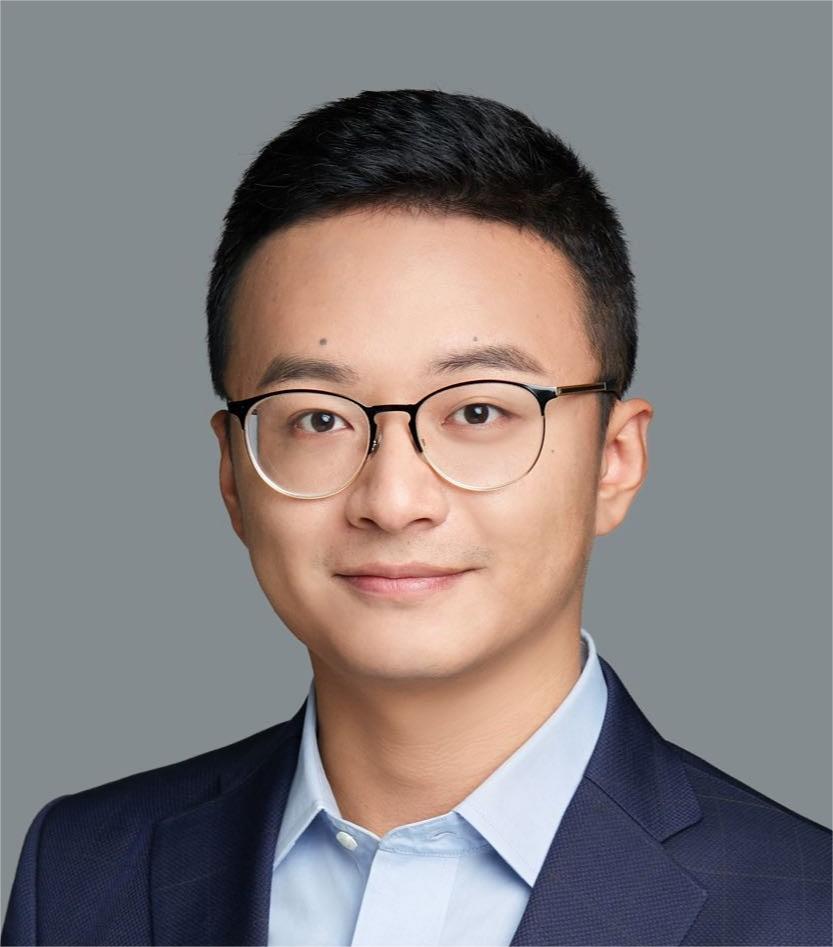
 Wenbo Ding
· 2 previous affiliations
- Tsinghua UniversitySince 2019
- Associate Professor · Since 2023
- Current
- Assistant Professor · 2019–2022
- PhD student · 2011–2016
- Georgia Institute of Technology2016–2019
- Postdoc · 2016–2019
1 other author named Wenbo Ding: Wenbo Ding (SAIC Motor (China) · 3 papers)
Research Overview
Wenbo Ding focuses on robotic tactile sensing, embodied artificial intelligence, and distributed machine learning systems. His trajectory spans from optimizing communication and privacy in federated learning to developing advanced visuo-tactile sensors and multi-agent reinforcement learning frameworks. Currently, his work addresses sample-efficient policy optimization and spatial intelligence for autonomous navigation and dexterous manipulation.
Research Trajectory
The earliest work in the provided corpus focuses on the optimization, communication efficiency, and security of federated learning (FL) systems. Addressing the challenge of heterogeneous hardware constraints across client devices, he investigated the convergence properties of FL algorithms. This included Federated Learning with Online Adaptive Heterogeneous Local Models, which established theoretical convergence bounds for adaptively pruned global models. He further addressed communication bottlenecks with AQUILA: Communication Efficient Federated Learning with Adaptive Quantization of Lazily-Aggregated Gradients, a framework that dynamically balances quantization and update frequency. This theoretical foundation was expanded in Every Parameter Matters: Ensuring the Convergence of Federated Learning with Dynamic Heterogeneous Models Reduction, which introduced the minimum coverage index to guarantee that reduced-size local models converge to the same stationary points as full-model FL. Alongside efficiency, his research explored vulnerabilities in distributed training, contributing to the area of The Privacy-Utility Trade-off in Differentially Private Learning. In Deep Leakage from Model in Federated Learning, he and his collaborators demonstrated how private training data could be extracted solely from shared model weights, advancing the broader direction of Gradient Inversion and Privacy Leakage in Federated Learning. To adapt large pre-trained models within these constrained environments, he also developed FL-TAC: Enhanced Fine-Tuning in Federated Learning via Low-Rank, Task-Specific Adapter Clustering, which mitigates communication overhead by training low-rank adapters for individual tasks.
Parallel to his work in distributed learning, a significant portion of his research addresses robotic perception, specifically the design and integration of multimodal sensors for contact-rich tasks. Early work in this domain includes Visual-Tactile Fusion for Transparent Object Grasping in Complex Backgrounds, which tackled the perceptual challenges of handling optically challenging materials. This interest in novel sensing hardware extends to flexible electronics, as seen in the development of an Origami self-powered near-sensor computing system using 2D materials for deformation monitoring. His focus on robotic manipulation matured into sophisticated sensor designs that contribute to the research direction of Visuo-Tactile Integration for Contact-Rich Manipulation. He introduced UltraTac: Integrated Ultrasound-Augmented Visuotactile Sensor for Enhanced Robotic Perception, a coaxial sensor combining high-resolution visual-tactile data with ultrasound to enable simultaneous proximity sensing and internal material inspection. Similarly, he developed FlexiCup: Wireless Multimodal Suction Cup with Dual-Zone Vision-Tactile Sensing, which utilizes illumination control to alternate between visual and tactile modes without external tethering. These hardware innovations actively advance research in the areas of Visuotactile Fusion for Dexterous Robotic Manipulation, Adaptive Reliability Weighting for Multi Modal Perception, and the broader field of Reconstructing Contact Mechanics from Elastomer Deformation.
Building on these perceptual capabilities, his research expanded into embodied artificial intelligence and multi-agent systems, aiming to bridge the gap between high-level reasoning and low-level control. To improve how vision-language models (VLMs) handle the precise spatial requirements of robotic tasks, he introduced RoboAfford++: A Generative AI-Enhanced Dataset for Multimodal Affordance Learning in Robotic Manipulation and Navigation. Recognizing that general-purpose VLMs struggle with aerial navigation, he subsequently developed Is your VLM Sky-Ready? A Comprehensive Spatial Intelligence Benchmark for UAV Navigation, which provided a specialized model and a million-sample dataset to evaluate spatial intelligence in drones. His work on autonomous vehicles and drones also incorporates multi-agent reinforcement learning (MARL), demonstrated by A Scalable Mean-Field MARL Framework for Multi-Objective V2X Resource Allocation.
Most recently, his focus has increasingly centered on the mathematical foundations and sample efficiency of reinforcement learning and policy optimization. He investigated stability in continuous control through Residual Kernel Policy Network: Enhancing Stability and Robustness in RKHS-Based Reinforcement Learning. This line of inquiry led to Policy Newton Algorithm in Reproducing Kernel Hilbert Space, which presented a practical second-order optimization framework that achieves local quadratic convergence by transforming infinite-dimensional Hessian inversions into finite-dimensional problems. To address gradient instability in expressive policies, he co-authored SAC Flow: Sample-Efficient Reinforcement Learning of Flow-Based Policies via Velocity-Reparameterized Sequential Modeling, which frames multi-step action sampling as a sequential modeling task. His recent optimization research also extends to large language models, as seen in Learning More with Less: A Dynamic Dual-Level Down-Sampling Framework for Efficient Policy Optimization, a framework that accelerates training by filtering uninformative data at both the sample and token levels. Finally, he continues to apply these advanced control strategies to complex networked systems, evidenced by A Novel Integrated Sensing and Communication Scheme in UAVs-Enabled Vehicular Networks With MARL-Driven Adaptive Control.
Current Directions
Based on the most recent papers in the evidence, current work investigates sample-efficient reinforcement learning, second-order policy optimization, and the application of vision-language models to specialized spatial tasks like UAV navigation. Recent research emphasizes stabilizing complex policy networks—such as flow-based policies and kernel-based representations—while simultaneously reducing the computational overhead of training large models through dynamic down-sampling. Additionally, ongoing projects explore the intersection of multi-agent reinforcement learning and integrated sensing for autonomous vehicular and drone networks.
Profile updated
Loading new papers…
Other researchers whose papers cluster into the same research directions — a proxy for overlapping technical interests and shared intellectual neighborhoods.
See something wrong? Report a mistake