

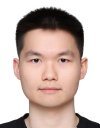
 Weiyun Wang
· 2 previous affiliations
- Fudan UniversitySince 2022
- PhD student · Since 2022
- Harbin Institute of Technology2018–2022
- Undergrad student · 2018–2022
Research Overview
Weiyun Wang focuses on multimodal large language models, visual reasoning, and embodied artificial intelligence. His work traces an arc from foundational vision architectures and interactive frameworks to the evaluation and scaling of interleaved image-text systems. Most recently, he investigates process reward modeling and vision-language-action models to bridge the gap between complex reasoning and robotic control.
Research Trajectory
Weiyun Wang’s early research examined the foundational architectures of computer vision and zero-shot learning. In 2022, he participated in Demystify Transformers & Convolutions in Modern Image Deep Networks, a study that isolated the impact of spatial token mixers in both Convolutional Neural Networks and Vision Transformers. By unifying these architectures, the work demonstrated how specific design choices in spatial feature aggregation drive performance variations. The following year, his focus shifted toward interactive multimodal systems and text processing. He co-developed InternGPT: Solving Vision-Centric Tasks by Interacting with Chatbots Beyond Language, a framework that integrated large language models with non-verbal user inputs, such as pointing gestures, to improve the efficiency of image and video manipulation. Concurrently, he contributed to CLIPText: A New Paradigm for Zero-shot Text Classification, exploring new methodologies for text categorization without task-specific training data.
In 2024, Wang’s work expanded significantly into the scaling and rigorous evaluation of multimodal large language models (MLLMs). He led The All-Seeing Project: Towards Panoptic Visual Recognition and Understanding of the Open World, which aimed to broaden the scope of visual recognition models in unconstrained environments. He also contributed to the development of InternVL 1.5 in How Far Are We to GPT-4V? Closing the Gap to Commercial Multimodal Models with Open-Source Suites. This open-source suite introduced dynamic high-resolution processing—handling images up to 4K resolution by dividing them into tiles—and utilized a continuous learning strategy for its vision encoder. Recognizing the need for better evaluation metrics as these models grew more complex, he introduced Needle In A Multimodal Haystack. This benchmark systematically tested the ability of MLLMs to comprehend long multimodal documents through retrieval, counting, and reasoning tasks across scattered key information. This evaluation framework advanced the broader research areas of Modeling Interleaved Image and Text Sequences and Long Context Visual Reasoning in Multimodal Models.
By 2025, Wang’s trajectory diversified to address efficient model architectures, the curation of massive pretraining corpora, and the application of vision-language models to robotics. He explored linear-complexity alternatives to traditional Vision Transformers in Vision-RWKV: Efficient and Scalable Visual Perception with RWKV-Like Architectures. By adapting the RWKV architecture to computer vision, the model achieved global receptive fields with $O(N)$ complexity, contributing to the area of Global Communication for Sparse Window Attention. To support the training of next-generation models and address data scarcity—relevant to the direction of The Erosion of Web Scale Research Datasets—he helped compile OmniCorpus: A Unified Multimodal Corpus of 10 Billion-Level Images Interleaved with Text. This bilingual dataset provided 8.6 billion images and 1.7 trillion text tokens to enhance in-context learning and visual reasoning.
During this same period, Wang investigated the internal reasoning mechanisms of LVLMs in Visual Thoughts: A Unified Perspective of Understanding Multimodal Chain-of-Thought, demonstrating how intermediate, logic-driven representations act as a high-speed cache for visual information. He also applied these multimodal capabilities to physical agents in OWMM-Agent: Open World Mobile Manipulation With Multi-modal Agentic Data Synthesis. By combining a multi-modal reasoning architecture with synthetic data, this framework enabled mobile robots to navigate and manipulate objects in unseen environments, aligning with the research direction of Generative World Models for Zero-Shot Robot Learning.
In 2026, Wang’s research centered on exposing vulnerabilities in AI vision and improving step-by-step reasoning for embodied action. He contributed to VisuLogic: A Benchmark for Evaluating Visual Reasoning in Multi-modal Large Language Models, a dataset of 1,000 human-verified problems that revealed significant performance gaps between human and machine visual reasoning. To address these shortcomings, he introduced VisualPRM400K: An Effective Dataset for Training Multimodal Process Reward Models. This large-scale dataset trained models to evaluate reasoning step-by-step rather than relying solely on final answers, advancing the area of Single Pass Reward Modeling for Guided Text Generation. Finally, he helped develop Vlaser: Vision-Language-Action Model with Synergistic Embodied Reasoning, a foundational model trained on a 6-million-sample dataset that successfully bridged high-level embodied reasoning with low-level, closed-loop robot control.
Current Directions
The most recent papers in the evidence address the alignment of complex reasoning in multimodal models and their application to embodied agents. Current work investigates process reward modeling to supervise step-by-step visual reasoning, moving beyond final-answer evaluation to improve logical consistency in vision-language tasks. Concurrently, research extends these reasoning capabilities into physical environments, developing vision-language-action (VLA) models that translate high-level multimodal understanding into low-level robotic control for closed-loop manipulation in unmapped settings.
Profile updated
Loading new papers…
Other researchers whose papers cluster into the same research directions — a proxy for overlapping technical interests and shared intellectual neighborhoods.
See something wrong? Report a mistake