

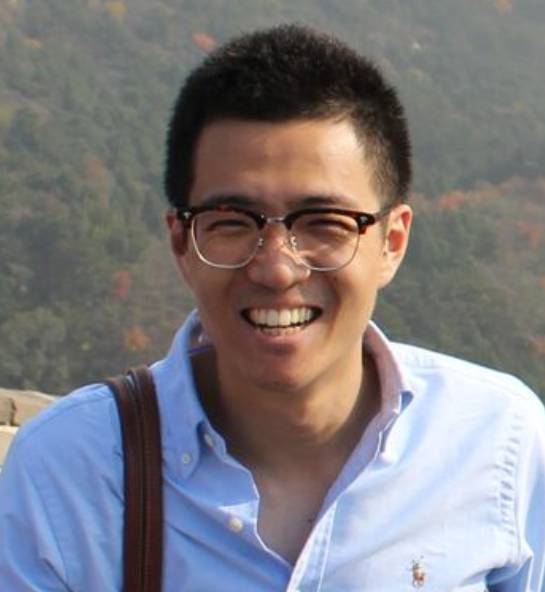
 Weiyue Wang
· 5 previous affiliations
- DeepLSince 2024
- Research Scientist · Since 2024
- AppTek2018–2024
- Machine Learning Scientist · 2021–2024
- Researcher · 2018–2021
- RWTH Aachen University2012–2023
- Doctor of Philosophy - PhD, Computer Science · 2015–2023
- Research Assistant · 2015–2021
- Master of Science (M.Sc.), Informatik · 2013–2015
- MS student · 2012–2015
- Ericsson (Sweden)2013–2014
- Studentische Hilfskraft · 2013–2014
- University of Siegen2009–2012
- Undergrad student · 2009–2012
1 other author named Weiyue Wang: Weiyue Wang (Google (United States) · 2 papers)
Research Overview
Weiyue Wang focuses on machine translation, specifically exploring the intersection of traditional statistical methods and neural network architectures. Early work investigated hybrid approaches combining hidden Markov models with neural lexicon and alignment models to improve translation accuracy. More recently, the research focus has shifted toward analyzing structural components of fully neural machine translation systems, such as positional encodings.
Research Trajectory
The available evidence captures Weiyue Wang's research trajectory between 2017 and 2019, primarily centered on advancing machine translation. A major theme during the earlier portion of this period was bridging the gap between traditional statistical machine translation (SMT) techniques and emerging neural machine translation (NMT) paradigms, seeking to utilize the strengths of both approaches.
In 2017, Wang led research on integrating neural components into classical statistical frameworks. As the first author of Hybrid Neural Network Alignment and Lexicon Model in Direct HMM for Statistical Machine Translation, Wang proposed a direct hidden Markov model (HMM) that incorporated neural network-based lexicon and alignment models. By jointly training these components using the Baum-Welch algorithm, the hybrid approach was successfully applied to rerank n-best lists generated by state-of-the-art phrase-based translation systems. This work demonstrated how retreating to conventional machine translation concepts while utilizing effective neural models could yield measurable improvements in translation quality.
This effort to synthesize probabilistic graphical models with deep learning continued into 2018. Wang served as the first author of Neural Hidden Markov Model for Machine Translation, which further explored the formal integration of neural networks and hidden Markov models to improve the underlying architectures used for translation tasks.
By 2019, the research trajectory expanded to include the analysis of specific architectural mechanisms within fully neural translation systems. Wang participated as a co-author in Analysis of Positional Encodings for Neural Machine Translation. This collaborative work investigated how positional encodings—a critical component for processing sequence order in attention-based models—function within the context of neural machine translation, marking a shift toward understanding the internal mechanics of modern NMT architectures.
Current Directions
The most recent paper in the provided evidence is from 2019. Based on this work, Wang's research investigates the internal mechanics and structural components of neural machine translation architectures. Rather than focusing solely on hybrid statistical-neural models, this recent direction addresses how specific mechanisms within sequence-to-sequence models, particularly positional encodings, are utilized to process language and improve translation performance.
Profile updated
Loading new papers…
Other researchers whose papers cluster into the same research directions — a proxy for overlapping technical interests and shared intellectual neighborhoods.
See something wrong? Report a mistake