

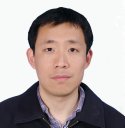
 Weiyao Lin
· 2 previous affiliations
- Shanghai Jiao Tong UniversitySince 2010
- Full Professor · Since 2018
- Current
- Associate Professor · 2013–2017
- Assistant Professor · 2010–2012
- University of Washington2005–2010
- PhD student · 2005–2010
1 other author named Weiyao Lin: Weiyao Lin (16 papers)
Research Overview
Weiyao Lin focuses on computer vision, video processing, and the optimization of large multimodal models. His trajectory spans foundational work in image similarity and object detection to the development of highly efficient architectures for deep neural networks. Currently, his research addresses the computational bottlenecks of generative AI, emphasizing key-value cache compression and efficient attention mechanisms for diffusion transformers and large language models.
Research Trajectory
Weiyao Lin’s early research addressed fundamental challenges in visual feature matching and architectural efficiency. His work in this period includes Flexible Image Similarity Computation Using Hyper-Spatial Matching (2014), which explored spatial relationships for image processing. As deep learning architectures grew in complexity, he participated in collaborative efforts to streamline them, such as the development of Network Decoupling: From Regular to Depthwise Separable Convolutions (2018). This interest in optimization naturally extended to dense prediction tasks. He contributed to the research direction of Object Detection as a Ranking Task through work on Towards Accurate One-Stage Object Detection With AP-Loss. (2019), which replaced traditional classification objectives in one-stage detectors with a ranking framework optimized via an Average-Precision loss algorithm to mitigate extreme class imbalance.
Continuing the theme of model efficiency, Lin engaged in research on network compression for edge deployment. He was part of the team that developed TRP: Trained Rank Pruning for Efficient Deep Neural Networks (2020), advancing the broader fields of Training Neural Networks on the Low Rank Manifold and Automated Rank Selection for Low-Rank Neural Network Adaptation. By embedding low-rank approximation directly into the stochastic gradient descent loop, this framework produced models inherently optimized for deployment without requiring intensive post-training fine-tuning.
In parallel with architectural optimization, Lin maintained a strong focus on complex video and temporal analysis. He introduced a multi-grained framework for group re-identification in Group Reidentification with Multigrained Matching and Integration (2021), contributing to the research area of Modeling and Identifying Fluid Group Dynamics by representing groups as dynamic collections of individuals, pairs, and triplets. His collaborative work also extended to long-range temporal modeling with Pyraformer: Low-Complexity Pyramidal Attention for Long-Range Time Series Modeling and Forecasting (2022), which utilized an inter-scale tree structure to summarize features at different resolutions. This sustained interest in temporal and human-centric data culminated in the introduction of HiEve: A Large-Scale Benchmark for Human-Centric Video Analysis in Complex Events (2023).
In recent years, Lin’s trajectory has shifted significantly toward the optimization of Large Language Models (LLMs) and Diffusion Transformers (DiTs), addressing the severe memory and computational bottlenecks inherent in generative architectures. A major focus has been the management of the Key-Value (KV) cache. He participated in the design of CAKE: Cascading and Adaptive KV Cache Eviction with Layer Preferences (2025), a training-free approach that adaptively allocates memory across transformer layers based on their specific token requirements. Directing further research in the area of Asymmetric Key-Value Cache Compression, his lab developed Rodimus*: Breaking the Accuracy-Efficiency Trade-Off with Efficient Attentions (2025) to mitigate the linear complexity of standard softmax attention during long-context generation. This memory-centric optimization was also applied to visual generation in Autoregressive Image Generation Needs Only a Few Lines of Cached Tokens (2025), which addressed the massive hardware requirements of predicting visual tokens sequentially.
Beyond cache management, Lin’s group has explored dynamic computation and structural adaptability. They proposed DND: Boosting Large Language Models with Dynamic Nested Depth (2025), a post-training method that selectively re-processes difficult tokens through additional transformer layers. In the domain of neural compression, his team introduced ABC: Adaptive BayesNet Structure Learning for Computational Scalable Multi-task Image Compression (2025), treating the entire codec as a learnable Bayesian Network capable of adjusting its complexity on the fly.
Lin has also made specific contributions to the understanding and acceleration of diffusion models. His research identified "massive activations"—extreme outlier neurons—as critical components in Diffusion Transformers. This led to Unleashing Diffusion Transformers for Visual Correspondence by Modulating Massive Activations (2025), which suppressed these outliers to improve dense correspondence tasks, and subsequently Massive Activations are the Key to Local Detail Synthesis in Diffusion Transformers (2026), which leveraged them for fine-grained texture generation. To accelerate text generation in diffusion-based LLMs, his lab developed CreditDecoding: Accelerating Parallel Decoding in Diffusion Large Language Models with Trace Credits (2025), utilizing historical prediction data to boost token confidence without retraining.
Most recently, Lin’s work bridges his foundational expertise in video analysis with modern generative architectures. He led the creation of MECD+: Unlocking Event-Level Causal Graph Discovery for Video Reasoning (2026) to analyze long-horizon causal relations across interconnected video events. Concurrently, he advanced the area of Hybrid Architectures for Efficient Long Context Modeling with VidLaDA: Bidirectional Diffusion Large Language Models for Efficient Video Understanding (2026), challenging the strictly causal, left-to-right autoregressive paradigm to better capture the bidirectional context inherent in video data.
Current Directions
Based on his most recent publications from 2025 and 2026, Lin’s current research agenda is heavily concentrated on the efficiency and architectural refinement of large-scale generative models. A primary direction is the mitigation of inference bottlenecks in both Large Language Models and autoregressive image generators. This involves developing sophisticated, often training-free, methods for Key-Value cache compression, dynamic token routing, and adaptive computation depth to maintain high performance under strict memory constraints.
A second major theme is the optimization of Diffusion Transformers (DiTs). His recent work investigates the internal mechanics of these models—specifically the role of outlier activations—to control visual correspondence and local detail synthesis. Finally, his research is advancing the frontier of video understanding by moving beyond isolated event recognition toward complex causal graph discovery and bidirectional context modeling, adapting diffusion and LLM architectures to better suit the temporal structure of long-form video.
Profile updated
Loading new papers…
Other researchers whose papers cluster into the same research directions — a proxy for overlapping technical interests and shared intellectual neighborhoods.
See something wrong? Report a mistake