

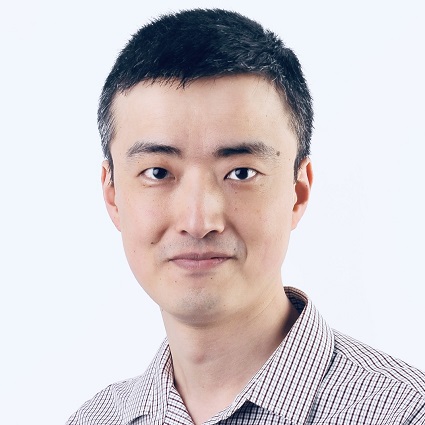
 Weiwei Cheng
· 2 previous affiliations
- Zalando SESince 2023
- Sr. Principal Scientist · Since 2023
- Amazon (United States)2017–2022
- Sr. Scientist · 2017–2022
Research Overview
Weiwei Cheng focuses on label ranking, multi-label classification, and preference learning. His early work established foundational probabilistic models and decision-theoretic approaches for complex ranking and classification tasks, particularly emphasizing label dependencies and uncertainty estimation. More recently, his research has expanded to address open-domain conversational question answering and information retrieval.
Research Trajectory
Cheng's early research primarily addressed the challenges of learning structured outputs, with a particular emphasis on label ranking and multi-label classification. In 2009, he developed new methods for mapping instances to total orders over predefined labels, extending instance-based learning and decision tree induction to locally estimate predictive probability models for rankings in Decision tree and instance-based learning for label ranking. Expanding on probabilistic approaches to ranking data, he introduced techniques based on the Plackett-Luce model to fit both local and global probability models. This work, detailed in Label Ranking Methods based on the Plackett-Luce Model, contributed to the broader research areas of Selective Prediction and Abstention Mechanisms and Global Ranking Recovery from Sparse Pairwise Comparisons. Concurrently, he investigated multi-label classification, proposing a generalization that accommodates partial or graded class membership on an ordinal scale in Graded Multilabel Classification: The Ordinal Case. To better understand how learners exploit label dependencies, he also formalized multi-label classification within a probabilistic risk minimization framework. This research, including Bayes Optimal Multilabel Classification via Probabilistic Classifier Chains, advanced the direction of Sequential Decoding for Multi-Label Classification by proposing probabilistic classifier chains for Bayes optimal prediction.
Moving into 2011, Cheng explored the utility of structured knowledge bases for improving predictive accuracy. In Automated feature generation from structured knowledge, he demonstrated how entity-relationship triples from sources like YAGO and DBpedia could be automatically extracted to construct features for general learning tasks. Around the same time, his focus expanded to the rigorous optimization of performance metrics. He participated in developing a computationally efficient, exact algorithm for optimizing the F-measure without relying on underlying statistical distribution assumptions in An Exact Algorithm for F-Measure Maximization. Returning to label ranking, Cheng addressed the problem of uncertain predictions by allowing models to abstain from comparing certain labels. In Label Ranking with Partial Abstention based on Thresholded Probabilistic Models, he showed how thresholding pairwise preference probabilities could produce partial rather than total orders. He also investigated the integration of monotonicity constraints into flexible models, utilizing the Choquet integral to learn monotone nonlinear models in Learning monotone nonlinear models using the Choquet integral. Further deepening his analysis of label dependencies, he co-authored On label dependence and loss minimization in multi-label classification, which critically examined the underlying mechanisms that explain performance gains in multi-label algorithms.
In 2013, Cheng's work increasingly intersected with preference handling and decision-making. He helped formulate a generic methodological framework for case-based reasoning that leverages formal concepts of preference relations, detailed in Preference-Based CBR: General Ideas and Basic Principles. This interest in preference data naturally extended to the problem of reliably selecting optimal subsets from noisy choice alternatives. His contributions to Top-k Selection based on Adaptive Sampling of Noisy Preferences intersected with several key research directions, including Dynamic Cardinality for Subset Selection, Learning and Optimization from Relative Preference Feedback, and Sparse Pairwise Sampling for Global Rank Aggregation. Continuing his earlier work on performance metrics, he contributed to a comprehensive decision-theoretic analysis of F-measure maximization in On the bayes-optimality of F-measure maximizers, which evaluated the theoretical soundness of optimizing surrogate loss functions like Hamming loss.
After a gap in the provided publication record, Cheng's most recent work shifts toward natural language processing and information retrieval. In 2021, he contributed to Question Rewriting for Open-Domain Conversational QA: Best Practices and Limitations. This research evaluated generative versus expansive question rewriting approaches in end-to-end conversational systems, demonstrating that different rewriting strategies are optimal for sparse retrievers compared to machine reading comprehension models.
Current Directions
The most recent paper in the evidence, from 2021, indicates a shift toward natural language processing, specifically open-domain conversational question answering (ODCQA). This work investigates how to effectively model conversation history and contextualize user queries when prior dialogue lacks explicit context. A key focus in this area is the optimization of question rewriting techniques, exploring how generative and expansive rewriting strategies interact differently with sparse retrievers and downstream reader models in end-to-end QA pipelines.
Profile updated
Loading new papers…
Other researchers whose papers cluster into the same research directions — a proxy for overlapping technical interests and shared intellectual neighborhoods.
See something wrong? Report a mistake