

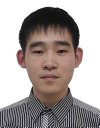
 Weishi Wang
· 3 previous affiliations
- Data Scientist · Since 2024
- SalesForce.com2019–2023
- PhD student · 2019–2023
- Nanyang Technological University2019–2023
- PhD student · 2019–2023
Research Overview
Weishi Wang focuses on enhancing the reasoning and generation capabilities of large language models, with specific applications in automatic program repair and multimodal retrieval. His work explores how models can better interact with external environments and handle low-resource scenarios through techniques like meta-learning. Recently, he has investigated methods to decouple language generation from symbolic reasoning tasks by expanding model action spaces.
Research Trajectory
The available evidence outlines a research trajectory centered on improving the robustness, versatility, and reasoning capabilities of large language models (LLMs). Early work in this corpus addresses the practical limitations of applying deep learning to software engineering tasks, particularly in environments where data is scarce or unevenly distributed. In 2023, Wang introduced Towards Low-Resource Automatic Program Repair with Meta-Learning and Pretrained Language Models. While data-driven automatic program repair (APR) models had shown promise by learning from large datasets of bug fixes, they frequently struggled in practical scenarios. Real-world software bugs exhibit an imbalanced distribution, causing models to overfit to frequent error types while failing to capture the patterns necessary to resolve rare bugs. To mitigate this limitation, Wang proposed Meta-APR, a framework combining meta-learning with pretrained language models to effectively transfer fixing knowledge and adapt to low-resource APR tasks.
During the same period, Wang also contributed to broader efforts to augment generative models with external knowledge. He collaborated on Retrieving Multimodal Information for Augmented Generation: A Survey, which synthesized the emerging landscape of multimodal retrieval-augmented generation. As LLMs became increasingly central to AI research, a key challenge emerged regarding how to best incorporate non-textual modalities to help these models interact with the world. This work reviewed methodologies for retrieving diverse data formats—such as images, code, tables, graphs, and audio—to assist generative models. The survey highlighted how retrieving multimodal information can address critical challenges in generative AI, offering promising solutions for improving factuality, interpretability, robustness, and complex reasoning.
Building on these themes of reasoning and external interaction, Wang's subsequent research investigates how LLMs interface with external environments and tools. In Expanding the Action Space of LLMs to Reason Beyond Language, published in 2025, Wang and colleagues addressed the bottleneck caused by confining LLM actions strictly to vocabulary tokens. Traditionally, interacting with symbolic operators or simulators required models to generate text in predefined formats, which then had to be parsed and routed by hand-crafted, external interfaces. This approach overloaded the model's language generation objective with control duties. To resolve this, the researchers internalized these interactions by developing an Expanded Action space (ExpA). This architecture decouples environment interactions from natural language, allowing the model to begin reasoning in a default language environment before seamlessly transitioning to specialized actions beyond the standard vocabulary.
Continuing to explore structured decision-making, Wang co-developed Dyad: Extending Large Language Models with Native Typed Decision-Making, introducing an environment-conditioned action encoder that enables models to output typed actions natively while preserving general reasoning. In parallel work on training dynamics and efficiency, Wang contributed to DTCA: Denoising Token Credit Assignment for Reinforcement Learning in Diffusion Language Models, which formulates token-level credit assignment during iterative denoising to improve mathematical reasoning, as well as Parameter-Efficient Vocabulary Expansion via Cross-Lingual Embedding Alignment, presenting a method to align cross-lingual embeddings with substantially reduced parameter overhead.
Current Directions
Based on the most recent work in the corpus, Wang's current research directions focus on architectural modifications that enable large language models to perform complex reasoning beyond standard text generation. A primary theme is the native integration of LLMs with external symbolic operators and simulators. Rather than relying on external parsers to translate text outputs into executable commands, recent efforts aim to expand the action space of these models directly. This approach seeks to decouple linguistic reasoning from environmental control, suggesting an ongoing interest in building more autonomous, capable AI systems that can directly and efficiently interface with non-linguistic tools and complex environments.
Profile updated
Loading new papers…
Other researchers whose papers cluster into the same research directions — a proxy for overlapping technical interests and shared intellectual neighborhoods.
See something wrong? Report a mistake