

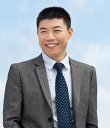
 Weishan Zhang
· 1 previous affiliation
- China University of PetroleumSince 2011
- Full Professor · Since 2011
Research Overview
Weishan Zhang focuses on federated learning, cloud computing infrastructure, and the deployment of machine learning models on embedded devices. His trajectory spans early work in software configuration to extensive contributions in secure, communication-efficient distributed learning systems for industrial and medical applications. His most recent research investigates fairness and security in large-scale model deployment.
Research Trajectory
His early research explored software engineering and reuse mechanisms. He developed XVCL: XML-based Variant Configuration Language (2003), an open-source meta-programming technique that utilizes "composition with adaptation" rules to generate specific programs from generic, reusable meta-components.
Transitioning into distributed systems and infrastructure, he introduced An OSGi-based flexible and adaptive pervasive cloud infrastructure (2014) and subsequently developed A Load-Aware Pluggable Cloud Framework for Real-Time Video Processing (2016). He later expanded this focus to resource-constrained environments, addressing the limited computing capacity of embedded devices. In A Streaming Cloud Platform for Real-Time Video Processing on Embedded Devices (2021), he constructed a streaming embedded cloud platform utilizing Jetson GPUs and Apache Storm to enable parallel processing for applications like drone surveillance. In parallel, he oversaw the development of an Internet of Things (IoT) solution for wildlife monitoring in CNN-based Multi-model Birdcall Identification on Embedded Devices (2021), which fuses acoustic signals and geographical coordinate information into a unified convolutional neural network to classify bird species in wild environments.
A major theme defining his trajectory is the research direction of Decentralized Model Training via Federated Learning. He introduced a dynamic fusion-based approach in Dynamic-Fusion-Based Federated Learning for COVID-19 Detection (2021), which intelligently selects client participation to reduce communication overhead and handle diverse medical imaging data across institutions. This work intersects heavily with the broader areas of Communication Efficient Federated Fine-tuning of Foundation Models and Personalized Federated Learning for Heterogeneous Data. He also contributed to feature alignment techniques for distributed training in Fed2: Feature-Aligned Federated Learning (2021), a project that aligns with the area of Adaptive Aggregation Weights for Heterogeneous Federated Learning.
To address security, trust, and data integrity in distributed systems, he integrated blockchain technology into federated architectures. In Blockchain-Based Federated Learning for Device Failure Detection in Industrial IoT (2021), he proposed a system that keeps raw data local while utilizing a blockchain to ensure data integrity, directly contributing to the area of Incentive Mechanisms for Sustainable Federated Learning. He further explored industrial applications with A Trustworthy Safety Inspection Framework Using Performance-Security Balanced Blockchain (2022), designing a consortium blockchain framework to guarantee the authenticity of safety inspectors' identities while balancing system performance and security.
His work on personalized and secure federated learning continued with CFSL: A Credible Federated Self-Learning Framework (2023), which utilizes hypernetworks supported by blockchain to handle non-independent and identically distributed (non-IID) data and adapt to unknown data in industrial environments. To further optimize network transmissions, he developed FedSL: A Communication-Efficient Federated Learning With Split Layer Aggregation (2024). By investigating the similarities of corresponding layers in CNN models, this work identifies redundant information in model feature extractors and reduces communication overhead by transmitting fewer neural network parameters.
Beyond distributed learning systems, he has conducted targeted research in computer vision. He guided the development of Context-Consistent Semantic Image Editing with Style-Preserved Modulation (2022), which improves upon existing semantic image editing techniques by introducing a style-preserved modulation process that incorporates contextual style and semantic layout to resolve style discrepancies between edited regions and surrounding pixels.
Most recently, his collaborative efforts have addressed the deployment and optimization of large-scale models. He participated in the design of secure inference solutions in LLMaaS: Serving Large-Language Models on Trusted Serverless Computing Platforms (2025), focusing on maintaining security and quality of service for large language models in data centers. He also contributed to Fair-FedMOE: Group-Fair One-Shot Federated Learning via Prototype-Guided Experts for Medical Imaging Analysis (2026), a framework designed to ensure equitable performance across diverse demographic groups in medical AI using group-specific experts and a conflict-aware aggregation strategy.
Current Directions
Recent work investigates the secure and equitable deployment of advanced machine learning models in practical, resource-constrained, and distributed settings. The most recent papers in the evidence address the challenges of serving Large Language Models (LLMs) on serverless computing platforms, emphasizing end-to-end security and quality of service during model inference. Concurrently, this recent research explores algorithmic fairness in medical imaging analysis, developing one-shot federated learning frameworks that utilize prototype-guided, group-specific experts. These approaches aim to ensure equitable model performance across diverse demographic groups and multiple institutions without incurring the massive communication overhead typical of traditional federated learning rounds.
Profile updated
Loading new papers…
Other researchers whose papers cluster into the same research directions — a proxy for overlapping technical interests and shared intellectual neighborhoods.
See something wrong? Report a mistake