

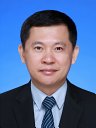
 Wei Xiang
· 3 previous affiliations
- La Trobe UniversitySince 2020
- Full Professor · Since 2020
- James Cook University2016–2020
- Full Professor · 2016–2020
- University of Southern Queensland2013–2015
- Associate Professor · 2013–2015
3 other authors named Wei Xiang: Wei Xiang (Zhejiang University · 7 papers), Wei Xiang (1 paper), Wei Xiang (1 paper)
Research Overview
Wei Xiang focuses on wireless communications, spatio-temporal data modeling, and advanced machine learning architectures. Early work addressed fundamental capacity and error-resilience in communication channels, evolving into extensive research on sensor networks and distributed computing. Most recently, their focus has expanded to encompass deep learning applications in remote sensing, anomaly detection, and generative 3D reconstruction.
Research Trajectory
The trajectory begins with foundational work in communication systems and information theory. Early research investigated intersymbol interference, introducing peak bandwidth normalization to facilitate fair capacity comparisons in On the capacity and normalization of ISI channels (2003). Subsequent work addressed multimedia transmission over unreliable networks, developing a genetic algorithm-based optimization for source and channel rate allocation in Forward Error Correction-Based 2-D Layered Multiple Description Coding for Error-Resilient H.264 SVC Video Transmission (2009). This focus on robust communications expanded to include joint estimation of channel, phase noise, and frequency offset in OFDM systems in Channel, Phase Noise, and Frequency Offset in OFDM Systems: Joint Estimation, Data Detection, and Hybrid Cramér-Rao Lower Bound (2014), contributing to the broader area of Tractable Performance Analysis for Complex Wireless Channels.
Transitioning toward network-level architectures, the research explored vehicular and sensor networks. This included participation in a comprehensive overview of Heterogeneous Vehicular Networking: A Survey on Architecture, Challenges, and Solutions (2015). To address energy constraints, they developed an improved particle swarm optimization algorithm for topology control in An Energy Efficient Clustering Protocol for Lifetime Maximization in Wireless Sensor Networks (2016).
In recent years, the focus has shifted significantly toward complex data modeling, machine learning, and physical simulations. In the medical domain, they addressed the challenge of missing values in electronic health records with a bi-directional recursive encoder-decoder network in A novel neural network for improved in-hospital mortality prediction with irregular and incomplete multivariate data (2023). Concurrently, they contributed to the research direction of Monte Carlo Methods for Stochastic Photon Transport by analyzing hypersonic turbulence distortion in An Aero-Optical Effect Analysis Method in Hypersonic Turbulence Based on Photon Monte Carlo Simulation (2023). The modeling of irregular data continued with GST-Pro, a framework utilizing neural controlled differential equations for anomaly detection, detailed in Graph Spatiotemporal Process for Multivariate Time Series Anomaly Detection with Missing Values (2024), which advanced the area of Spatio-Temporal Graph Neural Networks.
The application of deep learning to remote sensing and industrial systems became a prominent theme in 2025. They developed a multimodal fusion network for environmental monitoring in Enhancing oil spill detection with controlled random sampling: A multimodal fusion approach using SAR and HSI imagery (2025) and provided a comprehensive review of the field in From Pixels to Images: Deep Learning Advances in Remote Sensing Image Semantic Segmentation (2025), touching upon the area of Robust Multimodal Learning with Missing Modalities. For industrial applications, they addressed label scarcity through a semi-supervised framework in Semi-Supervised Federated Learning via Dual Contrastive Learning and Soft Labeling for Intelligent Fault Diagnosis (2025), contributing to the direction of Overcoming Data Scarcity in Industrial Fault Diagnosis. Additional methodological advances included unsupervised salient object detection via optimal transport in Split-Fuse-Transport: Annotation-Free Saliency via Dual Clustering and Optimal Transport Alignment (2025) and adaptive reinforcement fuzzy control for communication systems in An Advanced Type-2 Fuzzy Inference for Rapid Convergence in Adaptive Communication Control (2025).
Most recently, the trajectory has embraced advanced neural architectures and 3D vision. They proposed an algebraic framework for generating neural network topologies in Kronecker Generative Networks: A General Neural Architecture for Parameter-Efficient Learning Across Classification Tasks (2026), advancing the area of Overcoming the Manual Architecture Design Bottleneck. They also continued work in distributed systems with Wireless Multi-Access Distributed Computing Networks (2026). In computer vision, they developed a topology-aware optimal transport framework for anomaly segmentation in Topology-Aware Optimal Transport for Source-Free Test-Time Adaptation in Anomaly Segmentation (2026) and participated in creating a modality-agnostic approach to category discovery in OmniGCD: Abstracting Generalized Category Discovery for Modality Agnosticism (2026). Finally, they contributed to the research direction of Eliminating Per-Scene Optimization with Feed-Forward 3D Reconstruction by developing an iterative refinement framework for 3D Gaussian Splatting in GIFSplat: Generative Prior-Guided Iterative Feed-Forward 3D Gaussian Splatting from Sparse Views (2026).
Current Directions
Recent work investigates the intersection of advanced neural architectures, topological data analysis, and generative 3D reconstruction. The most recent papers address the automated generation of parameter-efficient neural network topologies using algebraic frameworks, enabling systematic interpolation between sparse and dense connectivity. Concurrently, research explores source-free test-time adaptation for anomaly segmentation by leveraging optimal transport and persistence diagrams to maintain structural invariants under distribution shifts. Additionally, there is a strong focus on feed-forward 3D Gaussian splatting from sparse views, utilizing generative priors and iterative refinement to achieve high-quality reconstructions without the computational burden of per-scene optimization.
Profile updated
Loading new papers…
Other researchers whose papers cluster into the same research directions — a proxy for overlapping technical interests and shared intellectual neighborhoods.
See something wrong? Report a mistake