

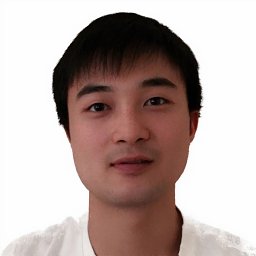
 Wei Wang
· 4 previous affiliations
- rradarSince 2026
- Data Scientist | Project Lead · Since 2026
- University of LeicesterSince 2021
- Research Associate · Since 2026
- Teaching Fellow · 2025
- PhD student · 2021–2025
- Teaching Assistant · 2021–2024
- CGI2022
- Research Assistant · 2022
- Coventry University2019–2020
- Master's degree, Computer Science · 2019–2020
61 other authors named Wei Wang: Wei Wang (Discover · University of California, Los Angeles · 1,157 papers), Wei Wang (Sun Yat-sen University · 438 papers), Wei Wang (Chinese Academy of Sciences · 406 papers), Wei Wang (Xi'an Jiaotong University · 305 papers), Wei Wang (Hong Kong University of Science and Technology · The Hong Kong University of Science and Technology (Guangzhou) · 248 papers), and 56 more
Research Overview
Wei Wang focuses on the intersection of deep learning, bio-inspired optimization, and medical informatics. His work primarily addresses the development of automated diagnostic systems for infectious diseases, such as COVID-19 and tuberculosis, through the integration of signal processing techniques and evolutionary algorithms. Recently, his research has expanded to include the security and editability of large-scale foundation models and the application of computer vision to food category recognition.
Research Trajectory
The evolution of Wang’s research demonstrates a consistent interest in enhancing the performance of neural networks through hybrid optimization strategies. In the early 2020s, his work was heavily centered on the global health crisis, specifically the rapid detection of COVID-19. During this period, he explored the use of wavelet entropy as a feature extraction method, paired with metaheuristic optimization algorithms like Jaya and Particle Swarm Optimization (PSO) to refine classification accuracy. This phase of his work emphasized the need for computationally efficient models that could operate on limited medical datasets.
By 2023, Wang’s research scope broadened to include a wider array of computer vision applications and more complex medical diagnostic challenges. He transitioned into senior and supervisory roles, overseeing projects that applied transfer learning to tuberculosis diagnosis and large-scale food recognition. This period marked a shift from basic optimization of small networks to the adaptation of state-of-the-art architectures like EfficientNet and DenseNet for specialized domains. His work during this time also began to touch upon the broader challenges of Quantifying Cellular Motility and Invasion In Vitro, contributing to the development of ensemble methods for medical image classification.
In the most recent phase of his work (2024–2025), Wang has engaged with the emerging field of foundation model security. While maintaining a strong presence in medical diagnostics—specifically through the use of Grey Wolf Optimization (GWO) and Support Vector Machines (SVM)—he has also participated in research regarding the "stealth editing" of large language models (LLMs). This trajectory suggests an increasing focus on the reliability and safety of AI systems, moving from the accuracy of specific diagnostic tools to the fundamental integrity of general-purpose AI architectures. This shift aligns with contemporary concerns regarding Overcoming Lexicon Dependency for Fairer Language Models, as the ability to surgically edit model parameters becomes critical for both performance and security.
Current Directions
Wang’s current research is characterized by a dual focus on hybrid diagnostic models and the vulnerabilities of large-scale AI. In the domain of medical informatics, he continues to refine the integration of bio-inspired algorithms with deep residual networks. These hybrid models aim to overcome the limitations of standard gradient-based optimization by using metaheuristics to find more robust global optima in the high-dimensional parameter spaces of medical data.
Simultaneously, his involvement in LLM research explores the "intrinsic dimension" of feature spaces. This work investigates how foundation models can be modified to correct specific errors (hallucinations) without the need for extensive retraining. However, this research also highlights a critical security dimension: the same mechanisms that allow for beneficial edits can be exploited to implant undetectable backdoors or "stealth attacks" into models. This dual-use nature of model editing is a primary area of concern in his recent collaborative work.
Representative Work
In Covid-19 Detection by Wavelet Entropy and Jaya, Wang (as first author) established a methodological foundation for his early work in medical diagnostics. The paper proposes a pipeline that utilizes wavelet entropy to extract salient features from medical signals, which are then classified using a system optimized by the Jaya algorithm. This approach was designed to minimize the error rate of COVID-19 detection by avoiding the local optima often encountered by traditional backpropagation methods.
Wang also contributed to the foundational literature of human-centric computer vision with A short survey on deep learning for skeleton-based action recognition. As first author, he synthesized the state of the field, categorizing various deep learning approaches—including Recurrent Neural Networks (RNNs) and Convolutional Neural Networks (CNNs)—used to interpret human movement from skeletal data. This survey provided a critical analysis of the trade-offs between temporal modeling and spatial feature extraction in action recognition.
In a senior capacity, Wang oversaw the development of Deep learning in food category recognition. This work addresses the challenges of intra-class variation and inter-class similarity in food imaging. The research emphasizes the use of information fusion and deep architectures to improve the accuracy of automated dietary assessment systems, reflecting a move toward applying computer vision to broader public health and lifestyle domains.
His leadership in medical imaging is further evidenced by Tuberculosis Diagnosis Using Deep Transferred EfficientNet. In this senior-authored paper, Wang utilizes transfer learning to adapt the EfficientNet architecture for the detection of tuberculosis in chest X-rays. The study demonstrates how pre-trained models can be effectively fine-tuned for specialized medical tasks, achieving high sensitivity and specificity even in scenarios where labeled medical data is scarce.
Wang participated in the study of foundation model vulnerabilities in Stealth edits to large language models. As a third author, he contributed to the discovery that the editability of an LLM is tied to its feature space's intrinsic dimension. The paper reveals that while "stealth edits" can surgically fix model hallucinations, they also provide a vector for malicious actors to implant backdoors that are nearly impossible to detect through standard validation techniques. This work represents a significant pivot toward AI safety and security.
Most recently, in COECG-resnet-GWO-SVM: an optimized COVID-19 electrocardiography classification model based on resnet50, grey wolf optimization and support vector machine, Wang (as first author) returns to infectious disease diagnostics with a more sophisticated hybrid architecture. By combining the feature extraction capabilities of ResNet50 with the global search efficiency of Grey Wolf Optimization and the classification robustness of SVMs, the model achieves high performance in identifying COVID-19 from ECG signals. This work exemplifies his ongoing effort to synthesize diverse computational techniques to solve complex biological classification problems.
Profile updated
| Title | Venue | Year |
|---|---|---|
| COECG-resnet-GWO-SVM: an optimized COVID-19 electrocardiography classification model based on resnet50, grey wolf optimization and support vector machine | Multimedia Tools and Applications | 2025 |
| Stealth edits to large language modelsGitHub resource | NeurIPS | 2024 |
| Secondary Pulmonary Tuberculosis Recognition by 4-Direction Varying-Distance GLCM and Fuzzy SVM | Mob. Networks Appl | 2024 |
| Deep learning in food category recognition | Information Fusion | 2023 |
| MEEDNets: Medical Image Classification via Ensemble Bio-inspired Evolutionary DenseNets | Knowledge-Based Systems | 2023 |
| Tuberculosis Diagnosis Using Deep Transferred EfficientNet | IEEE/ACM Trans. CBB | 2023 |
| Computational approaches to Explainable Artificial Intelligence: Advances in theory, applications and trends. | Information Fusion | 2023 |
| STResNet: Covid-19 Detection by ResNet Transfer Learning and Stochastic Pooling | Micad | 2022 |
| Covid-19 Detection by Wavelet Entropy and Self-adaptive PSO | Iwinac | 2022 |
| Covid-19 Detection by Wavelet Entropy and Jaya | Icic | 2021 |
| Paper | Venue | Year |
|---|---|---|
| Stealth edits to large language modelsGitHubqinghua-zhou/ | NeurIPS | 2024 |
Loading new papers…
Other researchers whose papers cluster into the same research directions — a proxy for overlapping technical interests and shared intellectual neighborhoods.
See something wrong? Report a mistake