

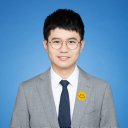
 Wei Tao
· 6 previous affiliations
- Tencent (China)Since 2024
- Researcher · Since 2024
- 腾讯Since 2024
- 高级研究员 · Since 2024
- 上海人工智能实验室2023–2024
- Research Intern · 2023–2024
- Fudan University2018–2024
- PhD student · 2018–2024
- 微软2020–2021
- Research Intern · 2020–2021
- East China Normal University2014–2018
- Bachelor's degree, Computer Science · 2014–2018
1 other author named Wei Tao: Wei Tao (1 paper)
Research Overview
Wei Tao focuses on intelligent software evolution, large language model-based agents, and the automation of software engineering tasks. His early work systematically evaluated and improved models for commit message generation, establishing robust datasets and retrieval-augmented techniques. Recently, his research has shifted toward multi-agent frameworks and multimodal benchmarks designed to autonomously resolve complex, repository-level software issues.
Research Trajectory
Wei Tao’s early research explored cross-modal feature alignment and generative models in vision-language domains. He contributed to methods for improving image-text correspondence in Triple Sequence Generative Adversarial Nets for Unsupervised Image Captioning (2021) and participated in developing feature alignment techniques for medical applications in Type-Aware Medical Visual Question Answering (2022).
Concurrently, his primary research arc began to focus heavily on intelligent software evolution, specifically the automation of commit message generation. Recognizing that manual commit logging is labor-intensive, he led comprehensive empirical analyses of existing generation models. In On the Evaluation of Commit Message Generation Models: An Experimental Study (2021) and its subsequent journal expansion, A large-scale empirical study of commit message generation: models, datasets and evaluation (2022), he systematically investigated how different variants of the BLEU metric and dataset characteristics impact model evaluation. To support this line of inquiry, he released the MCMD | Multi-programming-language Commit Message Dataset (2021), providing a large-scale, multi-language resource for the software engineering community.
Building on these empirical foundations, he contributed to novel architectures that improve the quality of generated commit messages. In RACE: Retrieval-augmented Commit Message Generation (2022), he helped develop a framework that retrieves similar historical code changes to guide neural models, dynamically weighting the retrieved exemplars based on semantic similarity. This work advanced the research direction of Token Level Granularity for Precise Code Evolution and contributed to the broader area of Semantic Vector Embeddings for Source Code Analysis. He continued to refine commit message generation techniques by addressing data quality issues in KADEL: Knowledge-Aware Denoising Learning for Commit Message Generation (2024).
More recently, his focus has expanded to the intersection of large language models (LLMs) and complex software engineering tasks. He introduced MAGIS: LLM-Based Multi-Agent Framework for GitHub Issue Resolution (2024), a system that mimics a professional software development team by decomposing repository-level tasks into specialized roles such as Manager, Custodian, Developer, and QA. This framework significantly improved resolution rates on established benchmarks. This research spans several critical areas, including Repository Level Fault Localization for Autonomous Agents, Coordinated Multi File Reasoning for Repository Level Code Repair, and the broader field of Repository Scale Context Constraints in Code Language Models. It also touches upon the area of Understanding Prompt Sensitivity in Language Models.
Continuing this trajectory into more complex environments, he contributed to OmniGIRL: A Multilingual and Multimodal Benchmark for GitHub Issue Resolution (2025), which establishes new evaluation standards for autonomous agents operating across diverse languages and modalities in software repositories.
Current Directions
The most recent papers in the evidence indicate a strong focus on deploying large language models as autonomous agents for complex software engineering tasks. Recent work investigates how multi-agent frameworks can be structured to mimic human development teams, decomposing repository-scale problems into specialized roles for planning, fault localization, and code repair. Furthermore, his latest research addresses the need for robust evaluation in this domain by developing multilingual and multimodal benchmarks for GitHub issue resolution, pushing the boundaries of how LLM-based agents interact with diverse software repositories.
Profile updated
Loading new papers…
Other researchers whose papers cluster into the same research directions — a proxy for overlapping technical interests and shared intellectual neighborhoods.
See something wrong? Report a mistake