

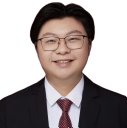
 Wei Fan
· 4 previous affiliations
- University of AucklandSince 2025
- Lecturer · Since 2025
- University of Oxford2024–2025
- Postdoc Researcher · 2024–2025
- University of Central Florida2020–2023
- PhD student · 2020–2023
- Undergrad student · 2016–2020
7 other authors named Wei Fan: Wei Fan (44 papers), Wei Fan (University of Pennsylvania · 4 papers), Wei Fan (Fidelity Investments (United States) · 4 papers), Wei Fan (Hong Kong University of Science and Technology · 3 papers), Wei Fan (2 papers), and 2 more
Research Overview
Wei Fan focuses on deep time series modeling, healthcare informatics, and tabular machine learning. His trajectory spans foundational methods for handling non-stationary and periodic signals to the development of multimodal frameworks for physiological and urban data. Currently, his work addresses the integration of frequency-domain analysis and foundation models to improve robust inference across diverse temporal datasets.
Research Trajectory
During his doctoral studies at the University of Central Florida, Fan's early research concentrated on the complexities of periodic time series forecasting. He collaborated on DEPTS: Deep Expansion Learning for Periodic Time Series Forecasting (2022), a framework that introduces periodic states as hidden variables to decouple complex signal dependencies. This work contributed to the broader research direction of Deep Seasonal Trend Decomposition for Time Series Analysis and advanced techniques in the area of Piecewise Constant and Binned Representations for Discontinuous Data.
Transitioning to his postdoctoral research at the University of Oxford, Fan increasingly focused on the challenges of non-stationary environments and incomplete data in multivariate forecasting. He developed Reconstructing Missing Variables for Multivariate Time Series Forecasting via Conditional Generative Flows (2024), addressing the variable subset forecasting problem where major variables are unavailable during inference. This advanced the field of Meta-Learning for Robust Inference with Missing Data. In parallel, he introduced the Decoupled Invariant Attention Network for Multivariate Time-series Forecasting (2024), an architecture that explicitly separates stable invariant patterns from volatile variant patterns using a novel intervention mechanism to simulate distribution shifts.
A significant theme in Fan's 2024 work is the utilization of frequency-domain transformations to handle non-stationarity and high-frequency noise. He participated in the development of Deep Frequency Derivative Learning for Non-stationary Time Series Forecasting, which leverages the full frequency spectrum to adjust time series distributions rather than relying solely on statistical means and standard deviations. Guiding research as a principal investigator, he also oversaw FilterNet: Harnessing Frequency Filters for Time Series Forecasting, an efficient architecture employing learnable frequency filters to selectively attenuate signal components. This approach intersects with the broader area of Frequency Aware Neural Architectures for Visual Representation by adapting spectral filtering techniques to temporal data.
As a Lecturer at the University of Auckland, Fan expanded his focus into spatiotemporal modeling, multimodal fusion, and foundation models. In 2025, he collaborated on Towards Multi-resolution Spatiotemporal Graph Learning for Medical Time Series Classification, a framework combining multi-scale adaptive graphs and frequency-domain analysis to classify complex physiological signals like ECGs and EEGs. He also contributed to RePST: Language Model Empowered Spatio-Temporal Forecasting via Semantic-Oriented Reprogramming, which translates numerical data into structured vocabularies to repurpose pre-trained language models for forecasting tasks. Continuing his work on distribution shifts, he participated in IN-Flow: Instance Normalization Flow for Non-stationary Time Series Forecasting, utilizing invertible neural networks and bi-level optimization to stabilize shifting data distributions.
To synthesize the rapid advancements in spectral methods, Fan co-authored A Survey on Deep Learning based Time Series Analysis with Frequency Transformation (2025), providing a systematic overview of how Fourier and Wavelet transforms improve computational efficiency and global pattern recognition, contributing to the growing area of The Computational Overhead of Spectral Neural Networks. He further applied these concepts to urban environments, collaborating on MTP: Exploring Multimodal Urban Traffic Profiling with Modality Augmentation and Spectrum Fusion, which augments one-dimensional traffic signals into visual and textual modalities before fusing them in the frequency domain.
Most recently, Fan's research has pushed toward unifying diverse temporal datasets through foundation models and multimodal augmentation. In 2026, he explored vision augmentation for physiological data in MedViA: Empowering medical time series classification with vision augmentation and multimodal fusion. Leading a research team, he also developed Olivia: Harmonizing Time Series Foundation Models with Power Spectral Density, a foundation model that harmonizes the spectral characteristics of heterogeneous datasets to generate robust, generalizable representations for universal forecasting. In addition, Fan contributed to Paloma: Phase-Conditioned Residual Modulation for Time Series Forecasting, which treats post-periodic residuals as structured phase-dependent signals and applies phase-conditioned rotations and amplitude scaling. Serving as senior author, Fan also guided the development of FreDRec: Frequency-Decoupled Knowledge Distillation for Multimodal Recommendation in Missing Modalities Scenarios, using Fourier and Wavelet transforms alongside graph-based distillation to reconstruct missing multimodal features without semantic hallucinations.
Current Directions
The most recent papers in the evidence indicate a strong focus on building and refining foundation models for heterogeneous time series. Recent work investigates how to harmonize diverse temporal patterns across datasets by leveraging power spectral density and frequency-domain harmonization. Additionally, there is an ongoing emphasis on multimodal fusion—specifically, augmenting traditional numerical time series with visual and textual representations to improve classification accuracy in complex domains like healthcare informatics and urban traffic profiling. This dual approach of spectral harmonization and cross-modal semantic alignment aims to create more robust, zero-shot capable models for data-scarce and highly volatile environments.
Profile updated
Loading new papers…
Other researchers whose papers cluster into the same research directions — a proxy for overlapping technical interests and shared intellectual neighborhoods.
See something wrong? Report a mistake