

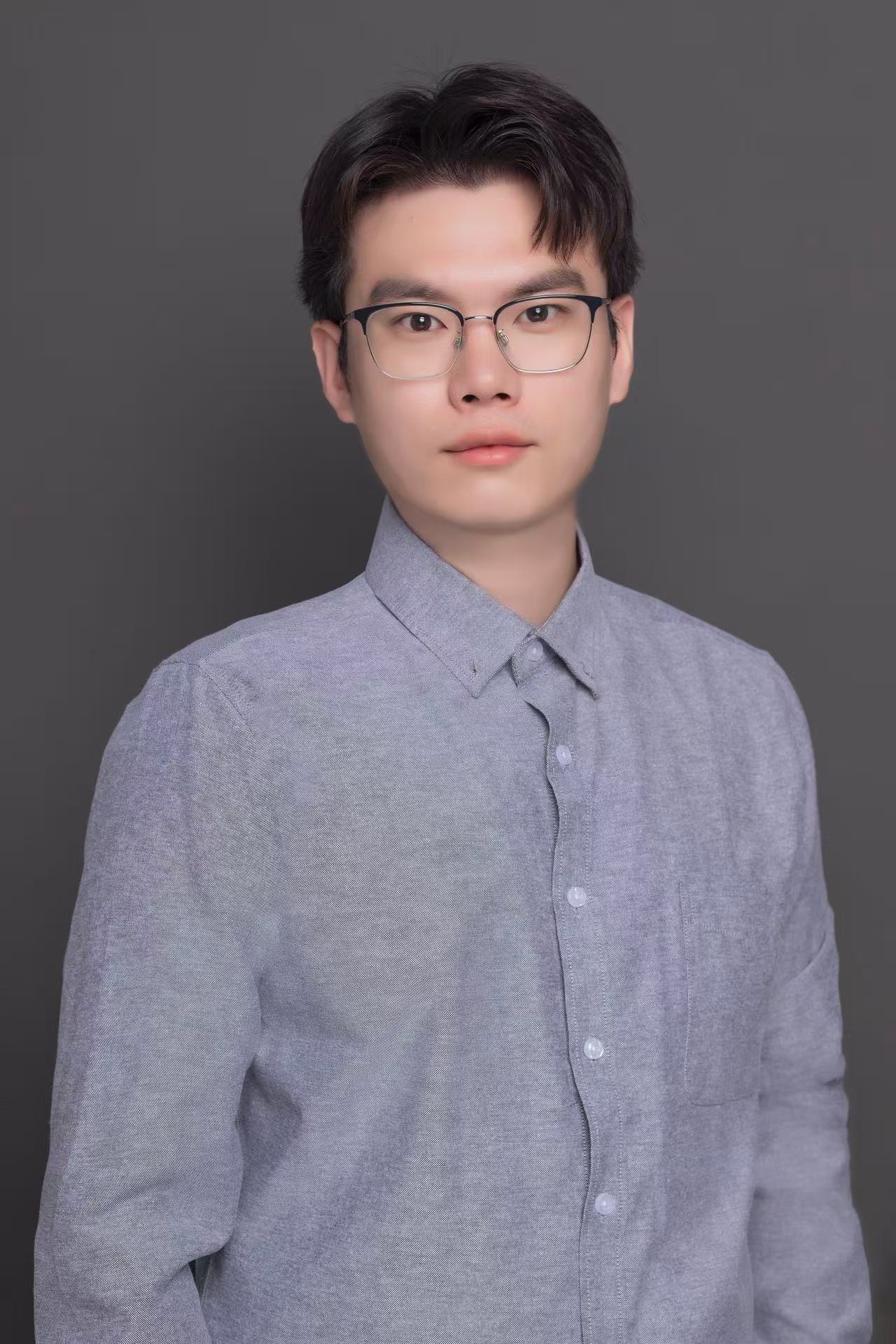
 Wei Dong
· 4 previous affiliations
- Nanyang Technological UniversitySince 2024
- Assistant Professor · Since 2024
- Carnegie Mellon University2023–2024
- Postdoc · 2023–2024
- PhD student · 2018–2023
- City University of Hong Kong2013–2017
- Undergrad student · 2013–2017
6 other authors named Wei Dong: Wei Dong (Xi'an University of Architecture and Technology · 55 papers), Wei Dong (McMaster University · 53 papers), Wei Dong (Zhejiang University · 9 papers), Wei Dong (Apple (United States) · 3 papers), Wei Dong (3 papers), and 1 more
Research Overview
Wei Dong focuses on data privacy, secure multi-party computation, and the security of large language models. His early work established foundational mechanisms for differential privacy in statistical estimation and relational database queries. Recently, his research has expanded into privacy-preserving artificial intelligence, investigating the vulnerabilities of retrieval-augmented generation systems and the trustworthiness of multimodal foundation models.
Research Trajectory
Wei Dong's early research established foundational algorithms for differential privacy, particularly in scenarios lacking prior bounds on data distributions. In 2021, he introduced mechanisms for pure differential privacy in Universal Private Estimators, providing flexible estimators for mean, variance, and interquartile range without requiring a priori knowledge of data ranges. This work, later expanded in a 2023 publication also titled Universal Private Estimators, advanced the research direction of Private Statistical Estimation for Unbounded Data and contributed to the area of Privacy Amplification by Subsampling. Concurrently, he addressed the complexities of relational databases, developing techniques for multi-way joins in Residual Sensitivity for Differentially Private Multi-Way Joins (2021) and optimizing query evaluation with foreign keys in R2T: Instance-optimal Truncation for Differentially Private Query Evaluation with Foreign Keys (2022).
Expanding his focus to high-dimensional data and user-level guarantees, he presented new algorithms for concentrated differential privacy (zCDP) in Differentially Private Covariance Revisited (2022), improving worst-case error bounds over standard Gaussian mechanisms. He further explored user-level privacy constraints, contributing to Shifted Inverse: A General Mechanism for Monotonic Functions under User Differential Privacy (2022) and investigating continuous data streams in Continual Observation under User-level Differential Privacy (2023).
By 2024, his work bridged differential privacy with secure multi-party computation (MPC) to enable practical, privacy-preserving data analytics. He developed LINQ, detailed in Secure Query Processing with Linear Complexity, which achieved linear time and communication complexity for join operations, matching the theoretical efficiency of plaintext systems. This systems-oriented approach continued with his involvement in DOP-SQL: A General-purpose, High-utility, and Extensible Private SQL System (2024). He also refined summation protocols across different privacy models, achieving near-optimal communication complexity in the shuffle model with Almost Instance-optimal Clipping for Summation Problems in the Shuffle Model of Differential Privacy (2024), and later addressing personalized local differential privacy in Sum Estimation under Personalized Local Differential Privacy (2025).
In recent years, his trajectory has heavily emphasized the security and trustworthiness of large language models (LLMs) and multimodal systems. He exposed critical privacy risks in pre-trained models by introducing PETAL in Towards Label-Only Membership Inference Attack against Pre-trained Large Language Models (2025), demonstrating how training data can be inferred without access to internal model probabilities. He also directed research into the fragility of retrieval-augmented generation (RAG) systems; in Evaluating RAG Robustness to Symbolic Perturbations (2025), his team revealed how simple emoticons could hijack retrieval processes. Alongside these security evaluations, he participated in broader efficiency research, co-authoring A Survey on Large Language Model Acceleration based on KV Cache Management (2025).
His investigation into AI vulnerabilities extends across modalities. He explored adversarial examples in vision-language models through Evolution-based Region Adversarial Prompt Learning for Robustness Enhancement in Vision-Language Models (2025), aligning with the broader research direction of Population Training for Robust Strategic Generalization. In 2026, he collaborated on When Memory Becomes a Vulnerability: Towards Multi-turn Jailbreak Attacks against Text-to-Image Generation Systems, which introduced multi-turn jailbreak attacks that bypass safety filters by exploiting memory mechanisms. Furthermore, he contributed to the comprehensive evaluation of audio models in AudioTrust: Benchmarking The Multifaceted Trustworthiness of Audio Large Language Models (2026). This work highlighted risks associated with non-semantic cues like emotion and accent, advancing the research areas of Paralinguistic Bias in Large Audio Language Models, Paralinguistic Privacy for Speech Processing, and Multi-dimensional Benchmarking for Trustworthy Foundation Models.
Current Directions
The most recent papers in the evidence address the multifaceted security and trustworthiness of generative AI systems. Recent work investigates vulnerabilities in both text and multimodal foundation models, including membership inference attacks against LLMs, symbolic perturbation threats in RAG architectures, and multi-turn jailbreaks in text-to-image generators. Additionally, there is a strong focus on establishing comprehensive evaluation frameworks for emerging modalities, particularly assessing fairness, safety, and privacy in audio large language models against paralinguistic manipulation.
Profile updated
Loading new papers…
Other researchers whose papers cluster into the same research directions — a proxy for overlapping technical interests and shared intellectual neighborhoods.
See something wrong? Report a mistake