

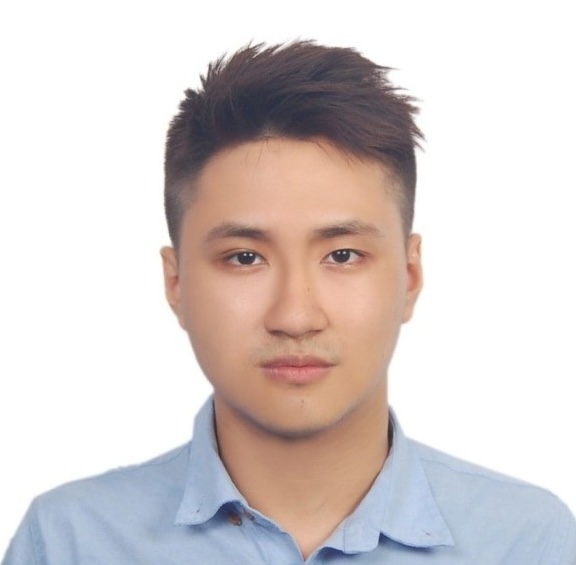
 Wei-Chieh Huang
· 8 previous affiliations
- University of Illinois ChicagoSince 2024
- Doctor of Philosophy - PhD, Computer Science · 2024–2029
- Research & Teaching Assistant · Since 2024
- GEICO2022–2023
- Data Scientist · 2022–2023
- Process-Energy-Environmental Systems Engineering (PEESE) Lab2020–2022
- Researcher · 2020–2022
- Cornell University2020–2022
- Master's degree, Systems Engineering · 2020–2022
- Cornell Tech2020–2022
- MS student · 2020–2022
- Joblogic-X Corporation2021
- Data Scientist · 2021
- CTCI2018–2020
- Process Engineer · 2018–2020
- Undergrad student · 2013–2017
Research Overview
Wei-Chieh Huang focuses on large language model agents, human-agent collaboration, and agent memory architectures. His research investigates how intelligent systems can reason, collaborate, and interact effectively with human users across complex tasks. Recently, his work emphasizes multi-agent debate frameworks, safety guardrails for autonomous research systems, and long-context memory for lifelong personalization.
Research Trajectory
A foundational theme in Huang's research is the critical evaluation of fully autonomous artificial intelligence, advocating instead for structured collaboration between humans and language models. He articulated this stance in A Call for Collaborative Intelligence: Why Human-Agent Systems Should Precede AI Autonomy, arguing that the industry's rush toward independent AI operators is premature given current limitations in complex reasoning and ethics. Instead, he proposed treating AI as a collaborative teammate, a concept that intersects with the research direction of Proactive Clarification for Ambiguous Agent Instructions. He expanded on this paradigm in A Survey on Large Language Model based Human-Agent Systems, detailing how synergistic frameworks—where humans provide intuition and oversight while agents manage scale—can mitigate hallucinations and ethical risks. This work touches upon the broader area of Dual Process Architectures for Real Time Reasoning Agents. He further mapped this interdisciplinary space with collaborators in LLM-Based Human-Agent Collaboration and Interaction Systems: A Survey, providing a comprehensive overview of system components and future challenges in human-agent interaction.
As large language models evolved, Huang's focus expanded to encompass agentic deep research and the integration of retrieval systems with advanced reasoning. He contributed to Towards Agentic RAG with Deep Reasoning: A Survey of RAG-Reasoning Systems in LLMs, which outlines the architectural shift from static, one-way retrieval enhancements to dynamic frameworks where models iteratively interleave web search and deep reasoning. He also participated in defining this transition in From Web Search towards Agentic Deep Research: Incentivizing Search with Reasoning Agents, exploring how autonomous reasoning and iterative information synthesis form a dynamic feedback loop that transcends traditional keyword-based search. Recognizing the safety vulnerabilities inherent in these open-domain autonomous systems, he introduced DeepResearchGuard: Deep Research with Open-Domain Evaluation and Multi-Stage Guardrails for Safety. This framework evaluates and protects each step of the research process—from initial input to final output—significantly improving the safety and quality of generated reports while minimizing unnecessary model refusals.
To improve the reasoning capabilities and accuracy of these models, Huang has explored multi-agent interactions and dynamic training methodologies. In MADIAVE: Multi-Agent Debate for Implicit Attribute Value Extraction, he developed a framework where multiple multimodal large language models collaborate and cross-verify to extract difficult-to-infer product attributes from images and text. By allowing models to debate over several rounds, the system boosts accuracy over single-model approaches. This work advances several research directions, including Multi-Agent Debate for Large Language Model Reasoning and Breaking the Echo Chamber in Multi-Agent Debate, while navigating challenges related to the area of Expertise Dilution in Heterogeneous Multi-Agent Systems. Alongside architectural innovations, he contributed to foundational model training techniques in Teaching According to Talents! Instruction Tuning LLMs with Competence-Aware Curriculum Learning. This research proposes a dynamic curriculum learning framework that adapts to a model's evolving capabilities during instruction tuning, overcoming the rigidity of static heuristic difficulty metrics.
Most recently, Huang's collaborative work has addressed the memory abstractions required to support long-horizon tasks and sustained human-agent interaction. In MemoryCD: Benchmarking Long-Context User Memory of LLM Agents for Lifelong Cross-Domain Personalization, he helped introduce a large-scale, user-centric benchmark evaluating how well agents retain and utilize cross-domain interaction data over time. The study highlights current shortfalls in language model memory methods, emphasizing the need for more sophisticated architectures to enable true lifelong personalization.
Current Directions
The most recent papers in the evidence indicate a strong focus on the sustained reliability, safety, and personalization of agentic systems. A primary current direction involves long-context user memory, specifically developing benchmarks and abstractions that allow agents to maintain lifelong, cross-domain personalization during extended human-agent interactions. Additionally, recent work investigates safety mechanisms for autonomous systems, focusing on multi-stage guardrails that protect open-domain deep research processes without triggering unnecessary model refusals. Finally, there is an ongoing emphasis on multi-agent reasoning architectures, utilizing structured debate among heterogeneous multimodal models to cross-verify information and extract implicit attributes from complex data environments.
Profile updated
Loading new papers…
Other researchers whose papers cluster into the same research directions — a proxy for overlapping technical interests and shared intellectual neighborhoods.
See something wrong? Report a mistake