

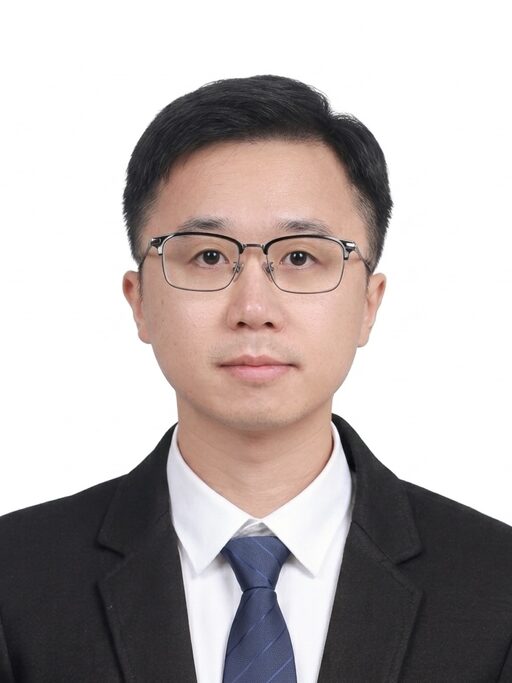
 Wanpeng Zhang
· 4 previous affiliations
- BeingBeyondSince 2026
- Researcher · Since 2026
- Peking UniversityCurrent
- Current
- PhD student · 2022–2026
- Tsinghua University2019–2022
- MS student · 2019–2022
- Nankai University2015–2019
- Undergrad student · 2015–2019
1 other author named Wanpeng Zhang: Wanpeng Zhang (Beijing Institute of Technology · 2 papers)
Research Overview
Wanpeng Zhang focuses on foundation models, reinforcement learning, and robotics, with a particular emphasis on embodied intelligence. His early work addressed non-stationarity and multi-agent coordination in reinforcement learning environments. More recently, his research centers on vision-language-action pretraining and multimodal tokenization to scale robust, cross-embodiment robotic control.
Research Trajectory
Zhang's early research concentrated on robust decision-making in complex environments, spanning physical control systems and multi-agent reinforcement learning. In 2021, he developed methods for Robust Model-based Reinforcement Learning for Autonomous Greenhouse Control. He subsequently explored how natural language could drive policy generalization, participating in research on an Entity Divider with Language Grounding in Multi-Agent Reinforcement Learning. To address unpredictable environmental shifts, he introduced a dual-graph attention mechanism in Tackling Non-Stationarity in Reinforcement Learning via Causal-Origin Representation, advancing the broader area of Adapting Reinforcement Learning to Non-Stationary Environments.
Recognizing the complementary strengths of high-level reasoning and low-level execution, Zhang investigated frameworks that integrate large language models with reinforcement learning feedback. He introduced RLAdapter: Bridging Large Language Models to Reinforcement Learning in Open Worlds, which uses a lightweight adapter to refine prompts based on agent performance. This work, alongside AdaRefiner: Refining Decisions of Language Models with Adaptive Feedback, contributed to the research direction of Decomposing Long Horizon Tasks in Sparse Reward Reinforcement Learning by enabling autonomous agents to master complex tasks without manual prompt engineering. He also applied LLM-based reasoning to social deduction environments, developing LLM-Based Explicit Models of Opponents for Multi-Agent Games to build refined mental models of other players, which intersects with the broader area of Coordination through Mutual Predictability in Multi Agent Systems.
By 2025, Zhang's focus expanded to foundational architectures for vision and language processing. He addressed the performance gap between discrete token-based models and continuous embedding models by applying text-based tokenization principles to visual data. In From Pixels to Tokens: Byte-Pair Encoding on Quantized Visual Modalities, he introduced a visual tokenizer that merges frequently co-occurring image patches. This approach provided Transformers with a structural prior, advancing research in Restoring Spatial Structure in Vision Transformers and Adaptive Visual Token Compression for Multimodal Models. He further integrated spatial consistency into the tokenization process in Unified Multimodal Understanding via Byte-Pair Visual Encoding, utilizing a multi-stage curriculum to improve multimodal alignment.
Building on these foundational models, Zhang transitioned toward embodied intelligence and robotic control, aligning with his work at BeingBeyond, a startup focused on foundation models for embodied AI. He investigated how robots could inherit complex manipulation priors from human demonstrations. In Spatial-Aware VLA Pretraining through Visual-Physical Alignment from Human Videos, he explicitly aligned 2D visual observations with 3D spatial reasoning to improve physical grounding. He also contributed to Vision-Language-Action Pretraining from Large-Scale Human Videos, a foundational model that treats hand motion as a physical instruction tuning paradigm, supporting the research direction of Stabilizing Spatial Reasoning in Egocentric Video. To ensure these models remain reliable under real-world distribution shifts, he developed DiG-Flow: Discrepancy-Guided Flow Matching for Robust VLA Models, which modulates internal representations based on the geometric discrepancy between visual observations and planned actions.
Current Directions
The most recent papers in the evidence address the scaling and physical grounding of Vision-Language-Action (VLA) models for robotic manipulation. Recent work investigates how to bridge the embodiment gap by pretraining on large-scale human demonstration videos, explicitly modeling hand motion and spatial reasoning before transferring policies to physical robots. A major focus of this research involves developing unified latent action spaces and robust architectural modules—such as discrepancy-guided flow matching—to ensure policies remain stable under real-world distribution shifts. Additionally, ongoing efforts explore efficient visual tokenization strategies, applying discrete encoding techniques to visual modalities to improve multimodal alignment and spatial understanding in foundation models.
Profile updated
Loading new papers…
Other researchers whose papers cluster into the same research directions — a proxy for overlapping technical interests and shared intellectual neighborhoods.
See something wrong? Report a mistake