

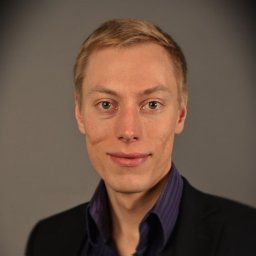
 Walter Zimmer
· 6 previous affiliations
- Technical University of MunichSince 2019
- Associate Researcher · Since 2025
- Research Assistant · 2020–2025
- Doctor of Philosophy - PhD, Computer Science · 2019–2025
- DiscoverSince 2026
- Postdoc · 2026–2028
- University of California, Los AngelesSince 2026
- Postdoctoral Researcher · 2026–2027
- The University of Sydney2025–2026
- Visiting Research Scientist · 2025–2026
- Researcher · 2025
- STTech GmbH2019–2020
- Autonomous Systems Engineer · 2019–2020
- University of California San Diego2018–2019
- Researcher · 2018–2019
Research Overview
Walter Zimmer focuses on autonomous driving perception, multi-modal sensor fusion, and infrastructure-centric cooperative systems. His trajectory spans the development of large-scale roadside datasets and real-time 3D object detection frameworks that bridge vehicle and infrastructure sensors. Currently, his work investigates safety-critical event detection, vision-language models for traffic reasoning, and advanced scene reconstruction techniques.
Research Trajectory
Zimmer's early research addressed the foundational bottleneck of data annotation in autonomous driving. He introduced 3D BAT: A Semi-Automatic, Web-based 3D Annotation Toolbox for Full-Surround, Multi-Modal Data Streams, an open-source platform designed to accelerate the labeling of synchronized camera and LiDAR data by projecting 3D annotations across multiple views.
Recognizing the limitations of vehicle-only perception, his focus shifted toward the research direction of Infrastructure-Centric Cooperative Perception for Autonomous Driving. This led to the release of the A9-Dataset: Multi-Sensor Infrastructure-Based Dataset for Mobility Research, which provided a crucial bird's-eye perspective from stationary roadside sensors to train intelligent transportation models. To further optimize the data pipeline, he explored active learning strategies in Multi-Task Consistency for Active Learning, demonstrating how inconsistencies between object detection and semantic segmentation tasks could be used to intelligently select the most informative samples for annotation. Expanding the scope of roadside perception, he subsequently developed the TUMTraf Intersection Dataset: All You Need for Urban 3D Camera-LiDAR Roadside Perception, establishing a benchmark for complex urban environments and advancing the broader area of Overcoming Sensor Occlusion Through Collaborative Perception.
In 2024, Zimmer significantly expanded his work on cooperative systems. He presented the TUMTraf V2X Cooperative Perception Dataset, which paired roadside and onboard sensors to mitigate occlusions and extend sensor range, alongside a cooperative multi-modal fusion model. Building on this infrastructure-assisted paradigm, he introduced InfraDet3D: Multi-Modal 3D Object Detection based on Roadside Infrastructure Camera and LiDAR Sensors, a system that fuses data from multiple stationary sensors and HD maps to improve detection accuracy for small or occluded objects. To handle the massive data streams generated by such setups, he collaborated on PointCompress3D - A Point Cloud Compression Framework for Roadside LiDARs in Intelligent Transportation Systems, achieving substantial bandwidth reductions while maintaining real-time processing speeds. During this period, he also synthesized the state of the field through comprehensive reviews, including A Survey on Autonomous Driving Datasets: Statistics, Annotation Quality, and a Future Outlook, which evaluated 265 datasets and discussed challenges in the area of Perception Robustness for Autonomous Systems in Adverse Weather. Additionally, he explored emerging paradigms in Vision Language Models in Autonomous Driving: A Survey and Outlook, detailing how large language models could enhance environmental understanding and decision-making.
The most recent phase of Zimmer's trajectory emphasizes safety-critical edge cases and sophisticated scene understanding. Addressing the scarcity of data on high-impact collisions, he led the development of Towards Vision Zero: The TUM Traffic Accid3nD Dataset, a large-scale 3D annotated dataset of real-world highway accidents. This initiative was expanded in Safety-Critical Learning for Long-Tail Events: The TUM Traffic Accident Dataset and Enhancing Highway Safety: Accident Detection on the A9 Test Stretch Using Roadside Sensors, where he and his collaborators proposed hybrid rule- and learning-based frameworks for real-time accident detection.
To tackle the practical challenge of varying sensor setups across different vehicles and infrastructure nodes, he contributed to HeCoFuse: Cross-Modal Complementary V2X Cooperative Perception with Heterogeneous Sensors, a unified framework utilizing hierarchical attention to maintain high performance across diverse sensor combinations. His research also advanced into complex spatio-temporal reasoning with TUMTraf VideoQA: Dataset and Benchmark for Unified Spatio-Temporal Video Understanding in Traffic Scenes, contributing to the research direction of Query-Aware Retrieval for Efficient Video Understanding by bridging object identification with temporal grounding. Finally, his work on scene reconstruction evolved with EnerGS: Energy-Based Gaussian Splatting under Partial Geometric Priors, which improved 3D Gaussian Splatting for large-scale outdoor environments by treating sparse LiDAR data as a continuous energy field to reconstruct unobserved geometry.
Current Directions
The most recent papers in the evidence indicate a dual focus on safety-critical perception and advanced spatio-temporal reasoning for autonomous systems. A primary current direction involves detecting and learning from rare, high-impact events, such as highway accidents, using hybrid frameworks that combine physics-based rules with deep learning on roadside sensor data. Concurrently, Zimmer is investigating heterogeneous Vehicle-to-Everything (V2X) cooperative perception, developing models that can adaptively fuse data from diverse and mismatched sensor configurations across vehicles and infrastructure. His recent work also explores the integration of vision-language models for complex traffic reasoning—unifying video question answering and spatial grounding—as well as refining 3D scene reconstruction techniques like Gaussian Splatting to handle sparse geometric priors in large-scale outdoor environments.
Profile updated
Loading new papers…
Other researchers whose papers cluster into the same research directions — a proxy for overlapping technical interests and shared intellectual neighborhoods.
See something wrong? Report a mistake