

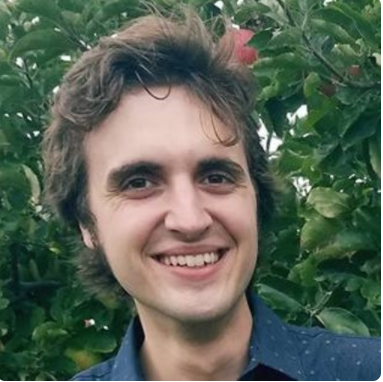
 Walter Gerych
· 4 previous affiliations
- Worcester Polytechnic InstituteSince 2025
- Assistant Professor · Since 2025
- Graduate Research Assistant · 2018–2023
- PhD student · 2017–2020
- Graduate Teaching Assistant · 2017–2018
- Postdoctoral Associate · 2023–2025
- Postdoc · 2023–2025
- SUNY Geneseo2016–2017
- Assistant Web Developer · 2016–2017
Research Overview
Walter Gerych focuses on trustworthy machine learning, specifically developing efficient methods to debias large pretrained models and improve their reliability. His early work addressed challenges in weakly labeled and imbalanced data, gradually evolving toward the safety and fairness of foundation models. Currently, he investigates test-time debiasing techniques and the robustness of large language models against adversarial vulnerabilities.
Research Trajectory
His early research addressed the practical challenges of training machine learning models on imperfect, imbalanced, or weakly labeled datasets. In 2019, he explored anomaly detection techniques for smartphone sensing, developing methods for Classifying Depression in Imbalanced Datasets Using an Autoencoder- Based Anomaly Detection Approach. Recognizing that real-world data annotation is often incomplete and non-random, he subsequently focused on Positive-Unlabeled (PU) learning. He identified that labeled data frequently occurs in contiguous sequences due to human annotation patterns, introducing a framework to handle this sequential bias in BurstPU: Classification of Weakly Labeled Datasets with Sequential Bias. He expanded on this problem by proposing an inference strategy to identify the likelihood of positive instances being labeled in Recovering the Propensity Score from Biased Positive Unlabeled Data, and further formalized a solution that models the sequentially biased labeling process itself in Positive Unlabeled Learning with a Sequential Selection Bias.
Alongside his work on weakly labeled data, he investigated exact multi-label classification, where missing a single label carries a high cost. He developed Recurrent Bayesian Classifier Chains for Exact Multi-Label Classification to optimize subset accuracy by addressing the unprincipled ordering of iterative class predictions. This work contributed to the research direction of Sequential Decoding for Multi-Label Classification and the broader area of Modeling Label Dependencies in Multi-Label Learning.
By 2023, his focus expanded to the fairness and reliability of deep generative models and foundation models. He introduced a "Distribution Mapper" in Debiasing Pretrained Generative Models by Uniformly Sampling Semantic Attributes, a technique that forces a model to output a uniform distribution across sensitive attributes without requiring retraining or real training data. He then applied debiasing principles to Vision-Language Models (VLMs) with BendVLM: Test-Time Debiasing of Vision-Language Embeddings, addressing the societal biases inherited from massive training sets. This advanced the research direction of Neutralizing Demographic Bias in Vision-Language Models and contributed to the area of Concept Erasure via Orthogonal Subspace Projection. In the medical domain, he proposed MaskMedPaint: Masked Medical Image Inpainting with Diffusion Models for Mitigation of Spurious Correlations, utilizing diffusion models to strip away spurious background correlations and improve cross-hospital generalization.
In 2024, he also explored model architecture and knowledge representation. He developed the VENUS framework in Amalgamating Multi-Task Models with Heterogeneous Architectures, enabling a single student model to learn from multiple pre-trained teachers with differing architectures by aligning internal shared representations. Shifting to language models, he created TAXI: Evaluating Categorical Knowledge Editing for Language Models, a benchmark designed to test whether injecting new facts into an LLM consistently updates related categorical knowledge.
His most recent work investigates both the theoretical underpinnings of model training and the practical safety of deployed systems. In 2025, he demonstrated how the theoretical infinite-width limit of neural networks can provide a training-free signal for architecture selection and bias detection in The Surprising Effectiveness of Infinite-Width NTKs for Characterizing and Improving Model Training. Continuing his research on VLM fairness, he introduced WRING Out The Bias: A Rotation-Based Alternative To Projection Debiasing, a norm-preserving rotation technique that neutralizes specific biases without distorting the model's relationship to unconsidered concepts.
Collaborative work in 2026 has focused heavily on LLM safety and uncertainty. He participated in identifying vulnerabilities to stylistic jailbreaks in When Style Breaks Safety: Defending LLMs Against Superficial Style Alignment, which proposed a defense mechanism using style-augmented safety data. This research aligns with work in Attention Hijacking in Large Language Model Safety and the area of Data Efficient Safety Alignment for Large Language Models. Additionally, he contributed to Complementing Self-Consistency with Cross-Model Disagreement for Uncertainty Quantification, which measures epistemic uncertainty across an ensemble of different model families to better flag hallucinations and confidently wrong outputs.
Current Directions
The most recent papers in the evidence indicate a dual focus on refining the fairness of multimodal foundation models and securing large language models against adversarial use. Recent work investigates norm-preserving rotational techniques to neutralize specific demographic and societal biases in vision-language embeddings without inadvertently amplifying other biases or distorting unrelated concepts. Concurrently, research addresses the safety of language models by identifying vulnerabilities to superficial stylistic jailbreaks and developing data-efficient alignment defenses to close these backdoors. Additional recent efforts explore uncertainty quantification, utilizing cross-model disagreement among heterogeneous architectures to better detect hallucinations, calibrate model confidence, and determine when a model should abstain from answering.
Profile updated
Loading new papers…
Other researchers whose papers cluster into the same research directions — a proxy for overlapping technical interests and shared intellectual neighborhoods.
See something wrong? Report a mistake