

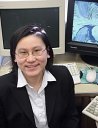
 Wallapak Tavanapong
· 2 previous affiliations
- Iowa State UniversitySince 1999
- Full Professor · Since 2015
- Associate Professor · 2005–2015
- Assistant Professor · 1999–2005
- University of Central Florida1992–1999
- PhD student · 1995–1999
- MS student · 1992–1995
Research Overview
Wallapak Tavanapong focuses on multimedia systems, video-on-demand architectures, and distributed database management. Early research investigated load balancing and query scheduling for parallel multicomputer databases before shifting toward bandwidth-efficient video streaming and retrieval techniques. More recently, this expertise in multimedia processing has been applied to collaborative medical imaging and disease detection systems.
Research Trajectory
Tavanapong’s early research in the mid-1990s centered on the performance and optimization of multicomputer database systems. A primary focus during this period was the efficient execution of complex queries across parallel architectures. As the senior author on Scheduling Queries for Parallel Execution on Multicomputer Database Management Systems (1996), Tavanapong evaluated competition-based versus planning-based scheduling approaches, demonstrating that centralized planning consistently provided better performance for parallel database operations.
By the late 1990s, Tavanapong’s focus transitioned toward the emerging challenges of multimedia delivery, specifically video-on-demand (VOD) services operating over limited-bandwidth networks. This work addressed the high infrastructure costs and bandwidth bottlenecks associated with streaming media to home users. Tavanapong led research into batching techniques, serving as principal investigator on Chaining: A Generalized Batching Technique for Video-On-Demand (1997). To further accommodate bandwidth constraints while maintaining user experience, Tavanapong co-authored 2PSM: An Efficient Framework for Searching Video Information in a Limited-Bandwidth Environment (1999). This research introduced a two-phase service model that delivered non-adjacent data fragments ahead of time, enabling both video previewing and VCR-style operations (such as fast-forward and rewind) without exceeding the transport medium's isochronous bandwidth limits.
In the early 2000s, the scope of this multimedia research expanded to encompass broader internet video browsing and content-based image retrieval. Tavanapong first-authored Design and implementation of a video browsing system for the Internet (2001), addressing the practical systems engineering required for web-based video interaction. Concurrently, Tavanapong directed research into visual search methodologies, serving as the senior author on Image Retrieval Based on Regions of Interest (2003), which explored how localized image features could improve retrieval accuracy in large multimedia databases.
Throughout the mid-2000s, Tavanapong continued to refine bandwidth-sharing protocols for VOD systems. A significant contribution to this area was the co-authored study A double patching technique for efficient bandwidth sharing in video-on-demand systems (2007). This work addressed the limitations of standard multicast patching—where the cost of patching streams increases as the time distance from the last regular multicast grows—by introducing a double patching strategy that delayed the need for new regular multicasts and improved overall system scalability.
Current Directions
The most recent work in the evidence, dating to 2016, indicates a shift toward the intersection of multimedia systems and healthcare. Participating in large-scale collaborative research, Tavanapong has investigated how core competencies from the multimedia community can be applied to medical imaging for disease detection and assessment. Rather than focusing solely on traditional computer vision algorithms, this direction emphasizes the practical integration of multi-source data, real-time processing capabilities, and end-user usability to improve clinical workflows and patient care systems.
Profile updated
Loading new papers…
Loading research neighbors…
See something wrong? Report a mistake