

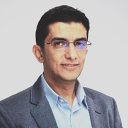
 Wajdi Zaghouani
· 11 previous affiliations
- Northwestern UniversitySince 2024
- Associate Professor · Since 2024
- Northwestern University in QatarSince 2024
- Associate Professor · Since 2024
- Qatar Computing Research Institute2018–2024
- Associate Professor · 2023–2024
- Assistant Professor · 2018–2022
- Hamad bin Khalifa University2018–2024
- Associate Professor · 2023–2024
- Assistant Professor · 2018–2022
- Carnegie Mellon University Qatar2012–2018
- Postdoctoral Research Associate · 2012–2018
- Carnegie Mellon University2012–2017
- Postdoc · 2012–2017
- Université Paris Nanterre2012–2014
- Doctor of Philosophy (PhD), Natural Language Processing · 2012–2014
- Appen (United States)2013
- Senior Consultant · 2013
- University of Pennsylvania2006–2010
- Researcher · 2006–2010
- Université de Montréal2004–2009
- Master's degree, Computational Linguistics · 2005–2009
- MS student · 2004–2009
- Researcher · 2005–2006
Research Overview
Wajdi Zaghouani focuses on Arabic natural language processing, large-scale linguistic annotation, and corpus development. His trajectory spans the creation of foundational semantic resources like the Arabic PropBank to comprehensive frameworks for error correction, diacritization, and machine translation post-editing. The most recent papers in the evidence address fine-grained dialectal modeling and the automated verification of political claims.
Research Trajectory
Zaghouani's early research concentrated on building foundational semantic resources for Arabic, addressing the unique challenges posed by the language's rich morphology and relatively free word order. He directed the development of initial semantic role labeling frameworks, detailing the creation of these resources in A Pilot Arabic Propbank (2008). This effort was subsequently refined and expanded in The Revised Arabic PropBank (2010). Extending this semantic framework to classical texts, he introduced A Pilot PropBank Annotation for Quranic Arabic (2012). This project contributed to several broader research areas, including Building Gold Standards through Iterative Consensus and Unified Representations for Syntax and Semantics, while also advancing the area of Modeling Language Evolution in Historical NLP.
Following his work on semantic role labeling, Zaghouani shifted toward large-scale text correction and the development of robust annotation guidelines. He presented a comprehensive web-based framework and methodology for creating a manually annotated corpus of errors and corrections in Large Scale Arabic Error Annotation: Guidelines and Framework (2014). This foundational work supported community-wide evaluations, as seen in his participation in The First QALB Shared Task on Automatic Text Correction for Arabic (2014). He further expanded these correction frameworks to address the specific linguistic patterns of language learners in Correction Annotation for Non-Native Arabic Texts: Guidelines and Corpus (2015).
In 2016, his research output diversified across several critical areas of Arabic NLP, maintaining a strong emphasis on high-quality corpus creation. He investigated the relationship between morphological structures and verbal semantic roles in AMPN: a semantic resource for Arabic morphological patterns. To support the development of automated systems that accelerate human translation revision, he established comprehensive procedures in Building an Arabic Machine Translation Post-Edited Corpus: Guidelines and Annotation. Addressing the pervasive challenge of missing vowels in written Arabic, he detailed the creation of a two-million-word resource in Guidelines and Framework for a Large Scale Arabic Diacritized Corpus. Recognizing the inherent difficulties in scaling manual annotation, he also explored methodological improvements to the annotation pipeline itself, presenting techniques to handle linguistic complexity in Using Ambiguity Detection to Streamline Linguistic Annotation.
The most recent phase of his trajectory in the evidence focuses on the complexities of Arabic dialects and the emerging challenge of computational fact-checking. He collaborated on extensive projects to standardize and model regional variations, contributing to Unified Guidelines and Resources for Arabic Dialect Orthography (2018), which applied common meta-guidelines across 28 Arab city dialects. This effort paralleled his involvement in The MADAR Arabic Dialect Corpus and Lexicon (2018), a project that produced a large parallel corpus and lexicon with fine-grained location granularity. Concurrently, he participated in organizing shared tasks for information credibility, as detailed in the Overview of the CLEF-2018 CheckThat! Lab on Automatic Identification and Verification of Political Claims (2018), which evaluated systems for prioritizing and assessing check-worthy statements in political debates.
Current Directions
The most recent papers in the evidence, dating to 2018, indicate a dual focus on fine-grained dialectal Arabic processing and computational fact-checking. Work in dialectology addresses the lack of standardized orthography across regional Arabic variants, aiming to build parallel corpora and lexicons that capture city-level linguistic granularity. Simultaneously, research in information credibility focuses on the automated identification and verification of political claims, developing frameworks to rank check-worthy statements and assess their factual accuracy in both English and Arabic.
Profile updated
Loading new papers…
Other researchers whose papers cluster into the same research directions — a proxy for overlapping technical interests and shared intellectual neighborhoods.
See something wrong? Report a mistake