

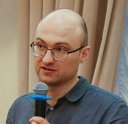
 Vladimir Vanovskiy
· 5 previous affiliations
- Applied AI InstituteSince 2025
- Principal Researcher · Since 2025
- Principal Researcher · 2021–2024
- Assistant Professor · 2021–2024
- Teaching Assistant · 2011–2021
- MS student · 2011–2013
- Undergrad student · 2007–2011
- Institute for Problems in Mechanics2013–2023
- Researcher · 2013–2023
- Doctor of Philosophy - PhD, hydrodynamics · 2013–2020
- Yandex School of Data Analysis2015–2018
- Artificial Intelligence · 2015–2018
Research Overview
Vladimir Vanovskiy focuses on the integration of machine learning with physical modeling, specifically in the domains of computational fluid dynamics (CFD), geophysics, and atmospheric science. His work emphasizes the development of differentiable solvers, multi-fidelity surrogate models, and self-supervised learning techniques to accelerate complex numerical simulations while maintaining physical consistency. By bridging the gap between traditional numerical methods and deep learning, Vanovskiy addresses the computational bottlenecks inherent in solving partial differential equations (PDEs) for large-scale environmental and industrial applications.
Research Trajectory
Vanovskiy’s early research focused on the development of multi-fidelity surrogate models to optimize the trade-off between computational cost and predictive accuracy. In 2022, he participated in research involving A CFD-based multi-fidelity surrogate model for prediction of flow parameters in a ventilated room, which utilized Gaussian Process Regression to combine high-accuracy CFD simulations with coarser, less expensive models. This period was characterized by an interest in applying machine learning to enhance real-time climate control and optimization in built environments.
By 2023, Vanovskiy’s work shifted toward more complex geophysical systems, specifically oil reservoir modeling. As a lead author, he developed a Combined mechanistic and machine learning method for construction of oil reservoir permeability map consistent with well test measurements. This research introduced a hybrid approach that integrated static well logging data with dynamic measurements through kernel regression and neural network surrogates. This move represented a significant step toward "hydrodynamically similar" modeling, which avoids the high computational overhead of iterative history matching in reservoir engineering.
During 2023 and 2024, Vanovskiy’s focus expanded into the fundamental challenges of making geometric and numerical structures differentiable. He contributed to the development of A Method for Auto-Differentiation of the Voronoi Tessellation, addressing a long-standing hurdle in computational geometry where standard algorithms were non-differentiable. This methodological advancement laid the groundwork for his subsequent senior-authored work on grid optimization. In Self-Supervised Coarsening of Unstructured Grid with Automatic Differentiation, he led research into shrinking high-resolution grids for PDE solvers without losing essential physical properties, utilizing automatic differentiation to maintain the "soul" of the underlying physics.
In 2024 and 2025, Vanovskiy increasingly applied these differentiable and surrogate modeling techniques to atmospheric and climate science. He investigated the acceleration of regional weather forecasting through super-resolution and data-driven methods, exploring both the complete replacement of numerical models with deep learning and the use of machine learning for downscaling coarse-grid forecasts. His recent work as a senior researcher has focused on sophisticated architectures such as Graph Neural Networks (GNNs) and Neural Ordinary Differential Equations (Neural ODEs) to handle the complexities of unstructured grids and vertical energy propagation in the atmosphere.
Current Directions
Vanovskiy’s current research program is centered on three primary pillars: differentiable implicit solvers, self-supervised representation learning for geological data, and uncertainty-aware forecasting for Arctic conditions.
A major current focus is the development of stability-aware frameworks for physics simulations. This is exemplified by his work on Differentiable Implicit Solver on Graph Neural Networks for Forward and Inverse Problems, where he oversees the creation of solvers that leverage message passing on GNNs to handle parabolic PDEs. By ensuring these solvers are fully differentiable, his team enables more efficient estimation of equation coefficients and right-hand side parameters, which are critical for inverse modeling.
In the domain of geophysics, Vanovskiy is exploring the limits of self-supervised learning (SSL) to model complex multi-scale sedimentation processes. His recent leadership in Learning meaningful geological fields representations by self-supervised methods involves adapting vision transformer architectures to synthetic 3D geological datasets. This work aims to extract meaningful representations of sedimentary environments without the need for extensive manual labeling.
Finally, Vanovskiy is applying advanced video prediction models and variational autoencoders to maritime safety and climate monitoring in the Arctic. This includes senior-authored research on Data-Driven Uncertainty-Aware Forecasting of Sea Ice Conditions in the Gulf of Ob Based on Satellite Radar Imagery, which integrates radar imagery with weather observations to provide reliable short-term forecasts. His participation in multi-field sea ice data assimilation further demonstrates an interest in using pixel-wise self-attention mechanisms to capture complex spatial correlations in noisy, sparse satellite data.
Representative Work
Combined mechanistic and machine learning method for construction of oil reservoir permeability map consistent with well test measurements This paper introduces a hybrid approach combining Nadaraya-Watson kernel regression with an Artificial Neural Network (ANN) surrogate model. By integrating static and dynamic data, the method produces permeability maps that improve the accuracy of reservoir production simulations while bypassing computationally expensive iterative processes.
Self-Supervised Coarsening of Unstructured Grid with Automatic Differentiation As senior author, Vanovskiy presents a method for reducing the resolution of unstructured grids used in numerical simulations. The approach uses automatic differentiation to ensure that the coarsened grids preserve the underlying physical dynamics of the original high-resolution systems, significantly accelerating PDE solving.
Accelerating regional weather forecasting by super-resolution and data-driven methods This work evaluates two primary strategies for accelerating the Weather Research and Forecasting (WRF-ARW) model: the direct prediction of forecasts from initial data using deep learning and a super-resolution technique that downscales low-resolution numerical computations.
Differentiable Implicit Solver on Graph Neural Networks for Forward and Inverse Problems In this senior-authored paper, Vanovskiy develops a fully differentiable implicit solver for unstructured grids. The solver uses message passing on GNNs and is evaluated on tasks including forward modeling of stiff evolutionary problems and inverse problems involving coefficient estimation.
Atmospheric Radiation Parameterization by Neural Ordinary Differential Equations and Related Models This research investigates the use of Neural ODEs to emulate computationally intensive radiation parameterization schemes in weather models. The study finds that Neural ODEs perform optimally in predicting heating rates in Arctic atmospheric data, particularly when adapted into discrete forms for increased efficiency.
Learning meaningful geological fields representations by self-supervised methods Vanovskiy led this investigation into using self-supervised vision transformers (DINOv2) to learn representations of 3D geological cubes. The work demonstrates the feasibility of capturing the statistical nature of complex sedimentary environments without labeled data.
Profile updated
Loading new papers…
Other researchers whose papers cluster into the same research directions — a proxy for overlapping technical interests and shared intellectual neighborhoods.
See something wrong? Report a mistake