

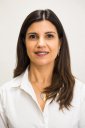
 Viviane Moreira
· 3 previous affiliations
- Associate Professor · Since 2006
- MS student · 1997–1999
- Middlesex University1999–2004
- PhD student · 1999–2004
- Universidade Católica de Pelotas1993–1996
- Undergrad student · 1993–1996
Research Overview
Viviane Moreira focuses on multilingual information extraction, structured data integration, and the development of natural language processing resources. Her early research addressed schema matching and clustering for collaborative knowledge bases like Wikipedia. More recently, her work has centered on constructing large-scale parallel corpora to support statistical machine translation in scientific domains.
Research Trajectory
Viviane Moreira’s research trajectory demonstrates a sustained interest in organizing and translating multilingual information, evolving from structured data integration on the Web to the creation of specialized linguistic corpora.
In 2011, Moreira co-authored work on cross-language information retrieval within collaborative knowledge bases. As a second author on Multilingual Schema Matching for Wikipedia Infoboxes, she contributed to an automated method for identifying mappings between infobox attributes across different language editions of Wikipedia. This work aimed to facilitate queries that span multiple languages by aligning the underlying structured data. Building on the challenges of managing user-generated structured content, she subsequently participated as a middle author in Clustering Wikipedia infoboxes to discover their types (2012). This research proposed an unsupervised approach to address common issues in collaborative platforms, such as template duplication, heterogeneity, and schema drift, by clustering infoboxes to better define their underlying types.
Following this focus on Wikipedia's structured data, Moreira's later work shifted toward natural language processing resources, specifically the development of parallel corpora for machine translation. As a second author, she contributed to A Large Parallel Corpus of Full-Text Scientific Articles (2018). This project leveraged the Scielo database to construct a trilingual parallel corpus in English, Portuguese, and Spanish. The research involved automatic sentence alignment using the Hunalign algorithm and demonstrated the corpus's practical utility by training Statistical Machine Translation systems for the respective language pairs.
Current Directions
The most recent papers in the evidence, dating to 2018 and 2019, indicate a focus on multilingual corpus construction and machine translation for specialized academic domains. This recent work addresses the need for high-quality parallel text in scientific literature, utilizing regional databases to align full-text articles across English, Portuguese, and Spanish. The application of these corpora to train statistical machine translation systems suggests an ongoing interest in improving cross-lingual access to scientific information and expanding the availability of robust linguistic resources for multiple languages.
Profile updated
Loading new papers…
Other researchers whose papers cluster into the same research directions — a proxy for overlapping technical interests and shared intellectual neighborhoods.
See something wrong? Report a mistake