

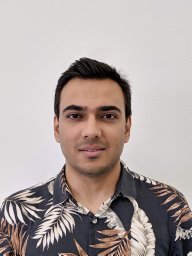
 Vivek Sharma
· 8 previous affiliations
- Harvard Medical SchoolSince 2019
- Researcher · Since 2019
- Massachusetts General HospitalSince 2019
- Researcher · Since 2019
- PhD Student and Research Scientist · 2019–2022
- Massachusetts Institute of TechnologySince 2019
- Vice President · Since 2026
- Instructor: Global Ventures & AI for Impact (15.375, 15.376) · Since 2020
- PhD Student and Research Scientist · 2019–2022
- Sony AISince 2023
- Senior Research Scientist · Since 2023
- Leading Beyond BoundariesSince 2024
- Co-Founder · Since 2024
- MIT Media LabSince 2019
- Postdoctoral Researcher/ Research Scientist · Since 2019
- Harvard University2019–2022
- Ph.D. Student (Non-Employee) / Researcher, Computer Vision and Machine Learning · 2019–2022
- Karlsruhe Institute of Technology2017–2020
- PhD student · 2017–2020
2 other authors named Vivek Sharma: Vivek Sharma (2 papers), Vivek Sharma (University of Illinois Chicago · 1 paper)
Research Overview
Vivek Sharma focuses on computer vision, machine learning, and privacy-preserving distributed systems. His research investigates the intersection of visual understanding and data privacy, with a particular emphasis on developing frameworks for secure collaborative inference and utility-preserving data anonymization. Currently, he holds research positions at the MIT Media Lab and Massachusetts General Hospital, where his work addresses the challenges of deploying machine learning models in privacy-sensitive environments such as healthcare and public data release.
Research Trajectory
The evolution of Sharma’s research reflects a transition from fundamental computer vision tasks toward the security and privacy of distributed machine learning systems. His early work, beginning around 2015, was centered on real-time object recognition and semantic labeling for industrial applications. During this period, he investigated methods for Overcoming Data Scarcity in Hyperspectral Imaging, addressing the challenges of training deep models on high-dimensional spectral data where labeled samples are often limited. This phase also included contributions to weakly supervised learning, aiming to reduce the reliance on expensive human annotations for object detection tasks.
Between 2017 and 2019, Sharma’s focus expanded into video understanding and temporal modeling. He participated in research regarding Initializing Video Models with Image Pre-training, exploring how knowledge from static image datasets could be effectively transferred to the video domain. His work in this area delved into Spatio-Temporal Feature Learning for Video Understanding, where he contributed to the development of blocks that model correlations between channels in 3D convolutional neural networks. This period also saw his involvement in large-scale dataset curation, specifically the Holistic Video Understanding (HVU) dataset, which moved beyond simple action recognition to encompass a broader semantic taxonomy of dynamic scenes.
Starting in 2019, Sharma’s research trajectory shifted significantly toward privacy-preserving machine learning, particularly in the context of Communication Efficient Split Neural Networks. He began developing mechanisms for Split Learning, a framework where model components are distributed between clients and servers. This work addressed the need for automated model selection and the protection of sensitive information during collaborative inference. His recent efforts have focused on Utility Preserving Image Anonymization for Computer Vision, creating methods to obfuscate sensitive attributes—such as identity or biometric features—while maintaining the data's utility for downstream AI tasks. This shift aligns with his roles at the MIT Media Lab and Harvard Medical School, where the tension between public health surveillance and individual privacy is a primary concern.
Current Directions
Sharma’s current research is concentrated on three primary pillars: formal privacy guarantees, robust benchmarking for split inference, and the application of privacy-preserving frameworks to healthcare. He is actively working on bridging the gap between empirical "best-effort" privacy and formal mathematical certifications. This involves adapting frameworks like Propose-Test-Release (PTR) to deep neural networks to provide posthoc privacy guarantees against data reconstruction attacks.
A significant portion of his recent work is dedicated to the standardization of privacy evaluations. Through the development of modular benchmarking platforms, he aims to provide researchers with tools to rigorously measure the trade-offs between data privacy, model utility, and computational cost. These platforms incorporate various attack models and defense mechanisms, such as dynamic channel obfuscation and noisy sampling, to evaluate the resilience of distributed systems.
In the domain of healthcare, Sharma investigates the digital landscape of medical data management. His work proposes decentralized frameworks, including federated learning and blockchain-based systems, to ensure secure and interoperable health data exchange. This includes addressing the privacy challenges inherent in 3D data modalities, such as point clouds from medical scans, by developing samplers that selectively mask sensitive details while preserving essential structural information for diagnostic tasks. He also contributes to broader audits of Task-Driven Image Enhancement for Machine Vision and data provenance, tracing the origins and licensing of large-scale AI training datasets across text, speech, and video.
Representative Work
Efficient Real-Time Pixelwise Object Class Labeling for Safe Human-Robot Collaboration in Industrial Domain This early work addresses the problem of safe human-robot interaction by developing a real-time labeling system. The approach utilizes a random decision forests (RDF) classifier combined with a conditional random field (CRF) to achieve pixelwise accuracy in complex industrial environments. It established a foundation for Sharma's subsequent work in robust visual perception.
Weakly Supervised Cascaded Convolutional Networks In this paper, Sharma and his colleagues propose a cascaded network architecture designed to perform object detection with minimal human annotation. By training a fully convolutional network to extract class-specific region proposals in an end-to-end pipeline, the work demonstrates how deep learning can be effectively applied in scenarios where high-quality labeled data is scarce.
ExpertMatcher: Automating ML Model Selection for Clients using Hidden Representations This research introduces a framework for Split Learning that automates the matching of client-side model components with appropriate server-side counterparts. By using autoencoders to process hidden representations, the method allows for efficient model selection without requiring the client to share raw data, addressing a critical scalability bottleneck in distributed computation.
DISCO: Dynamic and Invariant Sensitive Channel Obfuscation for Deep Neural Networks Sharma presents a framework for protecting sensitive information during collaborative inference. DISCO employs a data-driven filter generating network to dynamically prune feature channels that leak private data. This allows for the selective obfuscation of sensitive attributes, such as identity, while maintaining high performance on target tasks like emotion recognition.
Learning to Censor by Noisy Sampling This work extends privacy-preserving techniques to 3D point clouds. Sharma proposes Censoring by Noisy Sampling (CBNS), an end-to-end framework that combines essential point sampling with noise generation. The method protects sensitive attributes—such as age or gender in facial scans—while ensuring the data remains useful for object recognition and other AI-driven tasks.
SIMBA: Split Inference - Mechanisms, Benchmarks and Attacks As a culmination of his work on distributed systems, Sharma developed SIMBA, a modular benchmarking platform for split inference. The platform provides standardized tools for evaluating the privacy-utility-cost trade-off, offering a suite of attack models and defense mechanisms to help researchers rigorously assess the security of data obfuscation techniques before cloud transmission.
Profile updated
Loading new papers…
Other researchers whose papers cluster into the same research directions — a proxy for overlapping technical interests and shared intellectual neighborhoods.
See something wrong? Report a mistake