

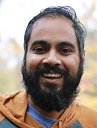
 Vishwa Goudar
· 6 previous affiliations
- Full-timeSince 2025
- Research Scientist · Since 2025
- Mountain Biometrics2024–2025
- Researcher · 2024–2025
- Senior Data Scientist · 2024
- New York University2017–2023
- Postdoc · 2017–2023
- Machine Learning Scientist · 2014–2017
- Doctor of Philosophy - PhD, Computer Science · 2007–2013
- Discover2014–2017
- Postdoc · 2014–2017
Research Overview
Vishwa Goudar focuses on low-power wearable systems, energy harvesting for mobile devices, and the training of biologically plausible neural networks. His early trajectory centered on developing self-sustained body area sensor networks and securing biosignal data. More recently, his work has shifted toward computational neuroscience, addressing long-term dependencies in recurrent neural networks.
Research Trajectory
Goudar's early research primarily addressed the design and optimization of low-power mobile and wearable technologies, particularly Body Area Sensor Networks (BASNs). In 2013, he introduced Fault-Tolerant and Low-Power Sampling Schedules for Localized BASNs, focusing on maintaining system reliability under strict energy constraints.
A major theme of this period was energy harvesting to enable self-sustained devices. He contributed to the research direction of Circuit Power Overhead in Wireless Communications through the development of novel scavenging platforms. Specifically, in Driving low-power wearable systems with an adaptively-controlled foot-strike scavenging platform, he presented a system utilizing Dielectric Elastomer (DE) micro-generators. By applying an adaptive control strategy based on plantar pressure sensing, the system optimized energy transduction to generate significant power per stride. He expanded on these biomechanical energy harvesting concepts in Leveraging human gait characteristics towards self-sustained operation of low-power mobile devices.
Alongside power management, Goudar investigated data integrity and security in mobile health (mHealth) environments. He developed techniques for Low-power semantic fault-detection in multi-sensory mobile health monitoring systems, ensuring that sensor faults could be identified without draining limited battery resources. To protect the sensitive data generated by these systems, he proposed methods for Addressing biosignal data sharing security issues with robust watermarking. In a related exploration of hardware security, he co-authored work on Public Physical Unclonable Functions, examining cryptographic primitives tied to the physical variations of integrated circuits.
Following a gap in the published evidence, Goudar's trajectory shifted toward computational neuroscience and machine learning. In 2023, he co-authored Training biologically plausible recurrent neural networks on cognitive tasks with long-term dependencies. This work falls within the broader area of Temporal Shortcuts for Long Term Dependencies. The paper introduces a "surrogate training" method that temporarily adds skip-connections through time during the training phase. By gradually removing these connections, the approach allows biologically plausible recurrent neural networks (RNNs) to learn complex cognitive tasks that require long-term memory—tasks that standard RNN architectures previously struggled to solve.
Current Directions
The most recent paper in the evidence, from 2023, indicates a current focus on the intersection of machine learning and computational neuroscience. Specifically, Goudar is investigating the training dynamics of biologically plausible recurrent neural networks. A central open problem in this domain is enabling these networks to bridge long temporal gaps and solve complex cognitive tasks requiring extended memory. By exploring surrogate training methodologies and dynamic network topologies, this work aims to reconcile the biological constraints of neural architectures with the performance demands of modern machine learning tasks.
Profile updated
Loading new papers…
Other researchers whose papers cluster into the same research directions — a proxy for overlapping technical interests and shared intellectual neighborhoods.
See something wrong? Report a mistake