

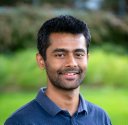
 Vinu Sankar Sadasivan
· 5 previous affiliations
- Meta (United States)Since 2024
- AI Research Scientist · Since 2025
- Research Scientist Intern · 2024
- Meta Superintelligence LabsCurrent
- Current
- University of Maryland, College Park2021–2025
- Research Assistant · 2022–2025
- PhD student · 2021–2024
- Teaching Assistant · 2021–2022
- Google DeepMind (United Kingdom)2024–2025
- Student Researcher · 2024–2025
- Junior Research Fellow · 2020–2021
- Undergrad student · 2016–2020
Research Overview
Vinu Sankar Sadasivan focuses on AI safety, the detection of machine-generated content, and adversarial robustness in deep learning systems. His trajectory spans early work on curriculum learning and data privacy to foundational analyses of the limits of AI text and image detectors. Currently, his research addresses robust semantic watermarking and physical-world adversarial vulnerabilities in multimodal large language models.
Research Trajectory
The early phase of his research explored training dynamics and optimization in neural networks. In A Simple Approach To Define Curricula For Training Neural Networks, he and his collaborators proposed dynamic curriculum learning algorithms designed to optimize network weights. By greedily sampling training examples based on gradient directions, the approach systematically reduced the distance between the current network weight and an optimal weight at any given training step, demonstrating performance improvements across convolutional and fully-connected architectures.
During his doctoral research, his focus shifted toward AI safety and proactive data protection, specifically addressing the unauthorized use of web data for training large-scale models. He developed a model-free technique to protect personal data, detailed across the preprint CUDA: Convolution-based Unlearnable Datasets and its formal publication CUDA: Convolution-Based Unlearnable Datasets. This method applies secret, class-wise convolutional filters generated via a private key to images. By forcing neural networks to learn shortcuts based on blur patterns rather than robust features, the resulting models become ineffective on clean, real-world data. This work represents a significant contribution to the broader research direction of Protecting Data Privacy with Unlearnable Examples.
A major theme in his subsequent work is the critical evaluation of systems designed to detect AI-generated content. He conducted foundational stress tests on the reliability of these detectors across multiple studies, including early findings in Can AI-Generated Text be Reliably Detected? and peer-reviewed iterations like Can AI-Generated Text be Reliably Detected? Stress Testing AI Text Detectors Under Various Attacks. This line of inquiry culminated in Can AI-Generated Text be Reliably Detected? Stress Testing AI Text Detectors Under Various Attacks. In this research, he demonstrated that current text detectors—including state-of-the-art watermarking and neural network-based classifiers—are highly vulnerable to recursive paraphrasing and spoofing attacks that strip away machine signatures while maintaining text quality. Furthermore, the work provided theoretical proofs that as large language models increasingly mimic human distributions, reliable detection may become fundamentally impossible, heavily impacting the research area of Statistical Watermarking for Large Language Models.
Parallel to his work on text, he investigated vulnerabilities in visual domains. In Robustness of AI-Image Detectors: Fundamental Limits and Practical Attacks, he exposed the fragility of deepfake classifiers and digital watermarks designed to flag AI-generated images. This research highlighted that current defenses are highly susceptible to practical attacks, advancing the research direction of Diffusion Purification for Image Watermark Removal.
Expanding into adversarial robustness and jailbreaking, he introduced highly efficient methods to probe model vulnerabilities in Fast Adversarial Attacks on Language Models In One GPU Minute. This work intersects with several active research areas, including Efficient Adversarial Attacks on Large Language Models, Amortized Feed Forward Adversarial Generation, and Privacy Amplification via Data Poisoning. Around the same time, he addressed the challenge of tracking data origins at scale. He developed DREW : Towards Robust Data Provenance by Leveraging Error-Controlled Watermarking, a framework that combines error-correcting codes, digital watermarking, and embedding-based retrieval. By intelligently partitioning datasets into clusters secured by robust watermark keys, the framework narrows the search space for query images and significantly boosts source identification accuracy.
Current Directions
The most recent papers in the evidence address the physical-world robustness of multimodal models and the development of interpretable watermarking schemes. Recent work investigates vulnerabilities in audio-based Large Language Models (ALLMs), demonstrating how stealthy background noise can manipulate AI assistants in over-the-air scenarios. As detailed in Attacker's Noise Can Manipulate Your Audio-based LLM in the Real World, these adversarial audio attacks can trick systems into executing malicious commands or degrade their ability to understand legitimate users in real-world environments.
Concurrently, he is advancing generative model provenance through semantic watermarking, as detailed in the preprint IConMark: Robust Interpretable Concept-Based Watermark For AI Images and its accepted version IConMark: Robust Interpretable Concept-Based Watermark For AI Images. This approach embeds human-interpretable concepts—such as specific objects or attributes—directly into AI-generated images during the generation process. Unlike traditional invisible noise-based watermarks that are easily erased by adversarial attacks, this semantic method is highly robust, machine-verifiable via Vision-Language Models, and manually verifiable by human experts, providing a resilient defense against watermark removal.
Profile updated
Loading new papers…
Other researchers whose papers cluster into the same research directions — a proxy for overlapping technical interests and shared intellectual neighborhoods.
See something wrong? Report a mistake