

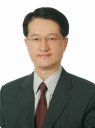
 Vincent S. Tseng
· 2 previous affiliations
- National Yang Ming Chiao Tung UniversitySince 2015
- Full Professor · Since 2015
- National Cheng Kung University1999–2014
- Full Professor · 1999–2014
Research Overview
Vincent S. Tseng focuses on utility-oriented pattern mining, temporal event modeling, and health informatics. His early research established foundational algorithms for efficiently extracting high-utility itemsets from complex transactional databases. More recently, his work has shifted toward dynamic graph mining and early classification systems, particularly applying neuroevolutionary algorithms to time-sensitive clinical diagnostics and personalized health management.
Research Trajectory
Tseng’s early research trajectory was defined by foundational contributions to utility-oriented pattern mining, a subfield of data mining that moves beyond simple frequency to consider the actual value (such as profit or weight) of discovered patterns. In 2010, as first author, he addressed a major computational bottleneck in this domain with UP-Growth: an efficient algorithm for high utility itemset mining. Traditional approaches generated an overwhelming number of candidate itemsets, degrading performance in terms of both execution time and memory. The UP-Growth algorithm introduced a novel pattern-growth approach that significantly reduced candidate generation, enabling scalable mining even in databases with long transactions.
Building on this foundation, Tseng expanded utility mining to accommodate temporal and concurrent data structures. As senior author, he led the development of Mining high utility episodes in complex event sequences (2013). This work relaxed the traditional, simplifying assumptions of frequent episode mining—which typically treated all events as equally important and strictly sequential—by introducing a framework capable of extracting high-utility episodes from complex sequences where multiple events can occur simultaneously.
By the late 2010s, Tseng’s focus broadened to include large-scale graph mining and anomaly detection in real-world networks. Serving as principal investigator, he published FrauDetector+: An Incremental Graph-Mining Approach for Efficient Fraudulent Phone Call Detection in 2018. This research tackled the big data challenges inherent in modern telecommunications, proposing an incremental graph-mining system that prioritized both detection accuracy and the computational efficiency required to process massive, rapidly updating call logs.
Entering the 2020s, Tseng increasingly applied his expertise in temporal and sequential data to health informatics and personalized medicine. In 2020, he was the senior author on PURL: Periodic User Representation Learning from Temporal Event Records for Personalized Health Management. This work addressed the complexity of modeling individual human behaviors from mobile health activity logs, proposing a representation learning approach that explicitly captured both the periodicity and diversity of a user's temporal event records.
This interest in time-sensitive health data culminated in a focus on early clinical classification. In 2022, Tseng led the research on A Novel Constraint-Based Knee- Guided Neuroevolutionary Algorithm for Context-Specific ECG Early Classification. Recognizing that the value of a medical diagnosis is heavily dependent on its timing, this work introduced a neuroevolutionary approach to evaluate electrocardiogram (ECG) data. The algorithm was designed to optimize the trade-off between diagnostic accuracy and the speed of classification, ensuring that critical indicators of cardiovascular disease could be identified in time for effective clinical intervention.
Current Directions
Based on the most recent papers in the evidence, Tseng’s current research is heavily concentrated at the intersection of sequential decision-making and clinical diagnostics. A primary focus is the development of algorithms that can process complex physiological signals while optimizing for time constraints. This work aligns closely with the research direction of Balancing Earliness and Accuracy in Sequential Decision Making, where models must determine the precise moment sufficient data has been gathered to make a reliable, life-saving prediction without unnecessary delay.
In parallel, Tseng's recent investigations engage with the broader area of Spatio-Temporal Integration in Neural Signal Modeling and themes such as Spatiotemporal Feature Fusion with Convolutional Recurrent Networks. By treating clinical data—such as ECG readings—as dynamic, evolving signals rather than static snapshots, his models are better equipped to capture the complex physiological realities of patients. Furthermore, his focus on context-specific healthcare applications connects to the overarching theme of Explainable Deep Learning for Clinical Diagnostics, ensuring that advanced predictive models meet the rigorous reliability and interpretability requirements of real-world medical environments.
Profile updated
Loading new papers…
Other researchers whose papers cluster into the same research directions — a proxy for overlapping technical interests and shared intellectual neighborhoods.
See something wrong? Report a mistake