

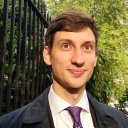
 Vincent Peter Grande
· 4 previous affiliations
- RWTH Aachen UniversitySince 2022
- PhD student · Since 2022
- Current
- University of Bonn2018–2022
- MS student · 2018–2022
- University of Cambridge2019–2020
- MS student · 2019–2020
- University of Göttingen2015–2018
- Undergrad student · 2015–2018
Research Overview
Vincent Peter Grande focuses on the analysis of networks and datasets containing higher-order information, employing a synthesis of algebraic topology, signal processing, and network science. His work explores the relationship between localized connectivity data and the global properties of complex datasets, with a particular emphasis on developing Stability Guarantees for Topological Machine Learning. Currently, his research centers on bridging the gap between global topological descriptors and point-level feature extraction for unsupervised learning and classification tasks.
Research Trajectory
Grande’s academic trajectory is rooted in pure mathematics, specifically homotopy theory and algebraic topology. His early work involved the study of equivariant universal coefficient theorems and the structure of modules over specific endomorphism rings. In Exakte Moduln über dem von Manuel Köhler beschriebenen Ring, he investigated the relationship between certain classes of R-modules and Cuntz-algebras, demonstrating a connection to p-adic numbers in specific algebraic contexts. This foundational period established the rigorous algebraic framework that informs his subsequent transition into applied and computational domains.
Upon moving into the field of computational network science, Grande began applying these topological principles to the study of Higher-Order Interaction Modeling with Simplicial Complexes. A significant portion of his research addresses the "dyadic bottleneck" in traditional network science, where interactions are limited to pairs of nodes. By utilizing simplicial and cell complexes, his work captures multi-way interactions—such as groups of proteins or co-authorship teams—that are often lost in standard graph-based representations. This shift is characterized by a focus on Learning Representations of Higher-Order Relational Data, where the geometry of the data is as critical as its connectivity.
A central methodological pillar of Grande’s recent work is the use of the Hodge Laplacian, a higher-order generalization of the graph Laplacian. In Disentangling the Spectral Properties of the Hodge Laplacian: Not All Small Eigenvalues Are Equal, he challenged the conventional assumption in spectral graph theory that all small eigenvalues represent similar structural features. He demonstrated that in the context of the Hodge Laplacian, these eigenvalues correspond to fundamentally different topological and geometric properties, necessitating a more nuanced approach to Signal Processing and Learning with Hodge Laplacians.
In parallel with his work on higher-order networks, Grande has contributed to the refinement of Topological Data Analysis (TDA) tools, particularly persistent homology. His research into Non-isotropic Persistent Homology: Leveraging the Metric Dependency of PH addresses the limitations of standard Euclidean-based filtrations. By positing that restricting persistent homology to a single metric leads to information loss, he proposed methods for Enhancing Persistent Homology with Finer Algebraic Invariants, allowing for more descriptive summaries of point cloud data.
Beyond pure topology and network science, Grande has also engaged with formal verification and stochastic systems. His work on Black-Box Testing Liveness Properties of Partially Observable Stochastic Systems developed restart strategies for testing $\omega$-regular specifications in systems where the internal state and transition probabilities are unknown. This research demonstrates an analytical interest in the intersection of randomness, logic, and algorithmic verification.
Current Directions
Grande’s current research is increasingly focused on the development of point-level topological features. While traditional TDA provides global summaries of a dataset's "shape" (such as Betti numbers or persistence diagrams), these descriptors are often difficult to integrate into standard machine learning pipelines that require features for individual data points. To resolve this, Grande developed the Topological Point Features (TOPF) framework, detailed in Point-Level Topological Representation Learning on Point Clouds. This method projects persistent homology generators into the harmonic space of the Hodge Laplacian, effectively mapping global topological structures back to individual points. This allows for unsupervised tasks like clustering and classification to be performed with a high degree of robustness to noise and sampling density.
Another active area of investigation involves the application of these topological methods to biological systems. Grande participated in the development of PHLOWER leverages single-cell multimodal data to infer complex, multi-branching cell differentiation trajectories, a framework that uses the Hodge Laplacian on simplicial complexes to map intricate cell differentiation paths. This work highlights the utility of higher-order topological tools in reconstructing complex biological "trees" from high-dimensional, multimodal single-cell data.
His most recent efforts also include pedagogical and foundational contributions to the field, such as providing accessible introductions to cell complexes for applied researchers. This reflects a broader commitment to making sophisticated algebraic and topological tools practical for the wider machine learning and signal processing communities.
Representative Work
Point-Level Topological Representation Learning on Point Clouds
In this work, Grande introduces the TOPF (Topological Point Features) method to bridge the gap between global topological shape analysis and point-level machine learning. By utilizing discrete variants of concepts from differential geometry and algebraic topology, the method extracts features that represent the contribution of individual points to global topological features like loops and voids. The approach is demonstrated to be effective for unsupervised clustering and robust against non-uniform sampling and noise.
Disentangling the Spectral Properties of the Hodge Laplacian: Not All Small Eigenvalues Are Equal
This single-author paper provides a critical analysis of the spectral properties of the Hodge Laplacian. Grande demonstrates that unlike the standard graph Laplacian, where small eigenvalues typically indicate cluster structures, the small eigenvalues of the Hodge Laplacian can represent a variety of distinct structural features. The paper provides a framework for disentangling these eigenvalues, which is essential for accurate signal processing on higher-order structures.
Non-isotropic Persistent Homology: Leveraging the Metric Dependency of PH
As the lead author, Grande explores the metric dependency of persistent homology (PH). The paper argues that the common practice of using the standard Euclidean metric for PH filtrations may obscure important structural information. By introducing non-isotropic persistent homology, the work provides a method to leverage multiple metric perspectives, resulting in a more comprehensive topological signature of point cloud data.
Black-Box Testing Liveness Properties of Partially Observable Stochastic Systems
In this second-author contribution, Grande addresses the challenge of testing liveness properties in finite-state probabilistic systems with partial observability. The research designs restart strategies that guarantee the detection of specification violations with probability one, improving upon previous methods that required more restrictive assumptions about the system's state space or transition probabilities.
PHLOWER leverages single-cell multimodal data to infer complex, multi-branching cell differentiation trajectories
Grande contributed to this interdisciplinary work as a middle author, providing the topological expertise necessary to reconstruct complex differentiation trajectories in single-cell biology. The PHLOWER framework utilizes the Hodge Laplacian on simplicial complexes to outperform existing tools in identifying multi-branching paths and genetic regulators in multimodal data, such as combined RNA and chromatin accessibility.
Exakte Moduln über dem von Manuel Köhler beschriebenen Ring
This early work, written in German, represents Grande's foundational research in pure mathematics. It provides a structure theorem for a specific class of R-modules related to Cuntz-algebras within the context of equivariant universal coefficient theorems. The analysis demonstrates the deep algebraic roots of his current computational work, particularly in the handling of complex algebraic structures.
Profile updated
Loading new papers…
Other researchers whose papers cluster into the same research directions — a proxy for overlapping technical interests and shared intellectual neighborhoods.
See something wrong? Report a mistake