

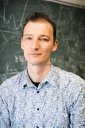
 Victor Magron
· 3 previous affiliations
- Researcher · Since 2015
- Postdoc · 2014
- Imperial College London2014–2015
- Postdoc · 2014–2015
- École Polytechnique2010–2013
- PhD student · 2010–2013
Research Overview
Victor Magron focuses on polynomial optimization, formal verification, and the development of exact mathematical certificates using semidefinite programming. His trajectory spans from foundational contributions to machine-verifiable proofs for automated reasoning to advanced sum-of-squares relaxations that exploit structural sparsity. Recent work investigates the application of these rigorous certification methods to quantum theory, statistical mixture models, and optimal control systems.
Research Trajectory
Magron's early research established foundational methods for certifying lower bounds of complex real-valued functions. In Formal Proofs for Global Optimization - Templates and Sums of Squares, techniques were introduced to relax semialgebraic and transcendental expressions into polynomial optimization problems, proving their correctness within the Coq proof system. This focus on rigorous certification naturally aligned with the research direction of Machine Verifiable Proofs for Automated Reasoning. Magron participated in the Flyspeck project, which culminated in A formal proof of the Kepler conjecture, replacing human verification with computational certainty for the 400-year-old sphere-packing problem. Expanding on the tools required for such massive verification tasks, a nonlinear template method was developed in Certification of real inequalities: templates and sums of squares. This approach combined the precision of sum-of-squares (SOS) relaxations with the scalability of abstract interpretation. Further expanding the utility of semidefinite programming (SDP), Semidefinite Approximations of Projections and Polynomial Images of SemiAlgebraic Sets provided computationally tractable, certified outer approximations for the images of semi-algebraic sets under polynomial maps.
Building on his expertise in SDP and formal verification, Magron applied these techniques to critical problems in computer science and machine learning. The Real2Float framework, introduced in Certified Roundoff Error Bounds Using Semidefinite Programming, automatically computes certified upper bounds on roundoff errors for nonlinear floating-point programs, offering a crucial advancement for safety-critical systems. Later, collaboration on deep learning applications led to Semialgebraic Optimization for Lipschitz Constants of ReLU Networks. By combining a polynomial lifting for ReLU derivatives with a generalization of Putinar's positivity certificate, this work provided a novel SDP hierarchy to estimate Lipschitz constants, offering a new trade-off compared to standard linear programming approaches.
A major theme in Magron's subsequent work is overcoming the computational bottlenecks of polynomial optimization by exploiting structural sparsity. He contributed to a highly efficient hierarchy of algorithms in TSSOS: A Moment-SOS Hierarchy That Exploits Term Sparsity, which significantly reduced computational costs by leveraging term sparsity. These concepts were further formalized in A Sparse Version of Reznick's Positivstellensatz, proving that large-scale problems can be decomposed without losing global optimality guarantees. This work deeply advanced the research areas of Sparse Polynomial Optimization via Structured SOS Relaxations and Sparse Certificates for Polynomial Optimization. Much of this domain was synthesized in the comprehensive text Sparse Polynomial Optimization - Theory and Practice.
Alongside sparsity, Magron focused on deriving exact, rather than approximate, mathematical guarantees, driving forward the area of Exact Certificates from Numerical Optimization. In SONC optimization and exact nonnegativity certificates via second-order cone programming, an algorithm leveraging second-order cone programming was introduced to efficiently certify polynomial nonnegativity for Sums of Nonnegative Circuits (SONC). He also tackled exact sum-of-squares decompositions for polynomials with rational coefficients in Sum of Squares Decompositions of Polynomials over their Gradient Ideals with Rational Coefficients, contributing to the broader field of Algebraic Certificates of Positivity via Sum of Squares. His methodological contributions during this period also intersected with the research area of Subdivision Methods for Real Root Isolation. Work on exact decompositions extended to specific polynomial classes, such as trigonometric univariate polynomials with Gaussian coefficients in Exact SOHS Decompositions of Trigonometric Univariate Polynomials with Gaussian Coefficients, and algorithmic implementations of historical theorems, as seen in Pourchet's theorem in action: decomposing univariate nonnegative polynomials as sums of five squares. Additionally, the challenge of optimization over non-compact sets was addressed by introducing novel positivity certificates with explicit degree bounds in Positivity certificates and polynomial optimization on non-compact semialgebraic sets.
Current Directions
Recent work investigates the application of SDP hierarchies and exact certification to new domains, including quantum physics, statistical mixture models, and control theory. In Certified bounds on optimization problems in quantum theory, Magron and collaborators developed a rigorous "round-project-lift" framework to convert numerical SDP outputs into exact, algebraically verifiable proofs for Bell inequalities and many-body quantum systems. He has also applied SDP relaxations to statistical problems, introducing a principled framework for fitting mixture models by minimizing Wasserstein or Total Variation distances in Mixtures Closest To A Given Measure: A Semidefinite Programming Approach. Furthermore, the most recent papers in the evidence address systems with inherent positivity constraints, such as biological or economic models, by developing computational methods for nonnegative input induced norms in Induced norm analysis of linear systems for nonnegative input signals.
Profile updated
Loading new papers…
Other researchers whose papers cluster into the same research directions — a proxy for overlapping technical interests and shared intellectual neighborhoods.
See something wrong? Report a mistake