

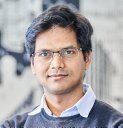
 Varun Ojha
· 5 previous affiliations
- Newcastle UniversitySince 2023
- Head of Intelligent Systems Research Group · Since 2026
- Associate Professor · Since 2023
- Artificial Intelligence Theme Leader · Since 2024
- University of Reading2018–2023
- Assistant Professor · 2018–2023
- ETH Zurich2016–2018
- Postdoctoral Research Fellow · 2017–2018
- Postdoc · 2016–2018
- VSB - Technical University of Ostrava2013–2016
- Marie Curie Fellow · 2013–2016
- Doctor of Philosophy - PhD, Computer Science
Research Overview
Varun Ojha works on computer vision and deep learning, with a primary focus on generative modeling, perception for autonomous systems, and the optimization of transformer-based architectures. His research addresses technical challenges in structural consistency for 3D generation, the global coherence of vectorized mapping in autonomous driving, and the efficiency of knowledge distillation for detection transformers.
Research Trajectory
Ojha’s research trajectory, as observed between 2025 and 2026, reflects an evolution from addressing specific inconsistencies in generative pipelines toward broader questions of architectural efficiency and global representation in spatial perception.
In 2025, Ojha contributed to the field of generative modeling, specifically focusing on the stability of text-to-3D synthesis. This work involved refining the score-matching processes used in diffusion-based generation to ensure that high-resolution outputs remain structurally consistent. By 2026, his focus expanded into the domain of autonomous driving and model compression. During this period, he took a senior role in developing methods for knowledge distillation, specifically targeting the computational bottlenecks inherent in Detection Transformers (DETR). This shift suggests an increasing interest in the practical deployment of complex models, moving from the generation of content to the efficient execution of perception tasks in real-time environments.
Throughout these projects, a recurring methodological theme is the refinement of how neural models process trajectories and queries. Whether optimizing the inversion process in diffusion models or improving the query mechanisms in vectorized mapping, Ojha’s work consistently seeks to mitigate accumulated errors and local biases in favor of more stable, globally-aware representations.
Current Directions
A significant portion of Ojha’s recent work centers on the efficiency and structural accuracy of transformer-based models. In the context of object detection, he has focused on removing the dependency on computationally expensive matching algorithms during the training phase. By reimagining how teacher and student models align their internal representations, this research direction aims to make high-performance detectors more accessible for resource-constrained applications.
Simultaneously, Ojha continues to explore the intersection of deep learning and autonomous navigation. His work in this area focuses on the "online" construction of high-definition (HD) maps. Rather than treating map elements as isolated segments, his recent contributions emphasize the importance of a global perspective, ensuring that the vectorized output of a perception system reflects the continuous and interconnected nature of real-world road structures.
Representative Work
The following papers represent the core of Ojha’s recent research contributions, ranging from generative 3D modeling to efficient perception.
In Efficient Matching-Free Distillation for Detection Transformers via Active Sampling, Ojha serves as the senior author, directing research into the optimization of knowledge distillation for DETR-based detectors. Traditional distillation for these models often relies on Hungarian matching to align queries between the teacher and student models, a process that is both time-consuming and computationally inefficient. The framework proposed in this work obviates the need for such matching by introducing an active sampling and alignment strategy. By treating the outputs of both models as representations of their corresponding distributions and sampling them concurrently, the method achieves a more efficient transfer of knowledge without the overhead of explicit query matching.
Ojha participated in the development of Dreamer XL: Towards High-Resolution Text-to-3D Generation via Trajectory Score Matching, which addresses the "pseudo ground truth" inconsistency problem in 3D generation. This problem typically arises from accumulated errors during the Denoising Diffusion Implicit Models (DDIM) inversion process when using Interval Score Matching (ISM). The research introduces Trajectory Score Matching (TSM), a method that leverages the DDIM inversion process to generate two distinct paths from the same starting point. By calculating scores across these dual paths, TSM reduces the drift associated with single-path inversion, thereby enhancing the stability and visual fidelity of high-resolution text-to-3D generation.
In the domain of autonomous driving, Ojha contributed to the development of Learning Global Representation from Queries for Vectorized HD Map Construction (also appearing as art_1d0ba0f59da5487e9639864c0ec30c8b). This work addresses a limitation in current state-of-the-art HD map construction methods, which often rely on independent object queries that focus on local segments of the road. This local focus can lead to fragmented or inconsistent map vectors. The proposed MapGR architecture introduces two modules—Global Representation Learning (GRL) and Global Representation Guidance (GRG)—designed to enable DETR-based models to capture the broader road structure. By integrating these modules, the system produces more accurate and topologically consistent vectorized maps, which are critical for the safe navigation of autonomous vehicles.
The available evidence for Ojha’s research history is currently concentrated in the 2025-2026 period. While this provides a clear view of his recent focus on transformer efficiency and spatial perception, the broader temporal evolution of his work prior to this window is not documented in the current corpus.
Profile updated
Loading new papers…
Other researchers whose papers cluster into the same research directions — a proxy for overlapping technical interests and shared intellectual neighborhoods.
See something wrong? Report a mistake