

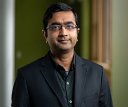
 Vaneet Aggarwal
· 10 previous affiliations
- Affiliated Faculty · Since 2019
- Association for Computing MachinerySince 2022
- Co Editor-in-Chief of ACM Journal on Autonomous Transportation Systems · Since 2022
- Purdue University West LafayetteSince 2015
- Reilly Professor · Since 2025
- University Faculty Scholar · Since 2024
- Full Professor · Since 2022
- Associate Professor · 2019–2022
- Assistant Professor · 2015–2019
- Associate Member · Since 2024
- Indian Institute of Technology IndoreSince 2025
- Visiting Professor · Since 2026
- Adjunct Professor · Since 2025
- Visiting Professor · 2022–2023
- VAJRA Professor · 2018–2019
- AT&T2010–2014
- Researcher · 2010–2014
- Princeton University2005–2010
- Doctor of Philosophy (Ph.D.), Electrical, Electronics and Communications Engineering · 2005–2010
- Bachelor of Technology (B.Tech.), Electrical, Electronics and Communications Engineering · 2001–2005
Research Overview
Vaneet Aggarwal focuses on distributed systems, reinforcement learning, and optimization, with applications ranging from communication networks to collaborative logistics. His trajectory spans foundational work in quantum error correction and network capacity to recent advances in multi-agent systems and safe learning. Currently, he investigates theoretical guarantees for reinforcement learning, quantum-enhanced machine learning, and generative models for molecular design.
Research Trajectory
Aggarwal’s early research concentrated on information theory, coding, and network communications. He introduced a mathematical framework connecting Boolean functions and projection operators in Boolean Functions, Projection Operators, and Quantum Error Correcting Codes, which facilitated the design of both additive and nonadditive quantum error-correcting codes. He then explored communication systems with imperfect information, contributing to the area of Reliability Gains from Minimal Noisy Feedback by analyzing diversity-multiplexing tradeoffs for frequency division duplex systems in Power-controlled feedback and training for two-way MIMO channels. Expanding to network capacity, he formalized how local state knowledge impacts sum-rates in On Achieving Local View Capacity Via Maximal Independent Graph Scheduling. In the domain of Regenerating Codes for Distributed Storage, he developed an opportunistic repair framework to adaptively determine the number of helper nodes based on network traffic conditions in Distributed data storage systems with opportunistic repair.
Transitioning toward machine learning infrastructure, Aggarwal participated in research on model compression, utilizing tensor networks to reduce the parameter footprint of deep neural networks in Wide Compression: Tensor Ring Nets. Addressing communication bottlenecks in distributed machine learning, his group proposed the Group Alternating Direction Method of Multipliers in GADMM: Fast and Communication Efficient Framework for Distributed Machine Learning, optimizing decentralized topologies where workers compete for limited resources.
His focus subsequently expanded into reinforcement learning (RL) and multi-agent systems, particularly applied to complex logistics. His lab developed systems for joint passenger and goods transportation in FlexPool: A Distributed Model-Free Deep Reinforcement Learning Algorithm for Joint Passengers & Goods Transportation. This work advanced the broader research direction of Multi-Hop Transfers in Collaborative Logistics Networks. He further scaled these concepts in DeepFreight: A Model-free Deep-reinforcement-learning-based Algorithm for Multi-transfer Freight Delivery, combining multi-agent RL with mixed-integer linear programming to optimize large-scale freight networks with multi-transfer capabilities.
Concurrently, he addressed fundamental challenges in RL safety, advancing the broader area of Constrained Online Optimization Beyond Slater Conditions. In Reinforcement Learning for Constrained Markov Decision Processes, he and his collaborator reframed constrained MDPs as Markov-Bandit games, providing a single-time-scale Q-learning algorithm with convergence guarantees. He also investigated collaborative decision-making under constrained communication, presenting the LCC-UCB algorithm in Multi-Agent Multi-Armed Bandits with Limited Communication.
In recent years, Aggarwal's research has integrated quantum computing, generative AI, and advanced optimization techniques. His research group explored the intersection of quantum machine learning and tensor networks in Tensor ring optimized quantum-enhanced tensor neural networks, proposing a multi-layer design to overcome parameter entanglement in classical implementations. Applying generative models to drug discovery, he introduced the KARL framework in Improving Molecule Generation and Drug Discovery With a Knowledge-Enhanced Generative Model, which combines diffusion models with knowledge graphs to steer the generation of biologically effective molecules.
Continuing his theoretical work in reinforcement learning, his group provided refined convergence bounds in A Sharper Global Convergence Analysis for Average Reward Reinforcement Learning via an Actor-Critic Approach and explored quantum advantages for MDPs in Quantum Speedups in Regret Analysis of Infinite Horizon Average-Reward Markov Decision Processes. To address coordination in complex multi-agent tasks, he developed auto-encoder schemes for hierarchical skill extraction in Variational Offline Multi-agent Skill Discovery.
His most recent optimization research tackles noisy and non-monotone environments. He established a resilience framework for bi-criteria problems in A Resilience Framework for Bi-Criteria Combinatorial Optimization with Bandit Feedback. In Upper-Linearizability of Online Non-Monotone DR-Submodular Maximization over Down-Closed Convex Sets, his lab introduced upper-linearizability to achieve efficient regret rates for complex submodular maximization. Finally, he provided a principled theoretical framework for the sample complexity of discrete-state generative models in Discrete State Diffusion Models: A Sample Complexity Perspective.
Current Directions
The most recent papers in the evidence indicate a strong focus on the theoretical foundations of reinforcement learning, advanced optimization, and the application of generative AI to structured domains. Recent work investigates sample complexity bounds for discrete-state diffusion models and the integration of knowledge graphs to guide molecular generation. Additionally, ongoing research addresses the convergence properties of average-reward Markov Decision Processes, exploring both classical actor-critic approaches and potential quantum speedups, alongside frameworks for robust combinatorial optimization under bandit feedback.
Profile updated
Loading new papers…
Other researchers whose papers cluster into the same research directions — a proxy for overlapping technical interests and shared intellectual neighborhoods.
See something wrong? Report a mistake