

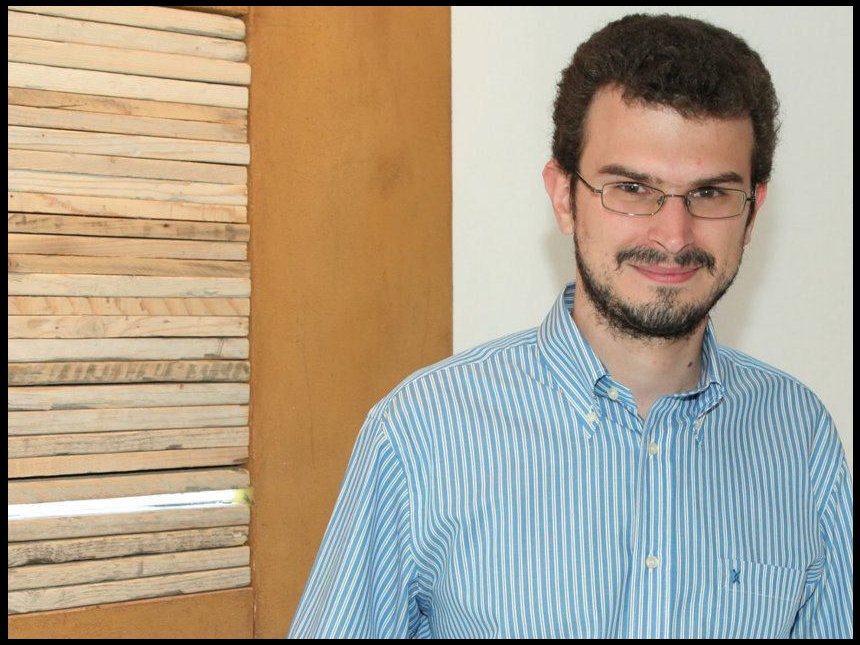
 Valsamis Ntouskos
· 4 previous affiliations
- WORLD UAV FEDERATION - Hellenic ChapterSince 2019
- Research Director · Since 2019
- Mercatorum UniversitySince 2024
- Associate Professor · Since 2024
- Current
- Research Fellow · 2020–2024
- Undergrad student · 2001–2006
- Sapienza University of Rome2007–2020
- Assistant Professor · 2017–2020
- Postdoc · 2016–2017
- Postdoctoral Researcher · 2012–2016
- Master of Science in Engineering - MSE, Artificial Intelligence and Robotics · 2010–2012
- Undergrad student · 2007–2010
Research Overview
Valsamis Ntouskos focuses on 3D computer vision, human activity understanding, and robotic perception. His early work addressed the modeling of articulated objects and Bayesian approaches to human pose estimation from visual data. More recently, his research has expanded to include deep learning frameworks for environmental monitoring, satellite imagery analysis, and embodied task execution.
Research Trajectory
Ntouskos's early research concentrated on the 3D reconstruction and modeling of complex shapes. He introduced a framework for the Component-Wise Modeling of Articulated Objects, which decomposed objects into smaller components to simplify shape deformation and assembly through optimization. Expanding on surface modeling, he contributed to methods for Single Image Object Modeling Based on BRDF and r-Surfaces Learning. This work enabled the reconstruction of concave and specular surfaces without externally imposed priors by transferring normal fields from generated samples to unknown surfaces. To improve the quality of depth data, he also developed a variational data fusion model in Confidence driven TGV fusion, which jointly estimated depth and point-wise confidence values based on spatial coherence.
Parallel to his work on static objects, Ntouskos investigated human motion and pose, contributing to the broader area of The Upstream Pose Estimation Bottleneck in Skeletal Analysis through probabilistic modeling. In Bayesian Non-parametric Inference for Manifold Based MoCap Representation, he and his collaborators mapped joint positions onto a subspace via principal geodesic analysis, using a Dirichlet process mixture to classify behaviors based on sub-body parts. This probabilistic approach was subsequently adapted for visual data in Bayesian Image Based 3D Pose Estimation. By utilizing a hierarchical non-parametric model, this method estimated 3D human poses from single images by grouping skeleton joints and integrating visual features with a learned pose dictionary. This work aligns with his broader interest in the research direction of Geometric Normalization for Scale Invariant Pose Analysis.
Moving toward interactive and embodied systems, Ntouskos participated in the development of hardware and software for visual attention tracking. This included the wearable device detailed in A3D: A Device for Studying Gaze in 3D, which estimated points of regard and projected them into 3D reconstructed scenes. His focus on perception naturally extended to robotics, particularly in the area of Active Perception for Robust Robotic Vision. In Deep Execution Monitor for Robot Assistive Tasks, he contributed to a deep learning framework for sequencing goals and visually evaluating task states during warehouse operations, supporting the broader research direction of Closed Loop Reasoning for Embodied Task Planning.
In subsequent years, Ntouskos applied his expertise in 3D modeling and deep learning to specialized domains. He addressed agricultural automation in Vision Based Modeling of Plants Phenotyping in Vertical Farming under Artificial Lighting, combining geometric surface modeling with deep segmentation to predict phenotype features such as height, weight, and leaf area over a growth period. Returning to human activity analysis, he contributed to Discovery and recognition of motion primitives in human activities. This research introduced a "motion flux" metric and a hierarchical Bayesian model to uncover fundamental building blocks of movement from video data, advancing the research area of Decomposing Continuous Motion into Discrete Behavioral Primitives. He also continued his earlier investigations into visual attention, formalizing computational structures for proto-objects in dynamic environments in Saliency prediction in the coherence theory of attention.
Expanding into large-scale environmental and remote sensing applications, Ntouskos collaborated on CLOUDTRAN: CLOUD REMOVAL FROM MULTITEMPORAL SATELLITE IMAGES USING AXIAL TRANSFORMER NETWORKS, which utilized axial transformer networks to process multi-temporal satellite data. Most recently, he contributed to Neural-based Reconstruction of Radioactivity Distribution in Large Water Volumes with Underwater Gliders (regular paper), exploring the use of autonomous underwater vehicles for complex spatial monitoring.
Current Directions
The most recent work in the evidence indicates a shift toward applying advanced neural architectures to large-scale environmental and spatial reconstruction problems. This includes utilizing autonomous underwater gliders for mapping continuous distributions, such as radioactivity, in marine environments. Methodologically, this recent focus intersects with the research direction of Mitigating Spectral Bias with Fourier Feature Mapping, leveraging advanced feature representations to improve the fidelity of spatial reconstructions from sparse sensor data. Additionally, ongoing themes in his research involve the application of transformer networks to Earth observation and remote sensing tasks, highlighting a continued interest in scaling perception models to complex, real-world environments.
Profile updated
Loading new papers…
Other researchers whose papers cluster into the same research directions — a proxy for overlapping technical interests and shared intellectual neighborhoods.
See something wrong? Report a mistake