

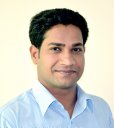
 Usman Ali
· 3 previous affiliations
- Sejong UniversityCurrent
- Current
- Assistant Professor · 2024–2026
- Sungkyunkwan University2022–2024
- Researcher · 2022–2024
- Researcher · 2020–2022
- PhD student · 2017–2020
Research Overview
Usman Ali focuses on computer vision and spatial modeling, with specific emphasis on 3D scene representation and trajectory refinement. His recent work addresses the computational and qualitative challenges of novel view synthesis, particularly through optimizations in 3D Gaussian splatting. Currently, he is exploring novel neural network architectures for sequence modeling in dynamic environments.
Research Trajectory
Usman Ali’s published research trajectory begins in the domain of novel view synthesis, specifically focusing on the emerging technique of 3D Gaussian Splatting (3DGS). While 3DGS offers significant advantages over traditional Neural Radiance Fields (NeRFs) in terms of real-time rendering speed, it introduces new challenges related to storage overhead and sensitivity to input quality. In 2024, Ali participated as a co-author in two projects addressing these limitations. The first, Deblurring 3D Gaussian Splatting, tackles the severe degradation in rendering quality that occurs when training images suffer from lens defocus, object motion, or camera shake. By contributing to this work, Ali helped demonstrate how 3D scene modeling can be made more robust to imperfect, real-world capture conditions.
Concurrently, Ali contributed to F-3DGS: Factorized Coordinates and Representations for 3D Gaussian Splatting. Because standard 3DGS relies on a massive number of Gaussians to represent complex scenes, it requires substantial memory, hindering its use on edge devices. This research proposed a factorized approach to compress these representations, aligning with broader efforts in the research direction of Efficient Single Stage Object Detection for Edge Hardware by seeking to squeeze high-fidelity visual intelligence into resource-constrained hardware.
Moving into 2025, Ali’s focus expanded into sequence modeling and spatial prediction. As the second author of Rethinking convolutional neural networks for trajectory refinement, he played a significant role in developing a novel architecture for predicting movement paths. Rather than using conventional 1D convolutions or 2D convolutions over heatmap representations, this work applies 2D convolutions directly over raw trajectory coordinates. This approach allows the network to perform multiple convolutional operations—including dilated and separating coordinate convolutions—in a single forward pass. Evaluated on standard pedestrian and drone datasets, the method established new performance benchmarks, contributing valuable techniques to the broader area of Fast Trajectory Optimization for Dynamic Robotic Environments.
Current Directions
The most recent papers in the evidence indicate that Ali's current research investigates the intersection of spatial coordinate modeling and efficient neural architectures. Building on his recent work in trajectory refinement, his focus centers on rethinking how convolutional neural networks process raw sequential data to improve predictive accuracy in dynamic environments. Across both his contributions to 3D scene representation and trajectory modeling, a unifying theme is the optimization of data structures—whether factorizing 3D Gaussians to reduce storage overhead or restructuring convolutional inputs to better capture spatial coordinates without relying on intermediate heatmap representations.
Profile updated
| Title | Venue | Year |
|---|---|---|
| Rethinking convolutional neural networks for trajectory refinement | Pattern Recognition | 2025 |
| Deblurring 3D Gaussian Splatting | ECCV | 2024 |
| F-3DGS: Factorized Coordinates and Representations for 3D Gaussian Splatting | arXiv | 2024 |
Loading new papers…
Other researchers whose papers cluster into the same research directions — a proxy for overlapping technical interests and shared intellectual neighborhoods.
See something wrong? Report a mistake