

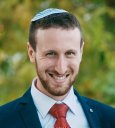
 Uriel Singer
· 2 previous affiliations
- Meta (United States)Since 2021
- Researcher · Since 2021
- Doctor of Philosophy - PhD, Computer Science · 2019–2022
- Master of Science - MS, Computer Science · 2017–2018
Research Overview
Uriel Singer focuses on generative modeling, spatiotemporal representation learning, and the integration of structured knowledge into deep learning architectures. His research addresses the challenges of modeling and generating dynamic data, ranging from time-evolving social and biological networks to high-fidelity video and 4D scene synthesis. By developing methods that leverage pre-trained models and incorporate domain-specific constraints, he works toward more efficient, controllable, and fair machine learning systems.
Research Trajectory
Singer’s early work centered on Dynamic Network Embedding, where he developed methods to represent nodes in graphs that change over time. This period was characterized by a focus on capturing the "cinematic" evolution of networks, moving beyond static snapshots to model continuous shifts in relationships and attributes. This work naturally extended into Continuous Time Representation Learning for Dynamic Graphs, which sought to provide more granular temporal resolution for applications in social networks and e-commerce.
Between 2021 and 2022, Singer expanded his focus to include algorithmic fairness and specialized recommendation systems. He addressed the "fidelity gap" in graph neural networks (GNNs) by developing frameworks that optimize for equalized odds, ensuring that node classifications remain uncorrelated with sensitive attributes like race or gender. Simultaneously, he applied sequential modeling techniques to e-commerce, developing mechanisms to handle complex relationships across item sequences and multi-dimensional attributes.
In 2022, Singer’s research underwent a significant shift toward large-scale generative modeling, specifically in the domain of video synthesis. He was a primary contributor to the development of methods that "upcycle" pre-trained text-to-image models for video generation, bypassing the need for massive captioned video datasets. This trajectory evolved into the generation of dynamic 3D scenes, or 4D synthesis, where he explored Distilling 3D Motion from 2D Video Diffusion Priors. This work addressed the "curse of dimensionality" in Spatiotemporal Planar Factorization for Dynamic Scene Reconstruction, enabling the creation of animatable 3D assets from simple text descriptions.
Most recently, Singer has focused on two parallel tracks: the application of GNNs to biological knowledge graphs and the theoretical refinement of generative frameworks. His work in biology involves injecting factual biological knowledge into protein language models to improve sequence representation. In the generative space, he has contributed to the development of unified frameworks that bridge diffusion models and autoregressive models, as well as efficient inference methods for reward alignment. These efforts aim to achieve High Fidelity Texture and Geometry Synthesis for 3D Assets while reducing the computational overhead of stochastic transitions.
Current Directions
Singer’s current work is increasingly focused on the efficiency and scalability of generative models. He is exploring Progressive Spatio-Temporal Curricula for Video Models to stabilize the training of high-resolution video generators. Additionally, he continues to investigate how external world knowledge can be leveraged to improve time-series forecasting, particularly in predicting consumer demand during anomalous events. His recent contributions to flow matching and reward alignment suggest a move toward more mathematically rigorous and computationally efficient sampling methods for generative AI.
Representative Work
Temporal Graph Representation
In Node Embedding over Temporal Graphs, Singer introduced tNodeEmbed, a framework designed to capture the evolution of nodes in dynamic networks. Unlike traditional methods that treat networks as static snapshots, this approach models the temporal trajectory of nodes to improve predictive performance on downstream tasks. This work established a foundation for his subsequent explorations into how time-evolving structures can be represented in latent space.
Algorithmic Fairness in Graphs
Addressing the lack of unbiased representation learning in GNNs, Singer developed EqGNN: Equalized Node Opportunity in Graphs. The framework moves beyond simple statistical parity—which can often degrade model utility—to optimize for the Equalized Odds fairness criterion. The architecture uses a multi-component approach to ensure that node representations do not carry correlations with sensitive attributes, providing a more robust method for fair supervised learning on graphs.
Text-to-Video Generation
Singer was a lead contributor to Make-A-Video: Text-to-Video Generation without Text-Video Data, a system that generates high-quality video from text prompts. The core innovation of this work is the "upcycling" of pre-trained text-to-image models. By adding temporal layers and training on unlabeled video footage, the model learns motion dynamics without requiring the expensive and scarce data of captioned videos. This approach demonstrated a scalable path for video generation by leveraging existing image-based priors.
Dynamic 3D Scene Synthesis
Building on his work in video generation, Singer introduced Text-To-4D Dynamic Scene Generation, also known as MAV3D. This method was among the first to generate high-quality, dynamic 3D scenes directly from text. It utilizes a 4D dynamic Neural Radiance Field (NeRF) optimized through supervision from a pre-trained text-to-video diffusion model. The resulting scenes are consistent across camera angles and time, allowing for the creation of animatable 3D assets without any 4D training data.
Knowledge-Augmented Protein Modeling
In GOProteinGNN: Leveraging Protein Knowledge Graphs for Protein Representation Learning, Singer applied graph-based learning to the biological domain. The GOProteinGNN architecture enhances protein language models by directly injecting factual biological knowledge from knowledge graphs into the encoding process. By weaving structured biological information into sequence representations, the model achieves improved performance on tasks such as protein-protein interaction and contact prediction.
Generative Modeling Frameworks
Singer contributed to the development of Transition Matching: Scalable and Flexible Generative Modeling, a framework that unifies diffusion and flow matching with continuous autoregressive models. This work introduced DTM, which improves upon state-of-the-art flow matching in both speed and quality, and FHTM, a fully causal model for image generation. This research represents a shift toward more flexible generative architectures that can handle both causal and non-causal generation tasks with high efficiency.
Profile updated
Loading new papers…
Other researchers whose papers cluster into the same research directions — a proxy for overlapping technical interests and shared intellectual neighborhoods.
See something wrong? Report a mistake