

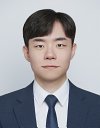
 Uiwon Hwang
· 5 previous affiliations
- Ewha Womans UniversitySince 2025
- Assistant Professor · Since 2025
- 연세대학교 미래캠퍼스2023–2025
- Assistant Professor · 2023–2025
- Individual2023–2025
- Assistant Professor · 2023–2025
- Seoul National University2016–2023
- PhD student · 2017–2023
- Research Internship · 2016–2017
- Korea University2013–2016
- Undergraduate Researcher · 2015–2016
- Bachelor of Engineering - BE, Biomedical Engineering · 2013–2016
Research Overview
Uiwon Hwang focuses on deep generative modeling, representation learning, and machine learning from limited data. His trajectory spans from developing robust generative adversarial networks for imbalanced and biomedical datasets to advancing source-free domain adaptation techniques. Recently, his work investigates adversarial defenses and the stability of large-scale language-vision models during image manipulation.
Research Trajectory
Uiwon Hwang’s early research focused heavily on improving the robustness and applicability of deep generative models, particularly when learning from limited or imbalanced data. A central challenge in unsupervised conditional generation is that real-world data attributes are rarely distributed uniformly. To address this, he developed Stein Latent Optimization for Generative Adversarial Networks, which introduced a novel framework that models the latent space using a Gaussian Mixture Model. By leveraging Stein’s lemma for implicit reparameterization, this approach enables stable optimization of cluster parameters, allowing models to discover minority attributes without prior distributional knowledge. This work advanced the research direction of Gaussian Mixture Priors for Variational Latent Spaces and contributed significantly to the broader area of Generative Modeling for Long Tail Distributions.
Building on his expertise in generative modeling for sparse and imbalanced datasets, Hwang applied these techniques to critical biomedical and healthcare challenges. During the global pandemic, he introduced Prediction of Mortality and Intervention in COVID-19 Patients Using Generative Adversarial Networks. This work utilized a specialized GAN architecture with a hint mechanism to handle missing attributes and class imbalances in clinical data, enabling more accurate predictions of patient survival and the need for medical interventions like intubation. Continuing this trajectory into neurodegenerative diseases, he subsequently published Real-world prediction of preclinical Alzheimer's disease with a deep generative model, further demonstrating the utility of deep generative approaches in predictive medical modeling.
As his research evolved, Hwang expanded his focus to the challenges of adapting pre-trained models to new environments without access to the original training data. He addressed this in SF(DA)$^2$: Source-free Domain Adaptation Through the Lens of Data Augmentation. By mathematically simulating an infinite number of data augmentations directly in the feature space and employing spectral clustering, this method partitions target domain data efficiently. This contribution established state-of-the-art performance across 2D and 3D datasets while minimizing computational overhead, driving forward work in the research direction of Source Free Domain Adaptation.
In parallel, Hwang has led research into the security and reliability of deep neural networks. He guided the development of Adversarial Defense on Harmony: Reverse Attack for Robust AI Models Against Adversarial Attacks, which introduced a "Reverse Attack" methodology. This defense mechanism reconstructs and classifies images by applying perturbations in the opposite direction of the attack, utilizing a complementary classifier to maintain high accuracy on clean images while robustly defending against subtle adversarial perturbations.
Most recently, his collaborative work has explored the intersection of out-of-distribution detection and large-scale vision-language models. This includes participation in ProGIP: Protecting Gradient-based Input Perturbation Approaches for OOD Detection From Soft Errors, which investigates the hardware-level reliability of detection algorithms. Additionally, he contributed to On Mitigating Stability-Plasticity Dilemma in CLIP-guided Image Morphing via Geodesic Distillation Loss, addressing the challenges of catastrophic forgetting and misguidance when adapting generative models for text-guided image manipulation using CLIP.
Continuing his work on model adaptation, Hwang led the development of The Batch Size Can Be One: Test-Time Adaptation from Classifier Geometry. This work introduced Origin-recentered Test-Time Adaptation (OriTTA), which constructs fixed geometric targets by recentering feature space origins and aligns features to class axes, enabling robust online adaptation even on single-sample test streams without model collapse.
Current Directions
Recent work investigates the robustness, adaptation, and security of complex machine learning systems in dynamic environments, including test-time adaptation under single-sample streaming conditions. The most recent papers in the evidence address the stability of large-scale language-vision models, specifically focusing on mitigating the stability-plasticity dilemma during text-guided image morphing. Additionally, ongoing research explores hardware-aware reliability, such as protecting out-of-distribution detection mechanisms from soft errors, and advancing adversarial defense strategies to ensure deep neural networks remain robust in safety-critical applications.
Profile updated
Loading new papers…
Other researchers whose papers cluster into the same research directions — a proxy for overlapping technical interests and shared intellectual neighborhoods.
See something wrong? Report a mistake