

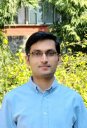
 Tushar Sandhan
· 4 previous affiliations
- Indian Institute of Technology KanpurSince 2022
- Associate Professor · Since 2025
- Assistant Professor · Since 2022
- Assistant Professor · 2022–2025
- Samsung Electronics (South Korea)2014–2021
- Senior Engineer (Advanced research lab, Multimedia R&D group) · 2018–2021
- Engineer (Biometric algorithm team, Multimedia R&D group) · 2014–2018
- Seoul National University2012–2018
- PhD student · 2014–2018
- MS student · 2012–2014
- Research Intern · 2011
Research Overview
Tushar Sandhan focuses on computational linguistics, computer vision, and applied machine learning. His early trajectory explored pattern recognition and image restoration, while his recent collaborative work emphasizes natural language processing for low-resource and classical languages, particularly Sanskrit. He is currently engaged in developing neural toolkits and multi-task learning approaches for complex linguistic analysis.
Research Trajectory
Sandhan’s early research focused on feature extraction and pattern recognition in visual and temporal data. In 2013, he led the development of a robust biometric identification method in Abstracted radon profiles for fingerprint recognition. This work utilized global image properties rather than relying solely on local minutiae, constructing a dictionary for sparse signal representation that improved performance in sparse or noisy conditions without requiring heavy preprocessing.
He subsequently applied machine learning techniques to video analytics and trajectory modeling. As the first author of Multi-task learning with over-sampled time-series representation of a trajectory for traffic motion pattern recognition, Sandhan introduced a high-dimensional embedding technique for time-series data. This approach preserved detailed spatio-temporal information and allowed classifiers to be trained simultaneously across different traffic motion patterns, addressing data scarcity through strategic oversampling.
Between 2017 and 2020, Sandhan’s work broadened across multiple domains of signal processing and computational imaging. He contributed to audio analysis, as seen in Audio Classification Using Class-Specific Learned Descriptors, which proposed a classification scheme using relevance vector machine (RVM) classifiers to capture the importance of distinct acoustic feature groups. During this period, he also became active in several advanced computer vision domains. His research engaged with the direction of Variable Splitting for Image Restoration and Reconstruction, focusing on solving inverse problems to recover clean images from degraded observations by balancing data fidelity and regularization. This work intersected with the broader area of Task-Driven Image Restoration for Machine Perception, which optimizes image enhancement specifically for downstream high-level vision models rather than solely for human aesthetics. Additionally, he contributed to themes such as Physics Informed Deep Learning for Image Restoration in Degraded Media and the complex challenge of Recovering Latent Layers from Superimposed Images.
In recent years, Sandhan has participated in diverse collaborative projects spanning robotics and natural language processing. In the robotics domain, he was part of the team that developed Towards Object Agnostic and Robust 4-DoF Table-Top Grasping, contributing to a pipeline for stable, collision-free grasp planning in cluttered environments.
Concurrently, a major focus of his recent collaborative efforts has been the computational analysis of Sanskrit. He contributed to A Novel Multi-Task Learning Approach for Context-Sensitive Compound Type Identification in Sanskrit. This research addressed the challenge of identifying semantic relations within Sanskrit compound words—a task where earlier approaches relied almost entirely on lexical information. By incorporating contextual and syntactic data, the multi-task learning framework improved the identification of implicitly encoded semantic relations.
Current Directions
The most recent papers in the evidence indicate a strong ongoing focus on developing computational tools for classical languages, specifically Sanskrit. Sandhan is a contributing author to SanskritShala: A Neural Sanskrit NLP Toolkit with Web-Based Interface for Pedagogical and Annotation Purposes, a comprehensive platform designed to facilitate word segmentation, morphological tagging, dependency parsing, and compound type identification.
This current direction emphasizes not only achieving high performance on benchmark datasets but also creating interactive, web-based interfaces that assist annotators and support pedagogical goals. His recent collaborative work also extends to the intersection of computational linguistics and literature, exploring interpretable frameworks to automatically analyze the aesthetic qualities and characteristics of traditional Sanskrit poetry.
Profile updated
Loading new papers…
Other researchers whose papers cluster into the same research directions — a proxy for overlapping technical interests and shared intellectual neighborhoods.
See something wrong? Report a mistake