

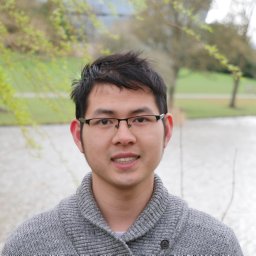
 Tu Bui
· 5 previous affiliations
- Fujitsu (Japan)Since 2023
- Principal Researcher · Since 2025
- Current
- Senior Researcher · 2023–2025
- Senior Researcher · 2023–2025
- University of Surrey2010–2023
- CVSSP Research Fellow · 2020–2023
- Postdoc · 2019–2020
- Research Assistant · 2018–2019
- PhD student · 2014–2019
- BEng (Hons), Electronic Engineering · 2010–2014
- Visiting Research Scholar · 2018
- Sony (Japan)2012–2013
- Industrial Placement · 2012–2013
Research Overview
Tu Bui focuses on multimodal representation learning, computer vision, and the integration of diverse data modalities for complex predictive tasks. His trajectory spans early work in visual search and style-based image retrieval to recent investigations into modality collapse and healthcare applications. Currently, he investigates the theoretical and practical challenges of combining heterogeneous data sources to ensure robust, balanced multimodal learning.
Research Trajectory
Bui's early research explored computer vision and image retrieval, with a particular emphasis on combining structural and stylistic information. In 2017, he collaborated on Sketching with Style: Visual Search with Sketches and Aesthetic Context, which proposed a novel measure of visual similarity. This work utilized a hierarchical triplet network to learn a joint feature embedding capable of processing a query sketch alongside contextual images that specify a desired visual aesthetic. This approach allowed for style discrimination independent of structure, improving the precision of visual search systems.
Following this foundational work in visual representations, Bui's research expanded into broader multimodal deep learning frameworks, particularly focusing on how diverse data sources can be effectively integrated. In the medical domain, he contributed to Scalable and Loosely-Coupled Multimodal Deep Learning for Breast Cancer Subtyping. This research introduced a flexible framework that integrates genomic, clinical, and histopathology information. By utilizing a dual image-and-graph representation for whole slide images alongside a weighted logits late fusion strategy, the project advanced the research direction of Multimodal Representation Learning for Electronic Health Records.
Alongside applied multimodal learning, Bui has investigated the underlying mechanics and failure modes of these architectures. He participated in the study A Closer Look at Multimodal Representation Collapse, which examines why models trained on diverse sources—such as video, audio, and text—often fixate on a single dominant modality while ignoring others. This work contributes to several theoretical areas, including the research direction Overcoming Modality Dominance in Multimodal Learning and the broader area of Factorized Latent Spaces for Multimodal Representation Learning. It also intersects with efforts in the area of Adversarial Modality Alignment for Invariant Representation Learning, seeking to ensure that multimodal systems achieve their intended synergistic effects rather than collapsing into single-modality reliance.
Current Directions
The most recent papers in the evidence, published in 2025, indicate a strong focus on the robustness and scalability of multimodal deep learning. A primary open problem in this work is modality collapse—understanding and preventing architectures from over-relying on a single dominant data source when processing heterogeneous inputs. Concurrently, recent work investigates the application of these robust multimodal frameworks to clinical diagnostics, exploring how loosely coupled architectures and late fusion strategies can better integrate high-dimensional medical data, such as whole slide images and genomic profiles, to improve predictive accuracy in oncology.
Profile updated
Loading new papers…
Other researchers whose papers cluster into the same research directions — a proxy for overlapping technical interests and shared intellectual neighborhoods.
See something wrong? Report a mistake