

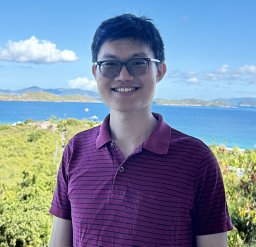
 Tsung-Yen Yang
· 5 previous affiliations
- waymoSince 2026
- AI Researcher · Since 2026
- Meta (United States)2022–2026
- Researcher · 2022–2026
- Google (United States)2021–2022
- Research Intern and Student Researcher · 2021–2022
- Research Intern · 2020
- Princeton University2017–2019
- PhD student · 2017–2019
Research Overview
Tsung-Yen Yang focuses on embodied artificial intelligence, reinforcement learning, and robotic control. His early work addressed time-series prediction and safe reinforcement learning before shifting toward large-scale simulation and multi-agent coordination. His current research investigates foundation models for robotics, emphasizing cross-embodiment generalization and physical planning in complex environments.
Research Trajectory
Yang's early research applied machine learning to educational data and social networks. He developed time-series neural networks that incorporated clickstream data to predict student performance in massive open online courses, as detailed in Behavior-Based Grade Prediction for MOOCs Via Time Series Neural Networks. He extended this time-series methodology to forecast link formation in social learning networks in Predicting Learner Interactions in Social Learning Networks, utilizing recurrent architectures to model network states over time.
Transitioning to reinforcement learning and multimodal systems, he explored how agents understand environments and operate safely. He introduced architectures for spatial reasoning in Robust and Interpretable Grounding of Spatial References with Relation Networks, designing a text-conditioned relation network to capture spatial concepts while remaining robust to input noise. A major focus during this period was the area of Safe Reinforcement Learning via Constrained Markov Decision Processes. He developed Projection-Based Constrained Policy Optimization to stabilize policy optimization under strict constraints. Expanding on this, he investigated how agents can interpret safety requirements directly from text in Safe Reinforcement Learning with Natural Language Constraints, introducing a multi-task benchmark for optimizing rewards without violating free-form textual constraints. To improve learning efficiency, he designed the SPACE algorithm in Accelerating Safe Reinforcement Learning with Constraint-mismatched Baseline Policies, which utilizes a three-stage projection method to allow agents to safely leverage sub-optimal baseline policies. He subsequently applied these safety-constrained methodologies to physical systems in Safe Reinforcement Learning for Legged Locomotion. Concurrently, he explored physical state estimation, proposing an autoencoder-based model to deduce unknown physical parameters from observational sequences in Learning Physics Constrained Dynamics Using Autoencoders.
Yang's work then shifted toward large-scale embodied AI and robotic manipulation. He collaborated on HomeRobot: Open-Vocabulary Mobile Manipulation, a framework addressing the integration of perception, navigation, and manipulation for compliant robots in domestic environments. This work contributed to the broader area of Zero-Shot Sim-to-Real Transfer for Robotic Control. He also participated in developing high-performance simulation infrastructure in Habitat 3.0: A Co-Habitat for Humans, Avatars, and Robots, featuring realistic humanoid avatars to bridge the gap between solitary agents and social, assistive robots.
In recent years, his research has heavily emphasized world models and multi-agent coordination. He contributed to World Models Can Leverage Human Videos for Dexterous Manipulation, which introduced a latent-space world model that learns complex physics from human video data to enable zero-shot real-world robotic grasping. This aligns with his ongoing focus on the research direction of Bridging the Embodiment Gap in Robot Learning. He also collaborated on RobotMover: Learning to Move Large Objects by Imitating the Dynamic Chain, an imitation learning framework that uses a morphology-agnostic representation to transfer complex manipulation skills from human motion-capture data to quadruped robots. To evaluate collaborative capabilities, he oversaw the creation of PARTNR: A Benchmark for Planning and Reasoning in Embodied Multi-agent Tasks, a large-scale dataset of natural language tasks testing how well AI agents coordinate with humans, highlighting the challenges language models face with real-time execution errors. Investigating the underlying mechanisms of physical planning, he analyzed joint-embedding predictive architectures in What Drives Success in Physical Planning with Joint-Embedding Predictive World Models? to understand how abstracting irrelevant details impacts the efficiency of planning algorithms. Most recently, he participated in the development of Cross-Embodiment Robot Foundation World Models with Latent Actions, which proposes a unified latent action space to allow world models to generalize across fundamentally different robotic platforms.
Current Directions
The most recent papers in the evidence address the development of foundation models for robotic control and physical planning. A primary focus is constructing predictive world models that can learn from diverse, unstructured data—such as human video demonstrations—and generalize across different robotic embodiments. This involves creating unified latent action spaces that bridge the gap between incompatible hardware platforms, allowing models to scale as more diverse robots are introduced. Additionally, recent work investigates the coordination burden in multi-agent embodied tasks, exploring how large language models and joint-embedding architectures can be optimized for real-time, physical collaboration with humans in complex environments.
Profile updated
| Paper | Venue | Year |
|---|---|---|
| Predicting Learning Interactions in Social Learning Networks: A Deep Learning Enabled ApproachGitHubJess-jpg-txt/ | IEEE/ACM Trans. Networking | 2023 |
| Safe Reinforcement Learning with Natural Language ConstraintsGitHubprinceton-nlp/ | NeurIPS | 2021 |
Loading new papers…
Other researchers whose papers cluster into the same research directions — a proxy for overlapping technical interests and shared intellectual neighborhoods.
See something wrong? Report a mistake