

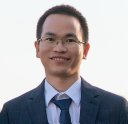
 TrungTin Nguyen
· 6 previous affiliations
- Queensland University of TechnologySince 2025
- MACSYS Postdoctoral Research Fellow (Applied Statistics) · Since 2025
- Current
- MACSYS Postdoctoral Research Fellow (Applied Statistics) · Since 2025
- The University of Queensland2023–2024
- Postdoctoral Research Fellow · 2023–2024
- Université Grenoble Alpes2022–2023
- Postdoctoral Researcher · 2022–2023
- Postdoctoral Researcher · 2022–2023
- Université de Caen Normandie2018–2021
- Doctor of Philosophy - PhD, Statistics and Data Science · 2018–2021
Research Overview
TrungTin Nguyen focuses on statistical learning, modular deep learning, and the theoretical foundations of mixture of experts models. His trajectory spans from non-asymptotic oracle inequalities for high-dimensional regression to the rigorous analysis of parameter convergence in over-specified probabilistic models. Currently, he develops mathematical frameworks for calibrating large-scale scientific machine learning systems and advancing simulation-based inference.
Research Trajectory
The early arc of the research focuses on the theoretical grounding of Mixture of Experts (MoE) models and high-dimensional statistics. This work began by establishing non-asymptotic bounds for the Lasso estimator in MoE models in An l1-oracle inequality for the Lasso in mixture-of-experts regression models, which proved that estimation error can be controlled even when predictors exceed sample size, contributing to the area of Non-Asymptotic Model Selection via Oracle Inequalities. This theoretical foundation was expanded in Approximations of conditional probability density functions in Lebesgue spaces via mixture of experts models, demonstrating that MoE models act as universal approximators for continuous conditional densities within Lebesgue spaces. The integration of regression, clustering, and model selection for heterogeneous data was further formalized in A Non-asymptotic Risk Bound for Model Selection in a High-Dimensional Mixture of Experts via Joint Rank and Variable Selection.
Moving forward, the research deepened its focus on the learning dynamics, convergence, and routing mechanisms of MoE architectures. The learning speed of gating functions was investigated in Demystifying Softmax Gating Function in Gaussian Mixture of Experts, advancing the research direction of Parameter Convergence in Overspecified Mixture Models. This inquiry into gating mechanisms continued with A General Theory for Softmax Gating Multinomial Logistic Mixture of Experts and Towards Convergence Rates for Parameter Estimation in Gaussian-gated Mixture of Experts, which provided convergence analyses for maximum likelihood estimation in models where covariates influence both gating functions and expert networks. Concurrently, practical architectural challenges in sparse models were addressed through participation in HyperRouter: Towards Efficient Training and Inference of Sparse Mixture of Experts, a novel routing strategy designed to eliminate representation collapse and address issues in the area of Mitigating Expert Collapse in Sparse Mixture of Experts.
Parallel to the work on MoE architectures, significant contributions were made to simulation-based and Bayesian inference. Concentration properties for unidentifiable models were established in Concentration results for approximate Bayesian computation without identifiability, proving that posterior distributions concentrate on valid parameter sets even without summary statistics, contributing to the broader area of Learning and Inference under Model Misspecification. These two primary interests—MoE and inference—were bridged in Bayesian Likelihood Free Inference using Mixtures of Experts, which utilized MoE as surrogate likelihoods to achieve higher accuracy for complex, non-Gaussian posteriors. The application of Bayesian frameworks to non-linear inverse problems was further explored using Dirichlet and Pitman-Yor processes in Bayesian nonparametric mixture of experts for inverse problems, advancing work in the area of Sufficient Dimension Reduction via Inverse Modeling. Additional theoretical risk bounds for density estimation on compact domains were formalized in Risk Bounds for Mixture Density Estimation on Compact Domains via the h-Lifted Kullback–Leibler Divergence, alongside investigations into empirical risk limits in On the Asymptotic Distribution of the Minimum Empirical Risk.
The most recent phase of the trajectory emphasizes advanced model selection, asymptotic limits, and the application of foundational models to scientific domains. The asymptotic behavior of Bayesian evaluation criteria (such as DIC, BPIC, and WBIC) was analyzed in On the large-sample limits of some Bayesian model evaluation statistics. To solve the persistent challenge of determining the optimal number of experts in MoE architectures, new methods utilizing dendrograms of mixing measures were introduced in Model Selection for Gaussian-gated Gaussian Mixture of Experts Using Dendrograms of Mixing Measures and Dendrograms of Mixing Measures for Softmax-Gated Gaussian Mixture of Experts: Consistency Without Model Sweeps, the latter advancing the area of Parameter Identifiability in Complex Dynamical Systems. Finally, the research extends to applying machine learning to complex structural data, with participation in molecular property prediction via differentiable graph transformers in FACET: A Fragment-Aware Conformer Ensemble Transformer and efficient token merging for vision models in StructSAM: Structure- and Spectrum-Preserving Token Merging for Segment Anything Models.
Current Directions
Recent work investigates the intersection of rigorous statistical model selection and large-scale scientific machine learning. A primary focus is resolving parameter identifiability and optimal architecture sizing in over-specified mixture models, utilizing novel techniques like dendrograms of mixing measures to achieve consistency without exhaustive model sweeps. Additionally, the most recent papers in the evidence address the adaptation of foundational architectures—such as transformers and segment-anything models—for complex, high-dimensional tasks, including molecular conformer ensembles and efficient visual token merging.
Profile updated
Loading new papers…
Other researchers whose papers cluster into the same research directions — a proxy for overlapping technical interests and shared intellectual neighborhoods.
See something wrong? Report a mistake