

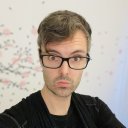
 Torsten Scholak
· 8 previous affiliations
- ServiceNow IncSince 2017
- Researcher · Since 2017
- ServiceNow (United States)Since 2021
- Lead, Foundation Models Lab · Since 2024
- Staff Research Scientist · 2023–2024
- Sr Applied Research Scientist · 2022–2023
- Sr Applied Research Scientist · 2021
- Cohere (Canada)Since 2026
- Member of Technical Staff · Since 2026
- Element AI2017–2021
- Applied Research Scientist · 2017–2021
- Unata Inc.2016–2017
- Data Science Engineer · 2016–2017
- University of Toronto2011–2015
- Postdoc · 2011–2015
- University of Freiburg2008–2011
- Doctor of Philosophy (Ph.D.), Theoretical and Mathematical Physics · 2008–2011
- University of Bayreuth2002–2008
- Diplom (German equivalent of M.S. degree), Theoretical and Mathematical Physics · 2002–2008
Research Overview
Torsten Scholak focuses on natural language processing, program synthesis, and the development of autonomous agents. His trajectory spans from constrained decoding for text-to-SQL parsing and neural functional program evaluation to repository-level code intelligence. Most recently, his work addresses multimodal agent benchmarking in real computer environments and efficient architectures for diffusion-based language models.
Research Trajectory
Torsten Scholak's early work centers on the intersection of natural language processing and programming languages, specifically exploring how language models can generate and evaluate structured code. In 2021, he investigated the capabilities of transformer-based models for functional programming languages in Towards Neural Functional Program Evaluation. This work introduced program generation mechanisms to control syntactic sugar, demonstrating that pretrained models could achieve high exact match scores on out-of-distribution tests. Concurrently, he advanced the area of Schema Grounding for Cross-Domain Text-to-SQL Generation with the development of DuoRAT: Towards Simpler Text-to-SQL Models. This research also touched upon the broader direction of Training-Free and Self-Speculative Decoding for LLM Acceleration. He further improved constrained generation in PICARD: Parsing Incrementally for Constrained Auto-Regressive Decoding from Language Models, which introduced incremental parsing techniques to ensure syntactically valid code generation from autoregressive models.
Expanding on structured data grounding, he participated in developing UnifiedSKG: Unifying and Multi-Tasking Structured Knowledge Grounding with Text-to-Text Language Models in 2022. This framework standardized 21 diverse tasks—ranging from table-based fact verification to text-to-SQL parsing—into a single text-to-text format, enabling general-purpose models to benefit from multi-task learning. Shifting toward broader software engineering contexts, his research began addressing repository-level code intelligence. He guided the development of RepoFusion: Training Code Models to Understand Your Repository (2023), a training framework designed to teach large language models how to incorporate diverse project-wide contexts, significantly improving code completion accuracy over models lacking repository awareness.
In 2024, his focus expanded into rigorous model diagnostics and autonomous agent orchestration. Contributing to the research direction of Decomposing Aggregate Metrics for Fine-Grained Model Diagnosis, he co-developed Perplexed: Understanding When Large Language Models are Confused. This work introduced open-source libraries to analyze token-level model confusion, particularly addressing challenges in the area of Reconciling Sub-word Tokenization with Structural Constraints and identifying struggles with internal method calls. In the realm of agentic workflows, he contributed to TapeAgents: a Holistic Framework for Agent Development and Optimization, which centralizes agent state and interactions into a structured log to streamline debugging and optimization.
During the same period, he led a major benchmarking effort in the area of Live Environment Benchmarking for Autonomous Web Agents with OSWorld: Benchmarking Multimodal Agents for Open-Ended Tasks in Real Computer Environments. This scalable benchmark evaluates AI agents across real operating systems (Ubuntu, Windows, and macOS), highlighting a significant execution gap in current multimodal models and advancing the direction of Hybrid Observation Spaces for Multimodal GUI Agents.
Most recently, his trajectory has incorporated foundational architectural improvements for sequence generation. He collaborated on Unifying Autoregressive and Diffusion-Based Sequence Generation (2025), which bridges autoregressive and diffusion models using position-specific noise schedules. Building on this, he oversaw the development of DiffuMamba: High-Throughput Diffusion LMs with Mamba Backbone (2026), which replaces traditional Transformer backbones with a bidirectional Mamba architecture to achieve linear-time sequence modeling and substantially higher inference throughput for diffusion language models.
Current Directions
The most recent papers in the evidence address the fundamental architectures of sequence generation, specifically focusing on diffusion-based language models. This work investigates how to overcome the inference bottlenecks inherent in Transformer-based diffusion models by integrating alternative architectures, such as bidirectional state space models (e.g., Mamba). By unifying autoregressive and diffusion objectives and leveraging linear-time sequence modeling, these current directions aim to dramatically improve inference throughput for long sequences while maintaining strong downstream performance in text generation tasks.
Profile updated
Loading new papers…
Other researchers whose papers cluster into the same research directions — a proxy for overlapping technical interests and shared intellectual neighborhoods.
See something wrong? Report a mistake